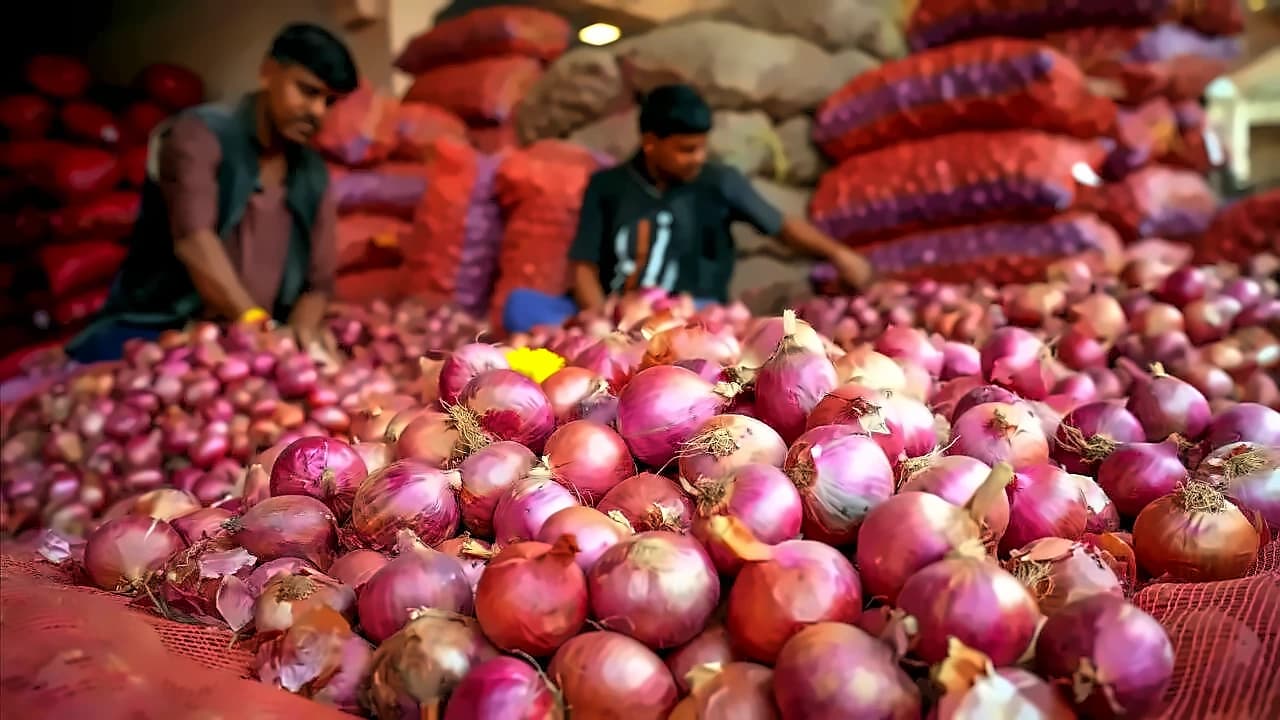
Onion prices experienced a dramatic 93% annual increase in September 2026, reaching ₹52.8 per kg - the highest monthly average since November 2024. According to ISignal's Food Price Watch dashboard using Department of Consumer Affairs data, this represents a significant escalation from ₹27.4 per kg in September 2025, which was the lowest monthly price since 2022. The price surge is particularly concerning as it occurred during a year with the fourth lowest rainfall since the turn of the century, with the country approaching monsoon withdrawal with a 13% deficit. Agricultural researcher Sominath Gholwe explained that onion prices remained low for two to three years, resulting in farmers unable to recover costs, leading to reduced cultivation.
The Union government's large-scale market intervention through its Price Stabilisation Fund has successfully brought down onion prices across India. According to a government communique, more than 2 lakh quintals of onions have been dispatched through 8 Kanda Express trains and 467 trucks, covering 123 cities nationwide. The government has deployed dedicated transportation networks including trucks and newly introduced 'Kanda Express' special trains to help stabilise onion prices and bring down retail rates across key consumption centres. However, onion trader Ritesh Poman noted that "the government buffer stock has not made much difference in our market" and that stocks are being sent through rakes from Lasalgaon to major markets like Mumbai and Azadpur.
The improving supply situation is reflected in mandi prices across major onion markets. Maharashtra's weighted average mandi price fell nearly 13% from around ₹4,030 per quintal on September 16 to approximately ₹3,475 per quintal on October 3. The continued decline in mandi prices suggests that higher market arrivals are translating into better supply conditions, with arrivals across major onion markets remaining strong. However, onion trader Ritesh Poman explained that "along with Maharashtra, onions are stored in large quantities in Madhya Pradesh, Gujarat and Rajasthan, and stocks have been lower there this year as well because many farmers did not store onions after last year's low prices."
The current price surge stems from multiple supply-side challenges affecting the onion market. Production costs have increased to at least ₹12.5 per kg from around ₹10 previously, while Kharif onion production is estimated at 30.74 million tonnes in 2025-26, comparable to the 30.77 million tonnes the previous year. Onion crop is harvested in three seasons: rabi in March-May; kharif in September-November and late kharif in January-February. The government procured 121,000 tonnes of rabi onion for its 2026-27 buffer stock, against a target of 200,000 tonnes, and began releasing onions at ₹35 per kg. Poman expects the new crop to arrive later than last year and anticipates "much lower quantity."
The easing trend is increasingly evident in retail markets across the country. Over the past two weeks, onion prices have declined by ₹1-21 per kg across 126 cities. Prices have moderated in several major consuming states including Tamil Nadu, Madhya Pradesh, Uttar Pradesh, Karnataka, Odisha, Andhra Pradesh, Bihar and West Bengal. The widespread decline across geographically diverse markets suggests that the improvement is broad-based, rather than limited to specific mandis or regions, pointing to stronger onion availability across the country. However, the current price surge demonstrates how quickly market conditions can shift, with prices more than doubling since May 2026.