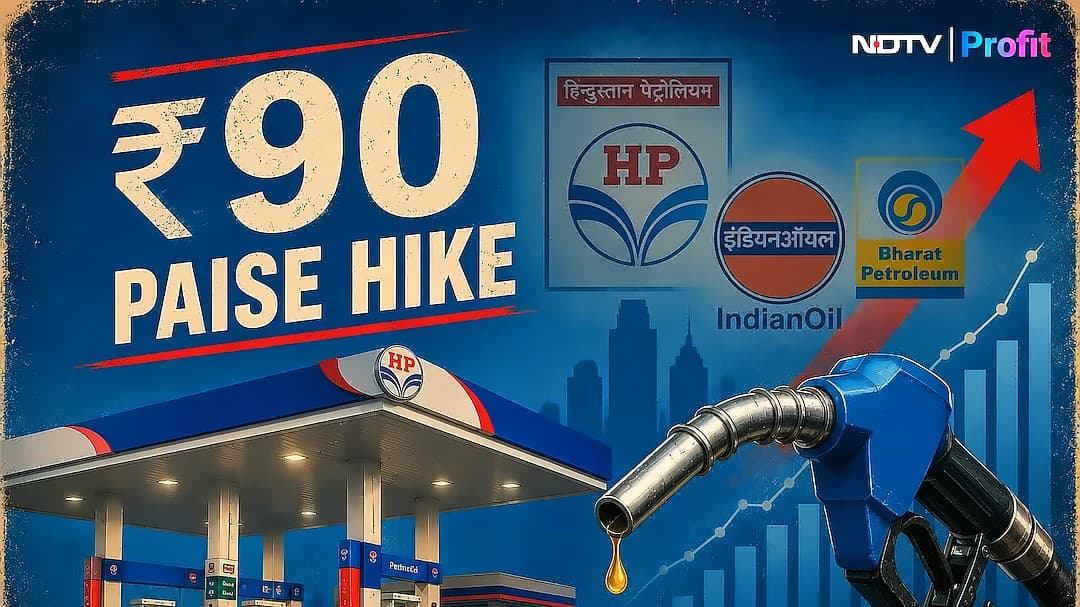
Oil-marketing companies (OMCs) experienced a dramatic turnaround on Monday (August 3), with stocks rallying up to 3% as crude oil prices eased from previous highs. According to ET Now, Indian Oil Corporation Limited (IOCL) led gains, rising 3% to trade at ₹144.60, with the stock touching an intraday high of ₹144.90, marking gains of 3.4%. Hindustan Petroleum Corporation Limited (HPCL) also gained 2% to trade at ₹397.40, while Bharat Petroleum Corporation Limited (BPCL) jumped around 2% to ₹325.55. This represents a significant recovery from Thursday's declines when these same stocks had fallen by less than 1% during the session.
Brent crude oil prices demonstrated significant volatility, with the latest developments showing a reversal from Thursday's surge above $90 per barrel. As per ET Now, the price decline provided crucial support for oil marketing companies, allowing stocks to recover from earlier losses. The previous session had seen Brent crude futures advance $1.48, or 1.63%, to $92.22 a barrel, while US West Texas Intermediate (WTI) crude gained 43 cents, or 0.51%, to $84.89 a barrel. The current easing in crude prices has been a key factor in the stock market recovery for OMCs.
The crude oil price movements continue to be driven by multiple geopolitical developments, as reported by Stock Market News. US President Donald Trump warned that Iran would face severe retaliation following Tuesday's missile attack on a US military base in Jordan. According to the US Central Command, the United States launched a two-hour military operation against Iran. Additionally, the US and Saudi Arabia carried out joint strikes on Iran-backed paramilitary groups in Iraq, marking the first publicly acknowledged Saudi participation in US air strikes.
Saudi Aramco is evaluating a new oil pricing structure for Asian markets in response to escalating security threats from Houthi rebels that jeopardize regional shipping flows. As reported by multiple sources, the move signals a broader shift toward risk-adjusted pricing in response to sustained geopolitical disruption. The decision stems from increasing frequency of Houthi attacks on commercial vessels in the Red Sea and surrounding waters, which have forced shipping companies to reroute their vessels, leading to longer transit times and higher operational costs.
The current price movements represent a continuation of recent volatility, with the latest session showing a sharp reversal from Thursday's decline when oil stocks had fallen by less than 1%. Major Asian crude importers including India, China, and Japan are closely monitoring developments, as any pricing shift could affect their energy budgets and refining margins. The spike comes after US President Donald Trump warned that Iran would face severe retaliation following Tuesday's missile attack on a US military base in Jordan, with the latest developments showing a reversal from the previous session's surge above $90 per barrel.