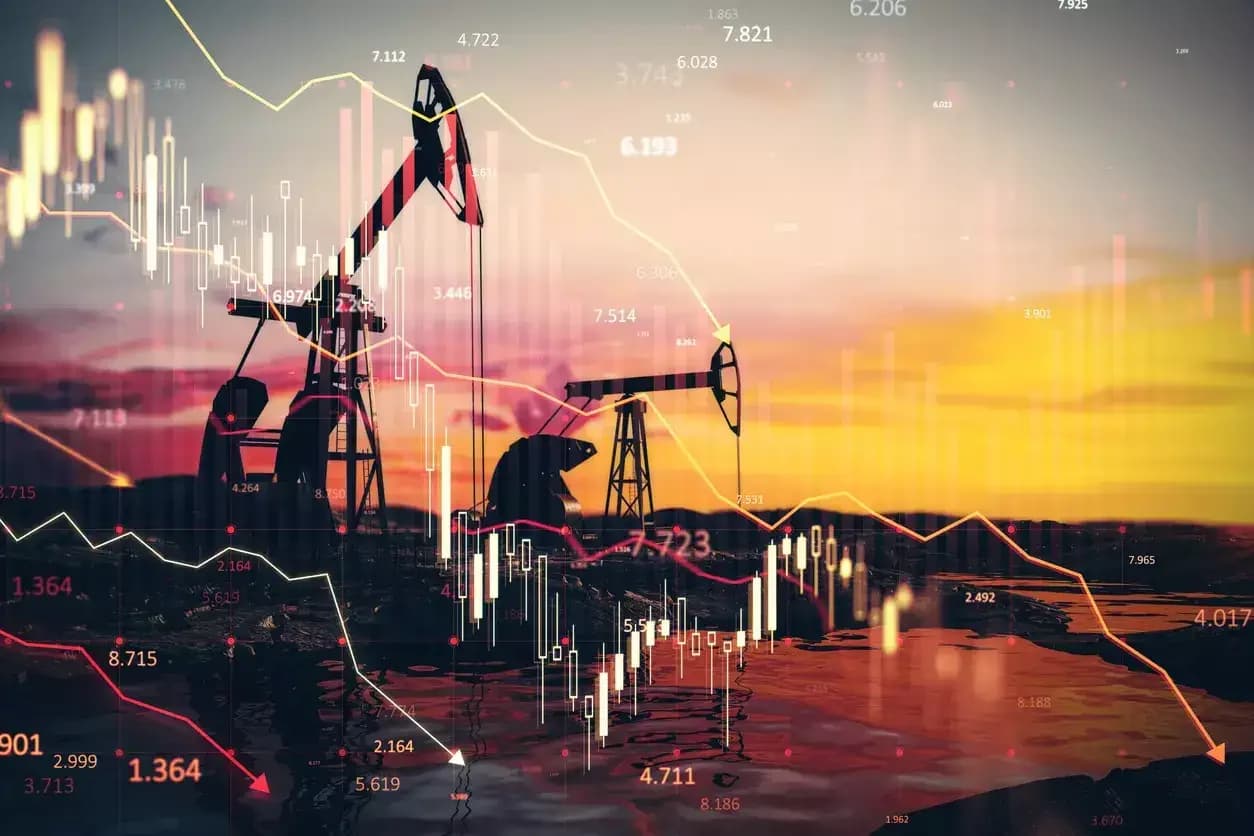
Oil prices surged 1.5% on Friday following renewed clashes between US and Iranian forces, with Brent crude rising $1.41 to $101.47 per barrel and WTI climbing $1.12 to $95.93 per barrel as of 0123 GMT. According to The Economic Times, the jump followed Iran's accusations that the U.S. violated the month-long ceasefire, while the U.S. said its attacks were retaliatory strikes following Iranian fire on Thursday on navy ships transiting through the strait. Iran's military said the U.S. had targeted an Iranian oil tanker and another ship and civilian areas in the strait and on the mainland. Despite the renewed combat, U.S. President Donald Trump told reporters later on Thursday the ceasefire was still in effect. The latest clashes have jeopardized the outlook for a deal to end the 10-week war, with the global oil market's focus remaining on the strait, which has been effectively closed since late February.
Oil prices steadied on Thursday, with Brent crude rising 0.9% to $102.15 per barrel and WTI advancing 1.2% to $96.20 per barrel as investors assess the likelihood of a successful peace agreement between the US and Iran. According to Mint, both benchmark contracts had tumbled over 7% on Wednesday, touching two-week lows amid optimism surrounding a potential resolution to the Middle East conflict. MCX crude oil prices also witnessed similar upward movement, tracking global prices and rising to ₹9,040 per barrel. The recovery comes as US President Donald Trump said it was 'too early' for direct talks with Iran, while a senior Iranian lawmaker described the US proposal as more of a 'wish list' than a practical solution. Iran stated that it was examining a US-backed peace proposal that aims to formally end the conflict but leaves unresolved Washington's key demands, including Tehran halting its nuclear programme and reopening the Strait of Hormuz.
The US Treasury has significantly escalated sanctions against Iran's oil smuggling operations, with OFAC blacklisting Iraq's Deputy Oil Minister Ali Maarij Al-Bahadly under Executive Order 13902 for allegedly using his ministry posts since 2018 to enrich Iran-linked smuggler Salim Ahmed Said and the Asa'ib Ahl Al-Haq militia. As reported by ABC News, the network mixed Iranian crude with Iraqi barrels at the VS Oil Terminal, then forged provenance papers before export, with three senior militia figures and four oil-services firms also blacklisted. Treasury Secretary Scott Bessent stated, "Like a rogue gang, the Iranian regime is pillaging resources that rightfully belong to the Iraqi people." This action extends earlier Economic Fury moves that froze $344 million in Tether (USDT) and seized close to half a billion dollars in regime-linked crypto. The smuggling network represents a significant component of Operation Economic Fury, the campaign designed to squeeze Tehran's revenue streams.
The Department of Justice and Commodity Futures Trading Commission are conducting separate probes into oil price trades totalling $7 billion ahead of key Iran war-related announcements by President Trump, according to Reuters. Most of the trades involved short positions, or bets on prices falling, placed on the Intercontinental Exchange (ICE) and Chicago Mercantile Exchange (CME) before Trump's statements to delay attacks or announce a ceasefire that led to prices falling. The probes examine four bearish oil positions totaling $2.6 billion: a $500 million bet 15 minutes before Trump delayed strikes on March 23, a $960 million wager hours before the April 7 ceasefire, $760 million ahead of Iran's April 17 Hormuz statement, and $430 million before the April 21 truce extension. LSEG data shows these patterns echo Polymarket cases where wallets repeatedly profited on Iran outcomes ahead of public news. The dual investigations raise questions about whether information about Trump's Iran moves may be leaking before it reaches public channels, potentially involving traders with advance knowledge of presidential announcements.
As the conflict has dragged on, liquidity in the oil market has slumped, with traders increasingly reluctant to take positions amid heightened volatility caused by a barrage of headlines and rapid shifts in sentiment, according to Bloomberg. Bridgewater Associates founder Ray Dalio said the outcome of the US-Iran conflict can be defined in 'almost black-and-white terms of who will control the Strait of Hormuz,' according to comments to the New York Times podcast Interesting Times with Ross Douthat. The Trump administration has been waiting for Tehran to respond to its proposal to reopen the trade route, with Iran's leaders yet to indicate whether they'll accept the terms. Anindya Banerjee, Head of Commodity and Currency Research, Kotak Securities, said Brent is expected to remain locked in a headline-driven $100–$118 range, well below the March peak of $126 but with the structural risk premium firmly intact. For the week, both Brent and WTI contracts are set to fall about 6%, despite Friday's recovery from earlier declines.
Gold's traditional reputation as a safe-haven asset is facing fresh scrutiny after prices declined during the ongoing Iran conflict, according to a report by Morgan Stanley. The investment bank noted that gold fell 14.5% in March -- the first month of the conflict -- while global equities and US Treasury indices also declined, though by smaller margins. Gold has remained nearly 10% below its pre-conflict levels even as equities recovered in April. Gold was steady as optimism that a deal to reopen the Strait of Hormuz was imminent faded following reports of attacks on US Navy vessels, reviving inflation concerns, according to Bloomberg. Gold has fallen around 11% since the conflict erupted, as the near-closing of Hormuz and resulting energy price shock fanned concerns about rising inflation that would keep interest rates higher for longer. Morgan Stanley Research's Metals & Mining Commodity Strategist Amy Gower said, 'Gold's sensitivity to monetary policy has taken over as the key price driver.' She added that the metal's safe-haven appeal has been 'overshadowed' by expectations of higher real interest rates. The report highlighted that rising oil prices and supply disruptions linked to the conflict have reduced expectations of lower US interest rates, making non-yielding assets such as gold less attractive to investors.