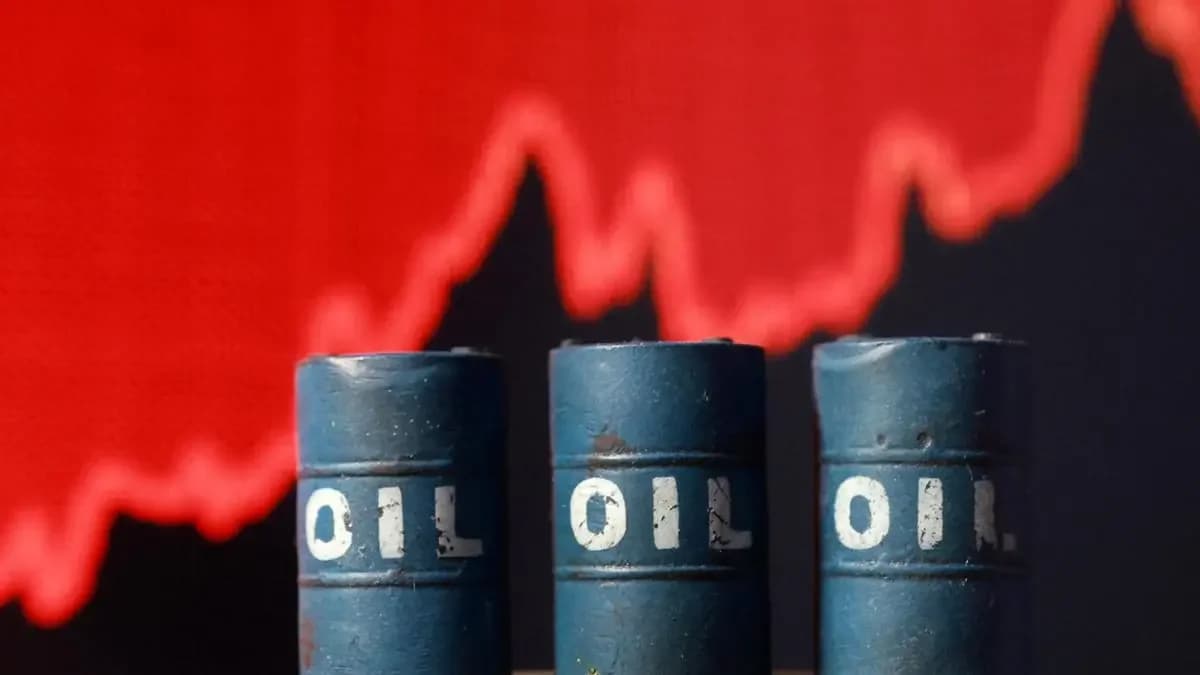
Oil prices cooled to around $104 per barrel during early Friday trading as investors focused on potential positive cues from ongoing negotiations for a US-Iran peace deal. Brent crude oil futures were trading 0.37% lower at $104.55 per bbl on Friday, May 22, compared to $104.93 per bbl at the previous commodity market close, according to Investing.com data. Brent crude has lost 4.28% in the past one week but remains trading over 8% higher in the last one month period. West Texas Intermediate (WTI) crude oil prices were trading 0.17% lower at $97.83 per bbl as of 7:38 am IST, compared to $98 per bbl at the previous market close. The oil prices remained volatile based on dynamic developments of the West Asia conflict, with both contracts showing significant volatility in recent sessions.
British households are facing a sharp hike in energy bills this summer, with household bills forecast to rise by more than £200 a year. According to Cornwall Insight, the annual bill for a typical dual-fuel household will increase to £1,850, representing a 13% increase from the current cap of £1,641. The rise has been attributed to volatile wholesale markets damaged by the Iran conflict since it began on 28 February, with prices rocketing in March after US strikes on Iran triggered retaliation from Tehran. Iran closed the Strait of Hormuz, clogging the route that is responsible for carrying a fifth of the world's oil and gas supply, causing a surge in prices. The price of petrol reached 158.5p a litre on 19 May, with diesel at 185.9p a litre.

US Secretary of State Marco Rubio said there were 'some good signs' that the United States is likely to reach a potential peace deal with Iran as negotiators continue their dialogue with the Gulf nation. As per an FT report, Rubio stated, "I think we've made some progress, but obviously, we are dealing with a system that is a little fractured, the Iranian system. There's some good signs, but I don't want to be overly optimistic as well." This comes as the United States and Iran have not been able to come to common ground on the Gulf nation's nuclear capabilities, with uncertainty looming over investors on any further escalations if negotiations fail again. US President Donald Trump has prepared his forces for a 'large-scale' attack on the West Asian country, though earlier this week he postponed military strike plans at the request of other Gulf nations, with reports suggesting Trump is willing to wait only until the end of this week before launching combat operations.
Despite progress in negotiations, supply disruptions continue to impact markets. Three supertankers were crossing the Strait of Hormuz on Wednesday, carrying oil bound for Asian markets, after waiting in the Gulf for more than two months with 6 million barrels of Middle East crude on board. The number of vessels crossing the strait remains well below the 130 or so ships that crossed daily before the war. UAE ADNOC Chief Executive Sultan Al Jaber said on Wednesday it will take at least four months to get back to 80% of pre-conflict flows. To make up the supply shortfall, countries are relying on commercial and strategic inventories. U.S. crude stockpiles reported by the Energy Information Administration are expected to have fallen by about 3.4 million barrels, according to a Reuters poll, with weekly EIA data due at 1430 GMT. PVM analysts warned that global oil stocks could reach critically low levels.
The UK government has implemented several measures to address fuel shortages and energy security concerns. On 2 May, airlines facing fuel shortages were given permission to cancel flights in advance without losing valuable take-off slots. The government announced a £53m support package for households using heating oil, which fluctuates more directly with oil prices. As a member of the International Energy Agency, the UK must hold 90 days' worth of net oil imports, but currently has more than this. However, analysts warn that Europe has 'maybe six weeks of jet fuel left', with European jet fuel prices more than doubling after the war started and currently about 50% higher. The official price cap announcement from Ofgem is anticipated this month, with the watchdog consulting on changing the definition of a 'typical' household's energy use, potentially lowering consumption figures used to calculate headline figures.