Crude oil prices declined on Friday following reports that the US and Iran have agreed to extend the ceasefire by 60 days, though there was no confirmation from US President Donald Trump or Iranian authorities. By 11:15 AM, international benchmark Brent crude was trading at $92.66 a barrel, down 1.12 per cent, while US West Texas Intermediate (WTI) crude also declined 1.18 per cent to $87.86 a barrel. June crude oil futures were trading at ₹8421 on Multi Commodity Exchange (MCX) during the initial hour of trading on Friday against the previous close of ₹8537, down by 1.36 per cent, and July futures were trading at ₹8286 against the previous close of ₹8378, down by 1.10 per cent. Prices were down more than 8% for the week with Brent hitting a low of $87.11 versus last week's high of $109.47, highlighting the volatile nature of recent trading sessions. Oil markets initially moved higher after reports of US strikes on a military site in Bandar Abbas heightened fears of further escalation, but investor attention quickly shifted back to developments surrounding the Strait of Hormuz.
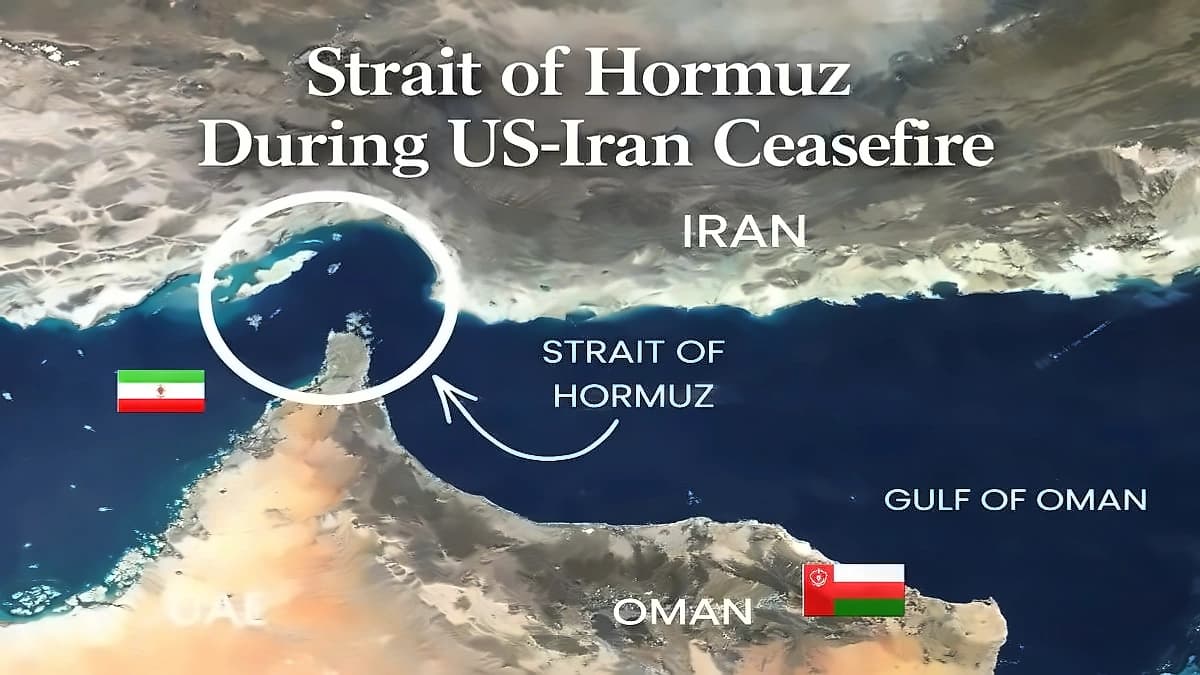
The proposed 60-day memorandum of understanding (MoU) between the US and Iran would ensure unrestricted shipping through the Strait of Hormuz, a strategic waterway that handles roughly one-fifth of global oil and liquefied natural gas trade. According to reports citing US officials, the framework would also require Iran to remove mines within 30 days and stop collecting tolls from vessels passing through the Strait. In return, the US naval blockade would be eased in proportion to the restoration of commercial shipping activity. While neither side has formally confirmed the agreement, markets responded positively to the prospect of reduced geopolitical risk. The reported framework has not yet received final approval from US President Donald Trump, while Iran has not publicly confirmed its acceptance of the proposal, leaving uncertainty around the deal's finalization.
The Strait of Hormuz remains a critical focus for global energy supplies, with the maritime chokepoint handling roughly 20 million barrels per day before Iran's restrictions. About 125 to 140 commercial transits crossed daily before the conflict, making it a critical transit route for roughly a fifth of the world's oil and liquefied natural gas supplies. The possibility of smoother shipping operations through the corridor has helped ease immediate concerns surrounding crude availability. Firstly, shipowners could be reluctant to send vessels into the Persian Gulf initially, with fears that the ceasefire could break down, potentially trapping vessels once again in the Gulf. Secondly, upstream oil production has fallen significantly since the war, with producers shutting in production in order to manage storage constraints, and the recovery in upstream production will be gradual rather than immediate.
For India, which imports the majority of its crude oil requirements, fluctuations in global oil prices have a direct impact on inflation, fuel costs and government finances. The recent surge in oil prices had already forced the Centre and public sector oil marketing companies to absorb a substantial portion of the increase rather than pass it entirely on to consumers. Earlier this week, the Ministry of Petroleum and Natural Gas said public sector oil companies were collectively absorbing losses of around ₹550 crore per day on the sale of petrol, diesel and LPG. The ministry noted that oil companies had refrained from passing on the full impact of rising global crude prices in an effort to shield domestic consumers. Indian retail fuel prices have risen by only 8-9 per cent since the crisis began, compared with increases ranging between 20 per cent and 67 per cent in several neighbouring economies.
Oil prices have been volatile in recent sessions, swinging by as much as $6 for both benchmarks on conflicting signals over a possible end to the three-month Iran war and the potential re-opening of the Strait of Hormuz. Despite Friday's decline, oil markets remain highly sensitive to developments in West Asia. Any formal confirmation of the reported US-Iran understanding could provide further relief to global energy markets, though uncertainty remains until both sides publicly endorse the proposed arrangement. The complex continues to advance grudgingly on bullish developments out of Iran while plunging markedly on even the slightest suggestion of a reopening of the Strait of Hormuz. The market has increasingly priced in a resolution this week, and any confirmation of a deal that reopens the strait means that significant further downside is likely limited, particularly during the early stages of a ceasefire.