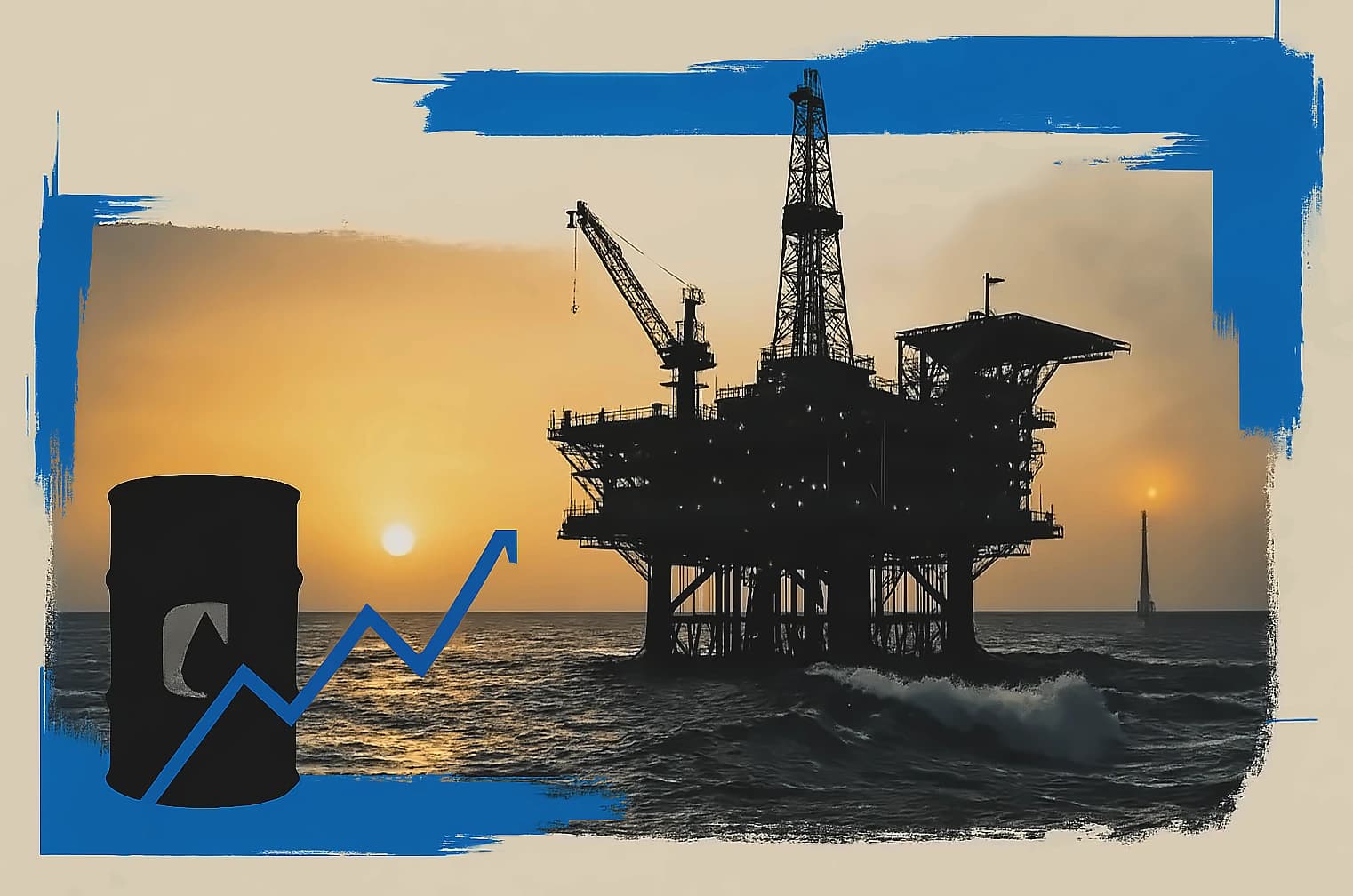
Oil prices continued their upward momentum on Monday, with Brent crude futures rising 91 cents or 1.09% to $84.46 a barrel, while U.S. West Texas Intermediate crude futures advanced 61 cents or 0.78% to $78.79 a barrel, according to latest reports. Both benchmarks had declined more than 7% last week on expectations that Iran and Oman were close to an agreement that could facilitate the reopening of the Strait of Hormuz, a key global oil transit route that carried around one-fifth of the world's oil supply before the war. Iranian Foreign Minister Abbas Araghchi said on Sunday that a deal with Oman was in its "final stages," though he reiterated that the waterway would only reopen once Washington met other conditions, including US compensation to Iran for its widespread attacks. Iranian Foreign Minister Abbas Araqchi said on Sunday that Tehran and Washington were not holding talks and that Iran would not enter negotiations as long as the US continued to breach an interim deal signed in June. "Traders have been conditioned by the on-again, off-again nature of the negotiations and are waiting for tangible evidence, such as verified tanker movements or formal agreements, before further unwinding the risk premium," said Tim Waterer, chief market analyst at KCM Trade.
US President Donald Trump appeared to signal a more measured approach on Sunday, telling Axios that Washington was now "low-keying it," his comments coming after weeks of threats of major strikes against Iran, followed by repeated de-escalation. The possibility of renewed conflict in the Middle East remains high, keeping investors and markets on edge. Iran-backed Houthi militants in Yemen claimed responsibility for an attack on Saudi Arabia's Jazan refinery on Sunday, two days after the kingdom signed a defence pact with Sunni Muslim allies Turkey and Pakistan in response to growing regional instability from the US-Israeli war on Shi'ite Iran. A Saudi oil plant was attacked over the weekend, adding to supply disruption concerns. The US has repeatedly maintained that it is involved in discussions concerning the management of the strait, a claim Tehran has rejected.
Iran has reiterated its conditions for fully reopening the Strait of Hormuz, including an end to the US naval blockade, the lifting of sanctions and compensation for damages caused by the conflict. Araghchi also cautioned that even if an agreement is reached, it would not lead to the immediate reopening of the key waterway, tempering expectations of a quick recovery in disrupted energy supplies. Four industry sources told Reuters that the proposed arrangement would be difficult to implement because US sanctions and restrictive insurance terms could complicate payments. Bjarne Schieldrop at SEB Research noted that "The structure of the Iran-Oman agreement in its current form and the power it yields to Iran is nothing that (US President Donald) Trump can accept politically." Also Read reports that Iran and the US are not engaged in talks and Tehran will not start them as long as Washington breaches an interim deal signed in June.
Despite diplomatic progress, supply concerns persist as crude oil and condensate exports from Gulf countries were broadly stable in July but remained about 40% below pre-war levels, according to shipping data. Before the war began in late February, the Strait of Hormuz carried about 20% of global oil and liquefied natural gas shipments, making any disruption significant for global energy markets. Market participants remain wary that continued Houthi attacks could prolong shipping disruptions in the Red Sea, limiting optimism over a full recovery in Middle East trade routes. The UAE's ADNOC said on Friday that 15 of its vessels had been attacked transiting the Strait of Hormuz since the beginning of the conflict, adding to the mounting pressure on regional energy infrastructure. Goldman Sachs has similarly warned that Brent could rise to $120 a barrel if shipping disruptions through the Strait of Hormuz continue, though its base case remains that tensions will eventually ease.
Market analysts remain divided on oil price trajectory despite current volatility. Anindya Banerjee, Head of Commodity Research at Kotak Securities, noted that "The direction of our outlook is unchanged; the path and the timeline have shifted. We still expect oil to cool as we move into 2027, for three reasons: supply outside the conflict zone is expanding, with OPEC+ raising production targets, the UAE at record output and non-OPEC barrels responding to price." However, Goldman Sachs expects Brent to average $80 a barrel in the fourth quarter and $75 a barrel next year, while cautioning that risks remain tilted to the upside due to the possibility of prolonged disruptions in the Strait of Hormuz and the Red Sea. The probability of a Federal Reserve rate hike in September has been reduced to just 57%, down from 67% previously, as investors await US payrolls data for clues about the Federal Reserve's interest-rate outlook.