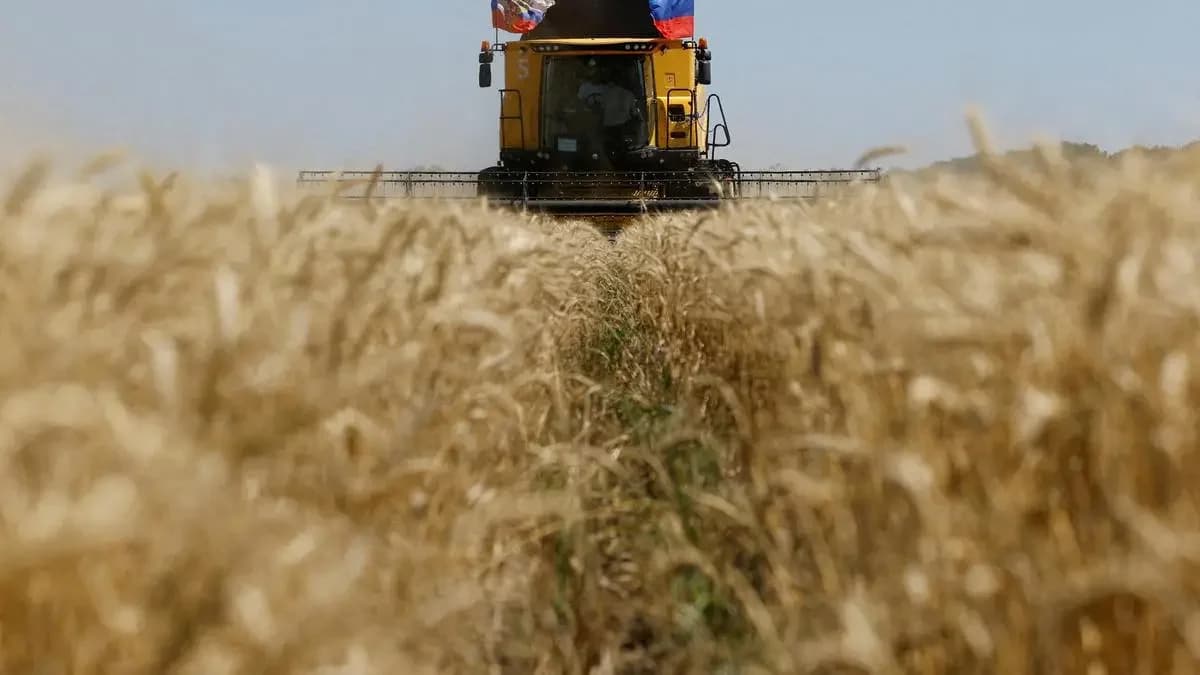
India's rice production is set to fall this year for the first time in a decade, with output potentially declining by 10 million tonnes in 2026-27 from the previous year, as reported by Reuters. This represents the biggest decline since 2009-10, when an El Niño-induced drought curtailed production. B.V. Krishna Rao, president of the Rice Exporters Association, confirmed that "yields will be lower due to reduced rainfall. We estimate that production could decline by around 10 million metric tons." The prolonged dry spell has significantly reduced yield potential in southern and eastern states, with India receiving 15% lower rainfall than normal since the four-month-long monsoon season started on June 1. In some rice-growing states, the deficit is as high as 42%, threatening the country's position as the world's biggest rice producer.
India's basmati rice production is set to decline due to a nearly 4% drop in acreage, mainly in west Uttar Pradesh and Haryana, as reported by The Hindu BusinessLine. The acreage under basmati crop has fallen to approximately 24.9 lakh hectares from 25.9 lakh hectares in 2025, marking the second consecutive year of decline after 2024's 27.5 lakh hectares. According to industry sources, the only positive aspect is Punjab's acreage, which remains unchanged from last year. In Madhya Pradesh, basmati acreage is also lower due to deficient rainfall, with overall rice acreage in the state 1.75 lakh hectares less as of September 4. Last year's domestic basmati production was approximately 10 million tonnes, and the current decline is expected to impact prices this year.
India's rice exports grew only 2.17% year-on-year to $4.81 billion during April-August 2026-27, as reported by The Financial Express. This modest growth represents a significant deceleration from previous performance, with the slowdown attributed to the ongoing West Asia conflict that has disrupted shipping routes and pushed up freight and marine insurance costs. Despite this setback, India remains the world's largest rice exporter, accounting for around 45% of global rice trade. The export growth comes amid supply disruptions and high freight costs due to the West Asia conflict continuing to impact shipments. With local rice prices already rising on expectations of lower production, export prices have reached their highest level in more than a year, making Indian rice less competitive in global markets.
India exported 6.52 million tonnes worth $5.67 billion of basmati rice in 2025-26 with an average realisation of nearly $870 per tonne, according to APEDA data. During April-June of the current fiscal, basmati exports were reported at 1.54 million tonnes worth $1.44 billion with value realisation at about $938 per tonne. In Karnal, Haryana, farmers have started bringing Pusa 1509 variety basmati, currently selling at ₹3,950 per quintal. Traders indicate that basmati crop from both local and neighbouring Shamli district is in good demand due to lower premium Pusa 1121 area and expectations of further price increases. Currently, Indian basmati is quoted at $1,160 per tonne, up 15-20% compared with last year, helping exporters demand better rates from overseas buyers amid ongoing West Asian tensions.
As reported by The Financial Express, Indian exporters have faced a sharp increase in ocean freight and marine insurance costs since February 2026. Freight charges to several Middle Eastern destinations have risen by nearly 1,000% to 3,000%. The logistical challenges extend across several ports in the region, with operations at ports in Iraq, Kuwait, Bahrain, Qatar, Dammam and Jebel Ali heavily disrupted. Alternative shipping routes have increased both transit times and costs, while Jeddah has faced Houthi attacks and tensions around the Bab el-Mandeb route have added to cargo movement concerns. Currently, due to uncertainty over cargo movement in the Strait of Hormuz, most rice and vegetables shipments are being routed through Sohar and Muscat ports of Oman and Khor Fakkan, UAE.
Despite the production crisis, India's massive rice stockpiles are expected to ensure continued export capacity. State reserves of rice, including unmilled paddy, totalled a record 59.6 million tons as of September 1, far exceeding the government's target of 10.3 million tons by October 1, according to Reuters. The crop area of summer-sown rice stood at 42.68 million hectares as of September 11, nearly 4% lower than a year earlier, with summer-sown crops accounting for more than 80% of total production. Nitin Gupta, deputy country head at Olam Agri India, noted that "the area under winter-sown rice is also likely to fall as reservoirs are holding less water than normal." With these substantial reserves, India should still be able to export the grain without imposing restrictions, providing some buffer against the production decline.