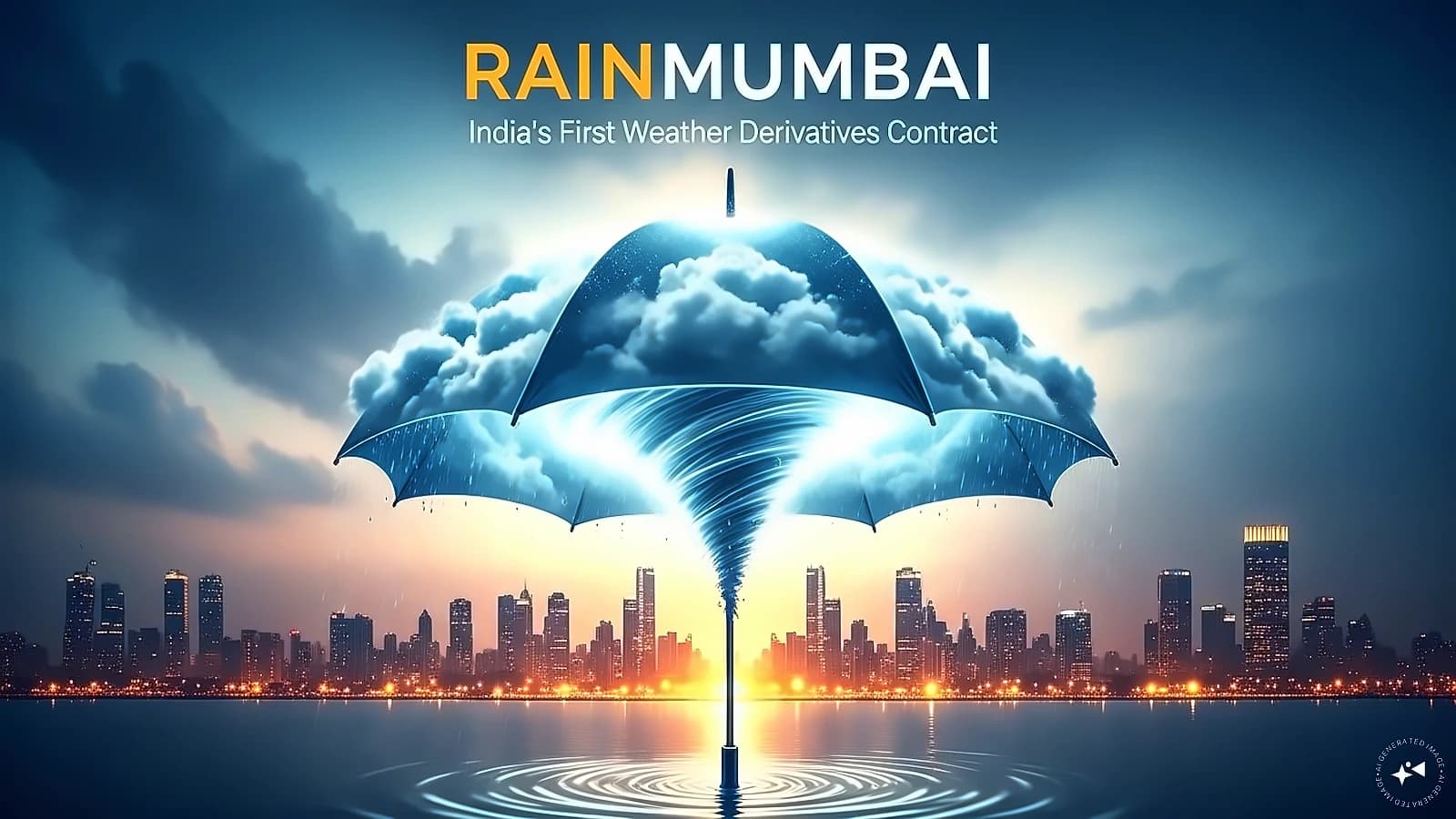
National Commodity and Derivatives Exchange (NCDEX) has launched India's first rainfall-based weather derivatives contract called 'RAINMUMBAI', marking a significant milestone in weather risk management. According to reports from Business Standard, the contract allows businesses to hedge against losses from excessive or insufficient rainfall, with trading commencing May 29, 2026. The contract is based on 30-year historical rainfall data from 1991-2020 sourced from the India Meteorological Department (IMD), providing a scientific framework for weather-linked economic losses. As per NCDEX Managing Director and CEO Arun Raste, the exchange has taken 30 years' monsoon data for each day of the four months to calculate the long period average (LPA) for Mumbai, which comes to around 2,206.7 millimetres.
The contract operates with four contracts aligned with monsoon months of June, July, August, and September, with each month having a long period average (LPA) of 2,206.7 millimetres for Mumbai. As reported by Business Standard, the exchange has set a tick size of ₹50 per 1mm deviation from the 30-year average. For example, if total rainfall after daily deviations reaches 2,152 mm, the difference of 54.7 mm (2,206.7-2,152) multiplied by ₹50 becomes the payout. The contract specifies that individuals cannot hold more than 40,000 lots with a 10% margin requirement to prevent excessive speculation. According to Arun Yadav, product head of NCDEX, the exchange has set the base at 2,206.7 mm and not zero to avoid negative values once actual deviations are added or subtracted.
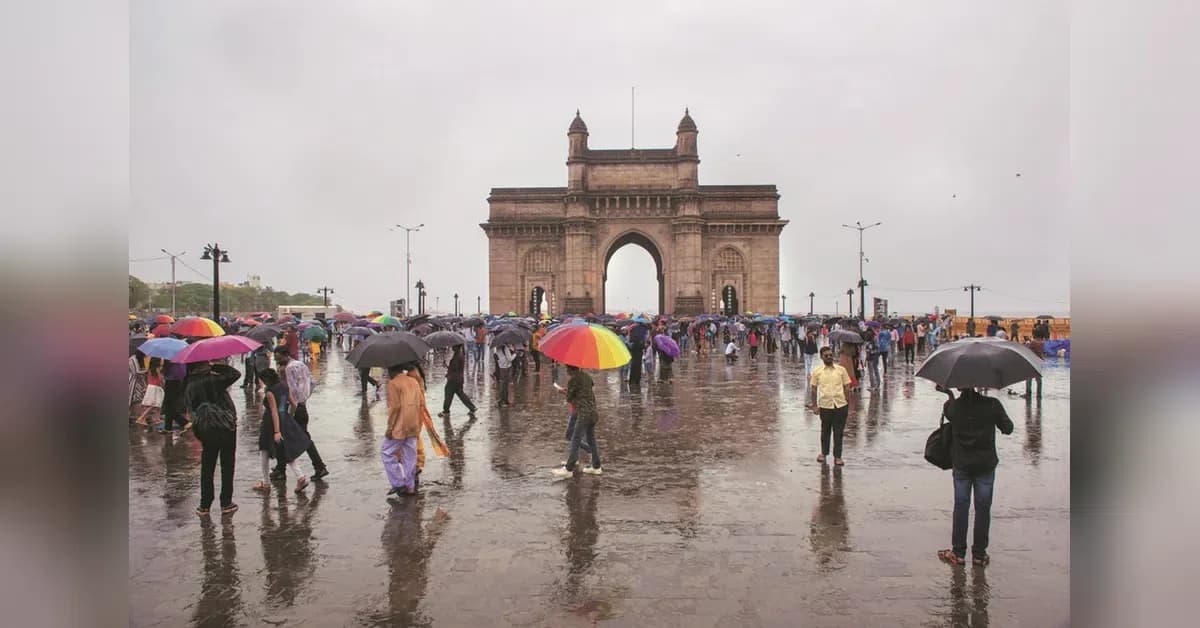
According to Business Standard reports, the contract addresses multiple sectors including agriculture finance, power generation, and transportation. Banks can hedge against non-performing assets from crop damage, while power companies dependent on 40-50% hydropower from Mumbai can protect against low water levels in dams. Transportation companies like app-based taxi aggregators can hedge against waterlogged roads during excessive rainfall. The primary user base includes farmers and agri-businesses carrying Kharif crop risk, construction firms whose project timelines and costs get affected by monsoon activity, power utilities whose demand patterns shift with rainfall, logistics operators whose Mumbai distribution networks are regularly impacted during heavy rain, banks and NBFCs having large agricultural loan portfolios, and airlines such as IndiGo and SpiceJet whose Mumbai operations face recurring disruptions from waterlogging and low visibility. As per Raste, the rainfall index in Mumbai doesn't require loss assessment - it asks what the rainfall is, and settlement happens automatically, making it different from crop insurance which involves intermediaries and has lagged payouts.
As reported by Business Standard, NCDEX will be the first globally to launch a rainfall-based derivatives contract, following Chicago Mercantile Exchange's temperature and snowfall products launched in 1997 and 1999. The exchange plans to develop North-East monsoon contracts for December-March period and heat contracts for April-May based on northern cities. NCDEX studied rainfall patterns of 2024 and 2025 and interacted with over 150 research analysts and financial institutions to refine the product. According to market risk management expert Vijay Sardana, the product can transform risk management for Indian agriculture and rural markets, though success depends on improved data transparency and regulatory oversight. Raste explained that while Chicago launched heat and snowfall indices in 1997, NCDEX studied their products and concluded that snowfall is not useful for India, leading them to focus on rainfall derivatives.