De Beers global CEO Al Cook has expressed robust confidence in India's natural diamond market, projecting demand to double by 2030. This optimistic forecast builds on sustained double-digit growth over the past four years, as Cook emphasized that "it has been four years of double-digit growth in natural diamond demand here." The surge is being driven by rising disposable incomes and national affluence, positioning India as a critical growth engine for the global diamond industry. Cook acknowledged geopolitical turbulence, particularly concerns over potential tariffs on global diamond trade, citing a 50% tariff risk from the United States. However, he remains confident these issues will be resolved, especially with the prospect of a trade agreement between India and the U.S. that could eliminate tariffs. As per De Beers, the company expects India's natural diamond category to grow 10–12% annually, supported by wedding demand and rising self-purchase by working women.
India's diamond market is operating under new regulatory clarity as the Bureau of Indian Standards (BIS) implemented updated diamond standards on January 1, 2026. The new regulations stipulate that the term 'diamond' will apply only to natural diamonds, while laboratory-grown alternatives must now be clearly disclosed as 'laboratory-grown diamond' (LGD) or 'laboratory-created diamond'. As per De Beers Brands CEO Sandrine Conseiller, the BIS ruling reinforces transparency at a critical moment when diamond buying is still evolving in India. The regulatory changes coincide with India assuming the chair of the Kimberley Process in 2026, reflecting the country's growing influence in the global diamond ecosystem. This development builds on previous labeling initiatives, as the Bureau of Indian Standards had introduced mandatory clear labels for lab-grown diamonds last week, reducing confusion between natural and synthetic stones.
India has emerged as the fastest-growing diamond market globally, with demand growing 11% in 2025, according to De Beers CEO Al Cook. Most significantly, India overtook China earlier this year to become the world's second-largest market for natural diamonds, as confirmed by Shweta Harit, CEO of Forevermark. De Beers expects this trend to widen further, cementing India's position after the US. The country also dominates global diamond processing, cutting and polishing nine out of every ten diamonds globally, according to the Gem & Jewellery Export Promotion Council (GJEPC). The GJEPC projects domestic diamond demand to grow from $8.7 billion in 2024 to $17 billion by 2030, forming roughly one-tenth of India's $85 billion gem and jewellery sector. However, this growth faces pressure as prices of LGD have declined by 70–90% globally, making value comparisons unavoidable for increasingly price-conscious Indian consumers.
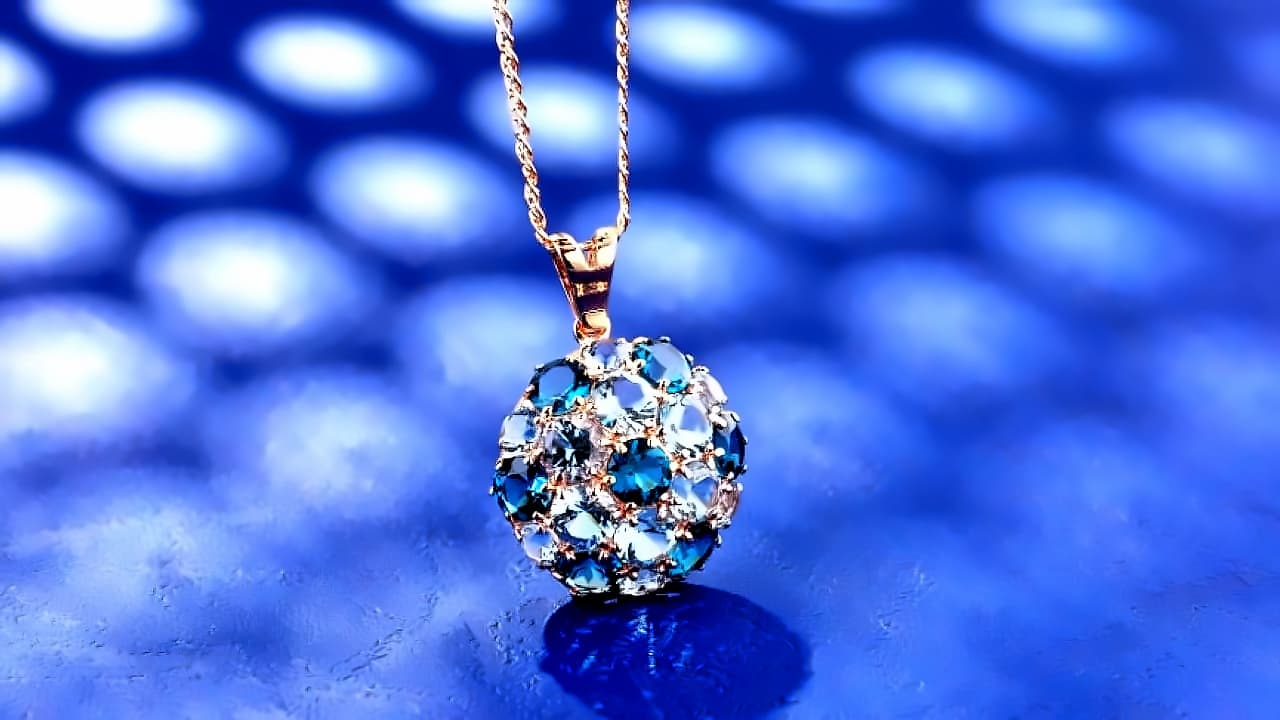
De Beers has opened a 5,000-square-foot flagship store in Mumbai's Khar suburb, making it the largest Forevermark store globally. The Mumbai launch represents a strategic shift from the company's earlier shop-in-shop model that began in 2011 through partnerships with Indian jewellers. As Harit explained, "When you entered another retailer like Malabar Gold & Diamonds, you'd find the Forevermark shop-in-shop. Now we're building a different model where you have Forevermark on the door." Having opened its first four stores last year, the company plans to expand to 20–25 stores by the end of 2026, with a long-term ambition of 100 stores by 2030 and $100 million in revenue. India is the first market where De Beers is rolling out the Forevermark standalone format at scale, with expansion targeting Tier-2 cities such as Ludhiana, Indore and Bhopal as growth engines. The retail strategy includes building strong CRM capabilities and using the Mumbai flagship's event spaces for community engagement and repeat customer interaction.
The India expansion comes as De Beers Group faces significant revenue pressures globally. The company reported a 23% year-on-year revenue decline to $3.3 billion in 2024, driven by a 25% drop in rough diamond sales to $2.7 billion amid slowing demand, particularly in China. Against this backdrop, India has emerged as a counterbalance to global market challenges. Conseiller draws clear distinctions between natural and lab-grown diamonds, comparing them to "a Picasso and a copy of a Picasso" that don't have the same price or value. She argues that LGD behave like technology products—manufactured at scale, with unlimited supply and declining prices, while natural diamonds derive value from scarcity, provenance and the energy-intensive process of formation. Regarding competition, De Beers views lab-grown diamonds and natural diamonds as distinct propositions capable of coexisting in the market, with the average ticket-size of a sale around ₹1.5 lakh.