India and the United States have concluded a comprehensive framework on 'Securing of Supply in the Mining and Processing of Critical Minerals and Rare Earths', signed by External Affairs Minister S. Jaishankar and US Secretary of State Marco Rubio on Tuesday near the conclusion of Rubio's visit to India. According to the US Embassy & Consulates in India, the agreement creates the framework for a strategic partnership focused on the security of supply through mining and processing. The framework builds on groundwork laid during high-level meetings in Washington, D.C. in February 2026, where Marco Rubio launched the Forum on Resource Geostrategic Engagement (FORGE). The agreement specifically seeks to strengthen resilient and diversified supply chains, while promoting collaboration in financing and effective management of critical minerals and rare earths scrap. This holistic approach addresses the critical need for secure and reliable supply chains for essential minerals used in advanced technologies, with emphasis on related investment opportunities.
The critical minerals framework extends beyond bilateral cooperation to include Japan and Australia as part of the Quad partnership, as announced by India's foreign ministry on Tuesday. According to the US Embassy & Consulates in India, through this framework, the U.S. and India will engage in international efforts to protect sensitive supply chains from 'coercive market practices' and reduce their 'collective vulnerability to single-source monopolies'. The agreement specifically mentions cooperation in mining, processing, recycling and related investment, indicating a comprehensive approach to addressing supply chain security for these essential materials. The framework comes amid intensifying global competition over access to critical minerals such as lithium, cobalt, nickel and rare earth elements, which are essential for electric vehicles, semiconductors, clean energy technologies and defence manufacturing. The initiative specifically targets nearly $20 billion public-private investment in stable critical mineral supply chains.
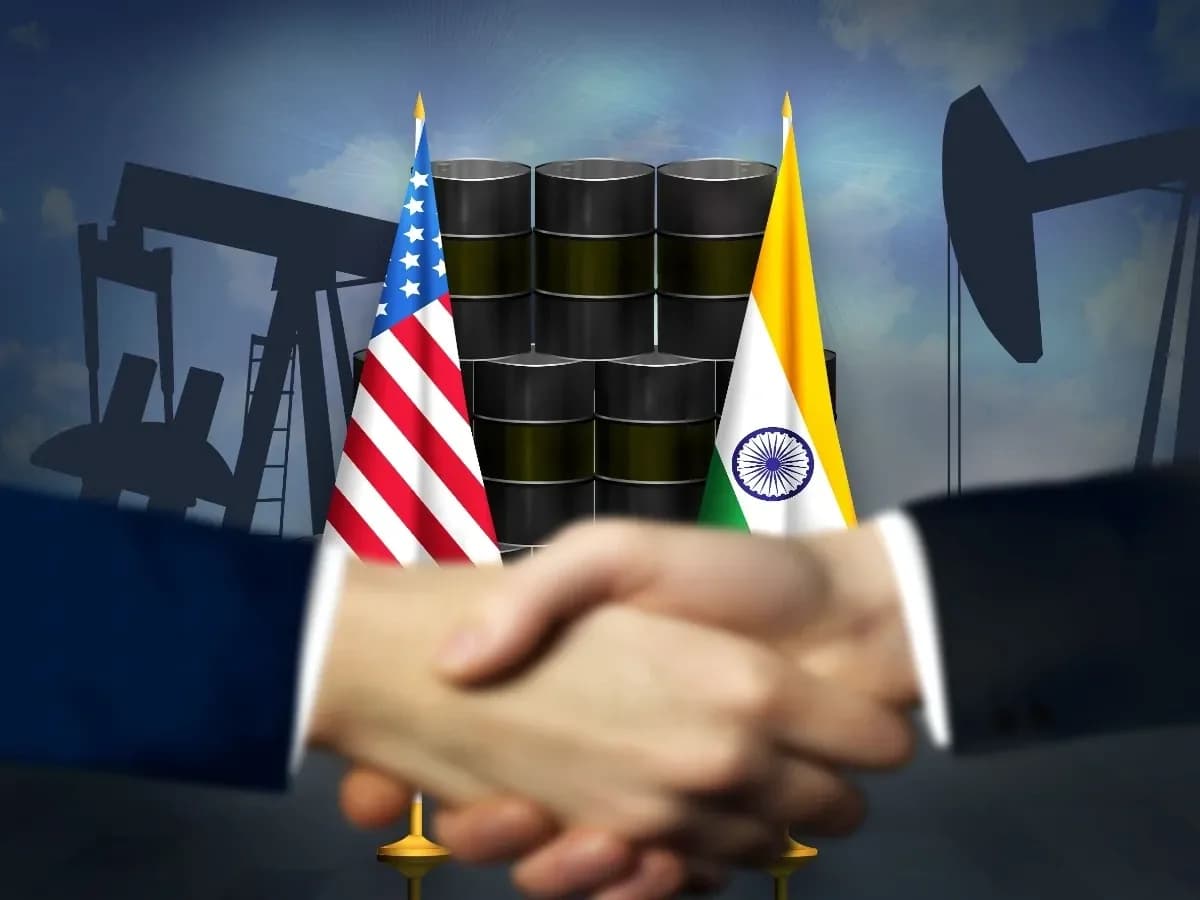
The US government has announced significant mobilization of resources to secure critical mineral supply chains, with support for projects exceeding $30 billion in letters of interest, investments, loans and other support in partnership with the private sector. According to the latest reports, these investments, along with Pax Silica and renewed diplomatic and commercial engagement, are helping mobilize private capital beyond government spending. The efforts span both domestic and international projects to strengthen U.S. national security and economic competitiveness. The framework specifically mentions cooperation in mining, processing, recycling and related investment, indicating a comprehensive approach to addressing supply chain security for these essential materials.
India, which officially recognizes 30 critical minerals, has significant untapped potential in the sector. According to government statistics, the country has over 13 million tonnes of monazite, a phosphate mineral containing rare earth elements. However, as reported by the US International Trade Administration (ITA), India produces only four critical minerals: copper, graphite, phosphorous and titanium. To address this gap, New Delhi announced plans to roll out an incentive scheme to bolster its critical mineral processing capacities. The framework builds on India's February inclusion into Pax Silica, a Washington-led initiative to counter China's dominance in emerging sectors such as artificial intelligence. This partnership comes at a time when secure access to critical minerals has become increasingly important for both nations' technological capabilities.
The framework addresses critical supply chain vulnerabilities created by China's export controls on several rare earth elements and strategic metals imposed in 2025, which increased fears of supply disruptions in technology, defence and clean energy sectors. According to recent data, China dominates global rare earth processing and supply chains, while Brazil has the second-largest reserves globally, and India has the third-largest rare earth reserves. The group of 17 strategic metals used in clean energy, high-tech manufacturing and strategic industries are essential for advanced manufacturing and next-generation technologies. The partnership supports reliable and resilient mineral supply chains, reinforcing objectives outlined by Donald Trump and Narendra Modi in the United States-India Joint Leaders' Statement, with focus on securing and diversifying supply chains for these essential materials.