
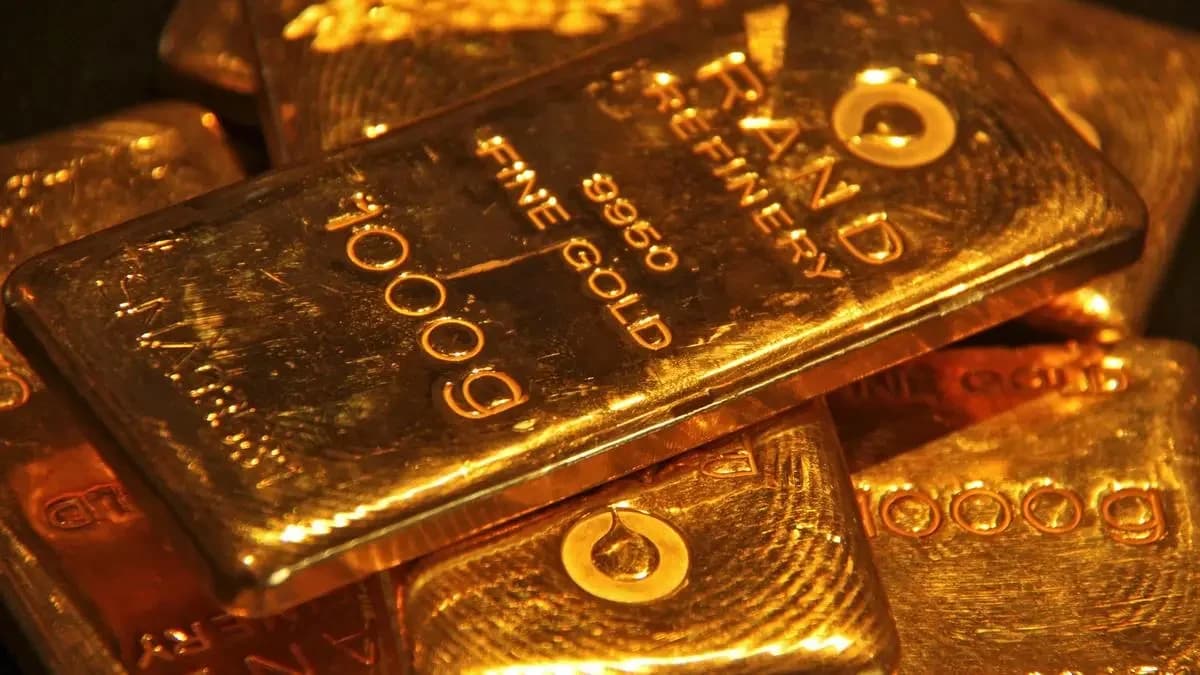
Gold prices witnessed a sharp uptick on Tuesday, with 24 karat gold increasing by ₹5,400 to ₹1,53,980 per 10 grams (₹15,398 per gram) according to Goodreturns data. 22 karat gold surged by ₹500 to ₹1,41,150 per 10 grams (₹14,115 per gram) and 18 karat gold rose by ₹410 to ₹1,41,150 per 10 grams (₹11,549 per gram). Silver prices also moved higher, reaching ₹2,90,000 per kilogram (₹290 per gram), benefiting from the renewed momentum in precious metals. The Indian Rupee hit a fresh all-time low of ₹95.73 against the US Dollar on Tuesday, May 12, boosting domestic bullion sentiment and supporting precious metals prices. International gold rates declined to $4,700 per ounce on Tuesday, as per Trading Economics data, after the precious metal had surged to its four-week high mark.
India has no plans to increase duties on gold and silver imports, according to a government source. The announcement came on Monday, a day after Prime Minister Narendra Modi urged people to avoid buying gold for a year due to the impact of the Iran war. As reported by The Hindu BusinessLine, this policy decision was made in response to recent geopolitical developments affecting precious metals markets. However, fresh speculation has emerged that the government may be preparing contingency measures if the geopolitical crisis in West Asia deepens, with policy circles interpreting Modi's remarks as an indication of potential duty hikes. Additional pressure came from Modi's appeal to defer non-essential gold purchases for a year in an effort to protect the country's external balances.
India's gold imports have reached record levels of $71.98 billion in FY2025-26, marking a sharp increase from $58 billion in FY2024-25. According to PTI, this surge came after the Union Budget of July 2024 slashed customs duty on gold from 15% to 6%, triggering a sharp rise in imports. Gold now accounts for roughly 8-10% of India's total merchandise import bill and contributes nearly one-fifth of the country's overall trade deficit. The increase in precious metals imports has widened the country's trade deficit to $333.2 billion in 2025-26. India's current account deficit for FY2025-26 is estimated at around 0.9-1.1% of GDP, or roughly $28-32 billion, higher than FY2024's relatively comfortable 0.7% of GDP, showing how pressure on India's external balances is beginning to rise again.
India maintains its position as the world's second-largest consumer of gold and the largest consumer of silver. According to reports from The Hindu BusinessLine, this significant market position gives India substantial influence in global precious metals trade and consumption patterns. The country's substantial demand for both metals makes policy decisions regarding import duties particularly significant for global markets. Currently, gold imports into India attract customs duty and other levies, taking the effective import tax to roughly 6 percent in many cases, as reported by Moneycontrol. India imports the overwhelming majority of the gold it consumes, with gold imports must be paid for in foreign currency, primarily U.S. dollars. This creates additional dollar demand in the foreign exchange market when gold demand surges, particularly when combined with elevated crude oil prices.
Economists suggest that if Indian households stop buying gold for a year, the current account deficit would narrow sharply, potentially compressing it back towards the more comfortable 0.4-0.6% of GDP range. According to Infomerics Ratings, a lower current account deficit would ease external financing pressures, improve investor confidence and strengthen the rupee. The rupee had touched an all-time low of around ₹95.43 against the US dollar earlier this month amid oil price pressures, capital outflows and rising import demand. India's foreign exchange reserves had peaked at $704.9 billion in September 2024 before falling sharply as the RBI intervened repeatedly to stabilise the currency, falling to around $620-625 billion by January 2025 before recovering partially later. Manoranjan Sharma of Infomerics Ratings noted that gold imports are among India's largest non-oil imports and a sharp fall in purchases could meaningfully reduce pressure on the economy's external balances.
