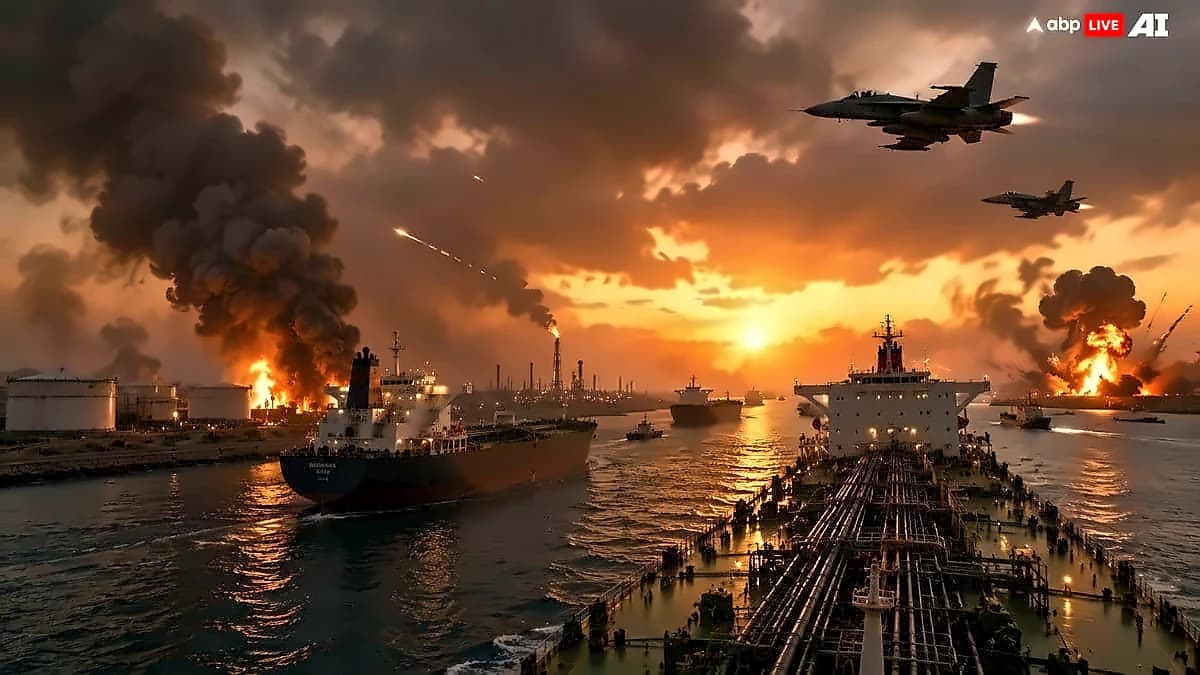
Oil prices climbed more than 2% on Wednesday, July 8 as renewed escalation between the United States and Iran raised concerns over potential disruptions to global oil supplies. Brent crude oil futures gained 2.4% or $1.80 to trade at $75.96 per barrel, while West Texas Intermediate (WTI) crude futures rose 2.6% to $75.96 per barrel as of 7:35 AM IST. The latest surge followed a sharp decline in the previous session when oil prices traded below the $70 mark, but both benchmarks recovered nearly 3% on Tuesday as investors reacted to rising geopolitical risks in the Middle East. The jump came after Washington launched military strikes in response to Iranian attacks on commercial vessels in the strategically important Strait of Hormuz, with the US military completing a new round of retaliatory strikes against Iran, hitting more than 80 targets. US President Donald Trump said the ceasefire between the US and Iran was "over" on July 8, marking the most serious escalation since the two sides reached a ceasefire agreement in mid-June that had brought an end to the conflict. The US and Iran exchanged fresh strikes early Sunday after Tehran attacked a vessel transiting the Strait of Hormuz, alleging it had sailed through an unauthorised route, further clouding prospects for a resolution to the conflict.
India's strategic petroleum reserves demonstrated their indispensable role as the first line of defence during the crisis. As reported by Business Standard, refiners collectively held around 190 million barrels of commercial reserves — crude, LPG, gasoline, diesel and jet fuel — when the war began, representing nearly 35 days' worth of national consumption. Union Oil Minister Hardeep Singh Puri confirmed on July 2 that India has crude oil stocks sufficient for 60 days, LNG inventories for 60 days and LPG inventories for 45 days. India's crude import arrivals dipped slightly to around 4.7-4.8 million barrels per day through March and April from an average of 5.3 million bpd over January-March, but bounced back above 5 million bpd through May and June. Russia became the anchor supplier in June, with arrivals climbing to around 2.56 million bpd, accounting for just over half of India's crude imports during the month. The reserves provided crucial buffer against potential supply disruptions and helped maintain energy security during the volatile period.
Refineries demonstrated remarkable operational flexibility by quickly reconfiguring operations to maximize domestic LPG production. According to Business Standard, within days of the war outbreak, refineries were instructed to redirect propane, butane and associated hydrocarbon streams, boosting daily domestic LPG production from roughly 35,000 mt to around 54,000 mt within a week. Some refineries that had never previously produced LPG were reconfigured to do so, substantially reducing import requirements and exposure to the increasingly stressed international LPG market. The government also pursued quiet energy diplomacy with Tehran to secure safe passage for Indian-flagged LPG tankers, with at least 10 Indian-flagged vessels completing transit between March and May. This operational agility helped India maintain energy security while minimizing exposure to volatile international markets.
Years of crude supply diversification proved critical during the crisis, with Indian refiners steadily investing in infrastructure to expand processing capabilities. As reported by Business Standard, India now imports crude from at least 41 countries, up from 27 just 12 years ago. Relatively small producers including Congo-Brazzaville, Colombia, Azerbaijan, Egypt, Gabon, Sudan and Cameroon were tapped for cargoes, while imports from the US increased as Washington encouraged higher exports to offset West Asian supply losses. Indian refiners have secured crude oil supplies through August and do not foresee any immediate supply disruptions, according to a refinery executive who requested anonymity. However, vessel movements have already fallen sharply, from around 20 vessels on July 6 to just 11 the following day, while traffic so far today appears to have come to a complete halt through the Strait of Hormuz. The government does not plan to immediately revisit restrictions on LPG and natural gas supplies to industrial users despite the renewed tensions.
The collapse of US-Iran peace talks has pushed crude oil prices to $79 per barrel from a low of $70 per barrel last week, once again threatening to push up India's oil import bill and inflation. Brent crude prices rose to nearly $79 a barrel, its highest level since June 19, as markets reacted to the renewed geopolitical tensions. "Energy prices would shoot up with the closure of Hormuz again. Procurement costs for September and October are likely to rise. However, we are in a comfortable position this time. We have secured crude supplies till August and tied up LPG imports. We might face some issues with LNG, but those should be manageable," a senior refinery executive said. "The risk premium on crude is likely to increase by $10-$15 a barrel, pushing oil prices to $80-$85 a barrel," said Hitesh Jain, lead analyst at Yes Securities. "In the near term, higher crude prices present a negative macroeconomic implication for India, as a sustained rise in oil prices could widen the oil import bill, put pressure on the current account deficit, add to inflationary pressures and keep the rupee under pressure,"** said Maulik Patel, Head of Research at Equirus Securities. The government's decision to cushion retail fuel prices through absorbing under-recoveries and excise duty reductions helped prevent sharp increases in diesel and LPG prices from feeding into broader economic inflation, but the current crisis has reinforced the importance of maintaining adequate energy reserves and supply diversification strategies.