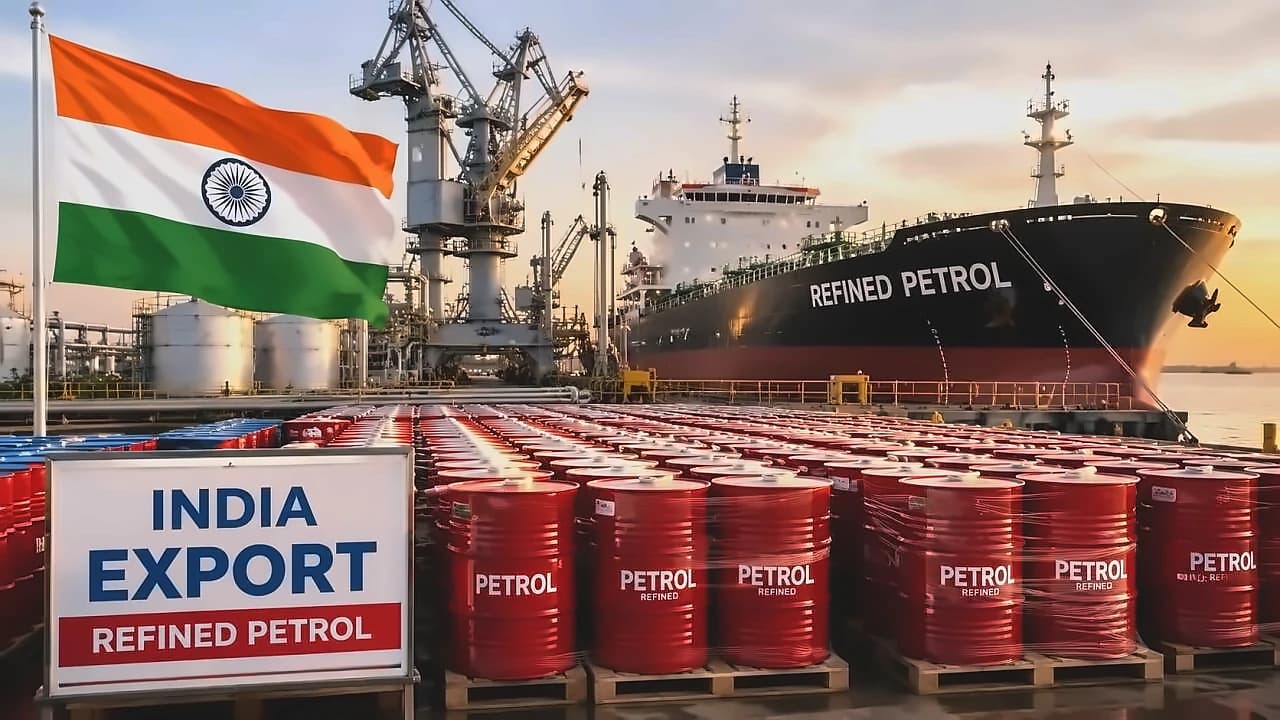
The global fuel supply crisis has reached critical levels, with Big Oil executives now warning that global fuel inventories are running dangerously low. As reported by Bloomberg, the wars in the Middle East and Ukraine, plus China's caps on fuel exports—and Russia's ban on diesel exports—have effectively slashed global refining capacity by as much as 10%. Exxon's chief executive stated that "I've never seen the available capacity relative to demand as low as it is today," while Shell's Wael Sawan noted that "Today, what you're seeing is all the price signals that we are short on diesel and gasoline." The crisis has been compounded by the U.S. and Israeli war against Iran entering its sixth month, with Rabobank senior energy strategist Joe DeLaura noting that "We're in a diesel supply crunch right now because none of the Persian Gulf refineries can get product out." According to Chevron's chief financial officer Eimear Bonner, "The geopolitical uncertainty has tightened markets and is reinforcing the importance of reliable supply."
India has successfully completed the addition of 646,000 barrels per day of new refining capacity during the April 2026-March 2027 financial year, according to Energy Intelligence Group. This milestone was achieved through four expansion projects and one greenfield facility that were set for completion during this period. The expansion brings India's total installed capacity to 290 million tonnes, or 5.8 million barrels per day, representing the highest annual capacity addition in decades. Throughput could rise to as much as 310 million tonnes as India's nameplate refining capacity typically exceeds actual production levels. The timing of this expansion proves particularly strategic as global refining capacity faces unprecedented constraints.
India is significantly expanding its strategic petroleum reserves through major infrastructure projects. ONGC will reserve half of its planned 1.75 million metric tons (about 13 million barrels) oil-storage facility at Mangaluru, Karnataka, where its Mangalore Refinery & Petrochemicals subsidiary operates a refinery that can process 300,000 barrels of crude oil per day. Junior oil minister Suresh Gopi announced that India also has the ability to store crude oil, petroleum products, and offshore facilities to meet 74 days' worth of its net crude import requirements. The country is planning to build a strategic storage facility of about 4 million tons at Chandikhol in Odisha, with a new facility of 2.5 million tons at Padur in southern India. According to Gopi, ISPRL has acquired land for the Chandikhol Project, which is estimated at ₹90 billion.
Petroleum product exports fetched $12.7 billion from sales of 11.3 million tonnes during April-June, equivalent to 10 per cent of India's total gross exports, according to oil ministry data. This compares with $9.1 billion from sales of 15 million tonnes a year earlier, reflecting strength in product prices. Overall exports of premium clean products — diesel, jet fuel and gasoline — surged to 1.37 million barrels per day in July, the highest since September 2025, according to Kpler trade data. Exports to Europe reached 229,000 barrels per day, the highest since November 2025, following a rebound led by Reliance Industries.
The global fuel crisis has pushed refinery utilization rates to unprecedented levels, with major oil companies reporting record-breaking operational rates. According to Bloomberg, Exxon's refineries along the Gulf Coast have been running at a utilization rate of 95%, while Chevron's refineries have been running at 97%. Most notably, Shell's refineries have actually topped 100% utilization rates, clocking in at 102% over the second quarter. However, this unsustainable level of operation poses significant risks, as maintenance season typically begins in September and lasts through October. As the owner of a freight brokerage told the Wall Street Journal, "Fall is particularly difficult, kind of like a perfect storm right now." The constraint pain point in the energy system is refining, according to Exxon's chief financial officer Neil Hansen, who noted that "This is something that perhaps the market isn't fully focused on."
Most of the completed capacity additions will go towards meeting domestic demand of around 242 million tonnes, which is expected to grow 3-4 per cent annually. However, the expansions will also free up capacity at private sector refiners, led by Reliance Industries, for higher-margin exports. According to Kpler data, Europe was one of Reliance's most lucrative export markets, accounting for 21-26 per cent of its exports by volume, though that share shrank to almost nothing in February after EU sanctions on Russian oil shipments took effect. The new capacity will be particularly welcomed in a products market expected to remain tight well into 2027, with current crack spreads running at record highs due to the global supply constraints. Shell, Exxon and Chevron all say that prices at the pump are set to stay higher, regardless of where crude oil prices go, as the world runs short on fuels.