Coal Minister G Kishan Reddy announced on Wednesday that the government has created a ₹40,000 crore corpus for scientific mine closures. According to reports from The Hindu BusinessLine and Business Standard, Reddy stated that this dedicated corpus of over $5 billion demonstrates the government's long-term commitment to environmentally responsible mining, ecological restoration, and socio-economic development of mining-affected regions. The ministry has now released its first comprehensive report on scientific mine closure, marking the first account of scientifically closed coal mines since Independence.
Speaking at the launch of Aaroh, India's first report on scientific mine closure and repurposing practices, Reddy revealed that India has scientifically closed 42 coal mines, including 33 blocks, in the last year alone. As reported by The Hindu BusinessLine and Business Standard, the ministry has set a target to scientifically close approximately 147 mines in the next 2 to 3 years, supported by a comprehensive ecosystem for mine closure. The latest report showcases how structured mine closure can support long-term regional development through ecological restoration and sustainable land use planning.
For the first time, 25 per cent of the approved mine closure cost has been earmarked for community development, creating an investment potential of nearly ₹10,000 crore over the next decade. According to the Minister's statement, this allocation represents a fundamental shift in how mine closure is approached, viewing it not as the end of mining but as the beginning of new opportunities for people, communities, and sustainable development. The report emphasizes how these initiatives aim to transform mine closure into an opportunity for ecological restoration, economic diversification and community development.
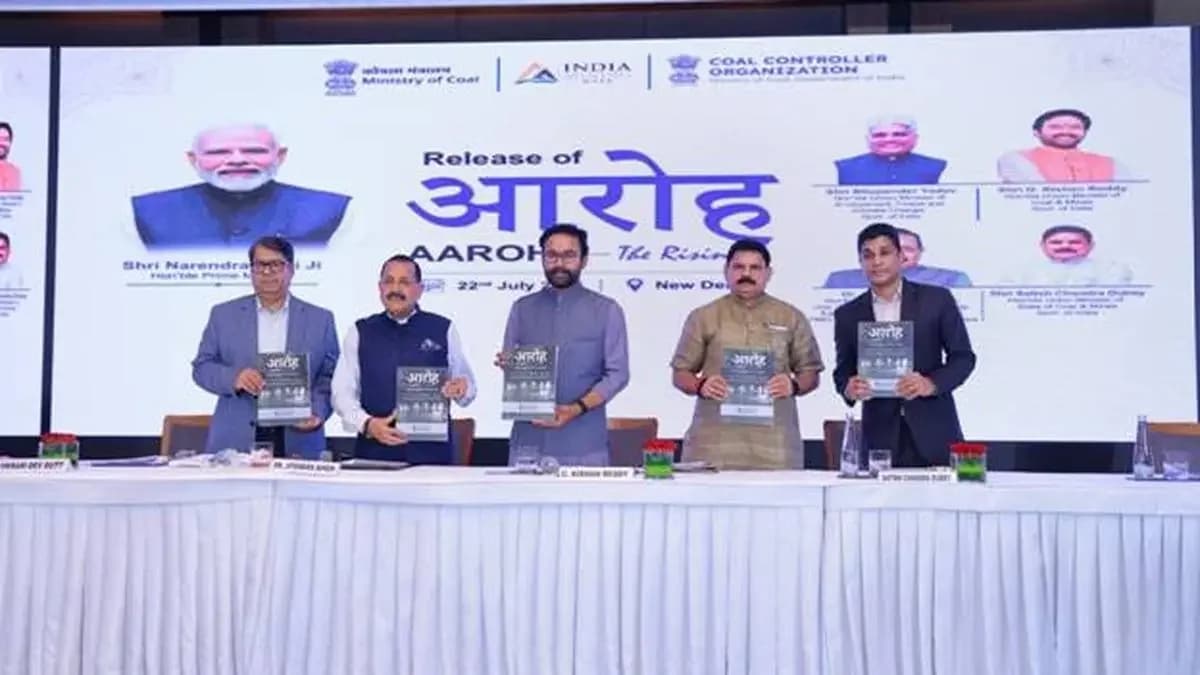
The Coal Ministry has signed an implementation agreement with Germany's Deutsche Gesellschaft für Internationale Zusammenarbeit (GIZ) to strengthen technical cooperation on scientific mine closure and post-mining development. As reported by Business Standard, Germany will provide technical cooperation in areas such as scientific mine closure planning, mine repurposing strategies, technical capacity building, knowledge sharing, and adoption of international best practices. The collaboration is expected to strengthen institutional capabilities in India and improve the long-term sustainability of mine closure projects while expanding India-Germany cooperation in the mining sector.
The Coal Ministry has established a comprehensive ecosystem for mine closure through the RECLAIM Framework, SUVIKALP digital platform, A.R.T.H.A. Framework and District Collector-led Mine Closure Advisory Committees. According to Coal Secretary Vikram Dev Dutt, the Ministry of Coal has transformed mine closure from a regulatory requirement into a planned, people-centric process through the Mine Closure Guidelines, 2025. The ministry will also sign an implementation agreement with Germany's Deutsche Gesellschaft für Internationale Zusammenarbeit (GIZ) to promote technical cooperation on scientific mine closure and post-mining land use through knowledge sharing and institutional capacity building, with a Euro 10 million grant from the German Government and the European Union.