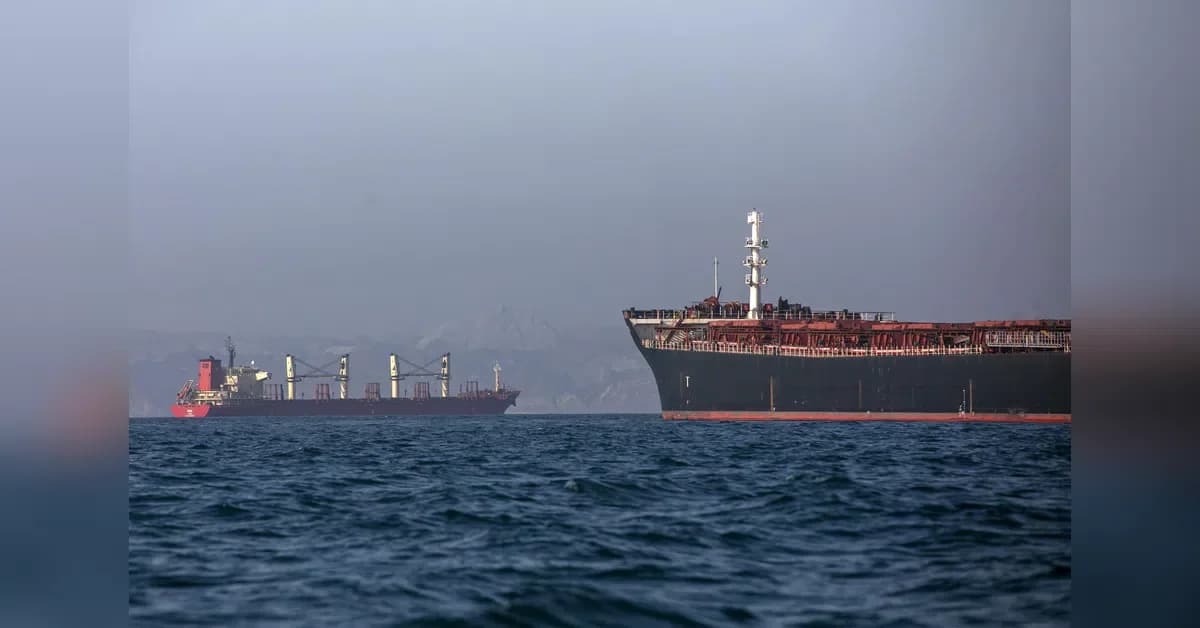
India has successfully managed its crude oil supply situation during the Middle East conflict by implementing a diversified procurement strategy led by Russian oil (30-37% or 1.5-1.7 million barrels per day), alongside Saudi Arabia (0.65-0.70 million barrels per day) and the UAE (0.60-0.62 million barrels per day), with additional barrels from Venezuela, Brazil, and minimal Iranian cargoes, according to latest government data. This diversification strategy has enabled India to maintain crude availability resilience despite the Strait of Hormuz being de facto closed since late February, which is responsible for one-fifth of the world's crude oil trade. The country has around 60 days of petroleum supplies in various forms including strategic reserves, but with 20% of the world's crude supply disrupted over 2.5 months of war, alternative sourcing routes have become crucial for maintaining energy security.
The US has extended sanctions waiver on Russian oil purchases until June 17, 2026, providing significant relief to Indian refiners who rely heavily on discounted crude imports. According to an order by the US Department of the Treasury's Office of Foreign Assets Control (OFAC), countries are authorized to procure Russian crude oil until June 17 that was loaded on vessels on or before April 17. US Treasury Secretary Scott Bessent confirmed that the temporary 30-day general license will help stabilize the physical crude market and ensure oil reaches energy-vulnerable countries. The extension addresses concerns that Indian refiners would face payment constraints and other related issues if the waiver was not renewed.
To circumvent the Strait of Hormuz closure, Middle East supplies are being rerouted through Saudi's East-West pipeline to Yanbu (Red Sea) and the UAE's Habshan-Fujairah pipeline, together offering significant bypass capacity, enabling flows via Yanbu to India and Fujairah to India while non-Gulf crude continues on open-ocean routes. However, these re-routings add 4-10 days via the Red Sea route and other longer global diversions, increasing freight costs significantly. India has also increased its reliance on Venezuelan crude imports, which have returned to the supply mix during the current crisis, providing additional diversification beyond traditional Middle Eastern sources.
India has maintained its record-breaking Russian crude imports despite the waiver extension, with Indian refiners purchasing 1.87 million barrels per day (bpd) of Russian oil in May so far, approximately 40% of India's total oil imports, according to data from maritime intelligence firm Kpler. This represents a continuation of the surge that began before the earlier waiver lapsed on May 16, 2026. As per Kpler reports, Russian crude shipments to India averaged about 2.3 million barrels per day during the first half of May, the highest daily level ever recorded. Refiners rushed to secure cargoes before the May 16 deadline, with full-month imports likely to average around 1.9 million barrels per day, close to earlier highs.
India will continue purchasing crude oil from Russia even after the expiry of the temporary United States sanctions waiver. A senior government official confirmed on May 18 that Indian refiners would continue buying crude oil from Russia, even in the absence of a US waiver. Sujata Sharma, joint secretary at the Ministry of Petroleum and Natural Gas (MoPNG), emphasized that Indian oil companies have been purchasing Russian crude before and during the waiver period, stating there should be commercial sense for oil marketing companies to continue purchasing Russian oil. This represents India's firm stance on maintaining energy security through strategic sourcing, with the US waiver enabling Indian oil firms to procure crude oil from sanctioned Russian entities, ensuring fuel availability as supply remains constrained from India's traditional suppliers in West Asia.