India has experienced an unprecedented heat wave that has broken global temperature records, with 50 of the world's 50 hottest cities located in India on April 27. The northern city of Banda recorded a blistering 115.2°F (46.2°C), marking the highest recorded temperature on Earth that day. According to CNN, this climate event represents no modern precedent, with the extreme heat arriving unusually early in the season and shattering hundreds of local records. The alarming aspect is the lack of overnight relief, with minimum temperatures remaining as high as 94.5°F (34.7°C), creating a prolonged period of intense heat stress across the country. A recent scientific study by World Weather Attribution has found that climate crisis has tripled the likelihood of such extreme heat events, with temperatures reaching the high 40 degrees Celsius now occurring roughly once every five years in today's climate, compared to only one-third as likely in a pre-industrial climate.
The India Meteorological Department has issued comprehensive warnings for heatwave conditions affecting multiple Indian states. West Rajasthan is expected to face severe heat in isolated pockets between May 16-21, with the weather agency warning of severe heatwave conditions in some parts between May 18-21. Uttar Pradesh is likely to experience heatwave conditions throughout the same period, with severe heatwave conditions forecast in some areas on May 18-19. The weather agency has also predicted heatwave conditions for Punjab, Haryana, Delhi, Madhya Pradesh, Chhattisgarh, Jharkhand and parts of Maharashtra over the next few days. As per Business Standard, IMD has forecast an intensifying heatwave across north India till May 21, with severe conditions likely in Rajasthan and Uprising temperatures across the region. The forecast indicates that widespread heatwave conditions will prevail across Rajasthan, Uttar Pradesh, and multiple states from May 16 to 21, as the mercury continues to rise over the coming days.
The highest maximum temperature of 45.6°C was recorded at Amravati, Maharashtra, on May 15. According to IMD reports, maximum temperatures are expected to rise gradually by 2-4 degrees Celsius in northwest India till May 18, while the western Himalayan region could see a sharper increase of 4-6 degrees Celsius by May 21. Northwest India is expected to witness isolated light-to-moderate rainfall with thunderstorms, lightning, and gusty winds reaching 40-50 km/h over Jammu-Kashmir-Ladakh, Himachal Pradesh, Uttarakhand, and East Rajasthan on May 16. Hot and humid conditions are very likely to prevail in parts of Konkan and Goa, while warm night conditions are likely in parts of Madhya Pradesh and Vidarbha on Saturday. The latest IMD forecasts indicate severe heat conditions in central and western districts, with dry heat dominating and sharp afternoon temperature rise expected across the region.
The Southwest Monsoon is likely to set in over Kerala on May 26 with a model error of ±4 days, as reported by IMD. Northeast India will experience scattered to fairly widespread rainfall with thunderstorms and gusty winds in Nagaland, Manipur, Mizoram, and Tripura between May 16-17. Isolated heavy rainfall is forecast over Arunachal Pradesh and Assam-Meghalaya between May 16-21. East India will face thundersquall with wind speeds reaching 50-60 kmph, gusting to 70 kmph, over the Andaman & Nicobar Islands between May 16-18. Arunachal Pradesh, Assam, Meghalaya, Sub-Himalayan West Bengal and Sikkim are expected to receive heavy to very heavy rainfall between May 16-18, while a similar forecast has been issued for Kerala, Tamil Nadu, Puducherry, Karaikal and parts of Karnataka. The IMD added that conditions are favourable for the advance of the southwest monsoon over parts of the South Bay of Bengal, Andaman Sea and Andaman & Nicobar Islands during the next 24 hours. However, the latest forecasts indicate weakening monsoon support conditions are associated with developing El Niño signals, which may affect the monsoon's progression.
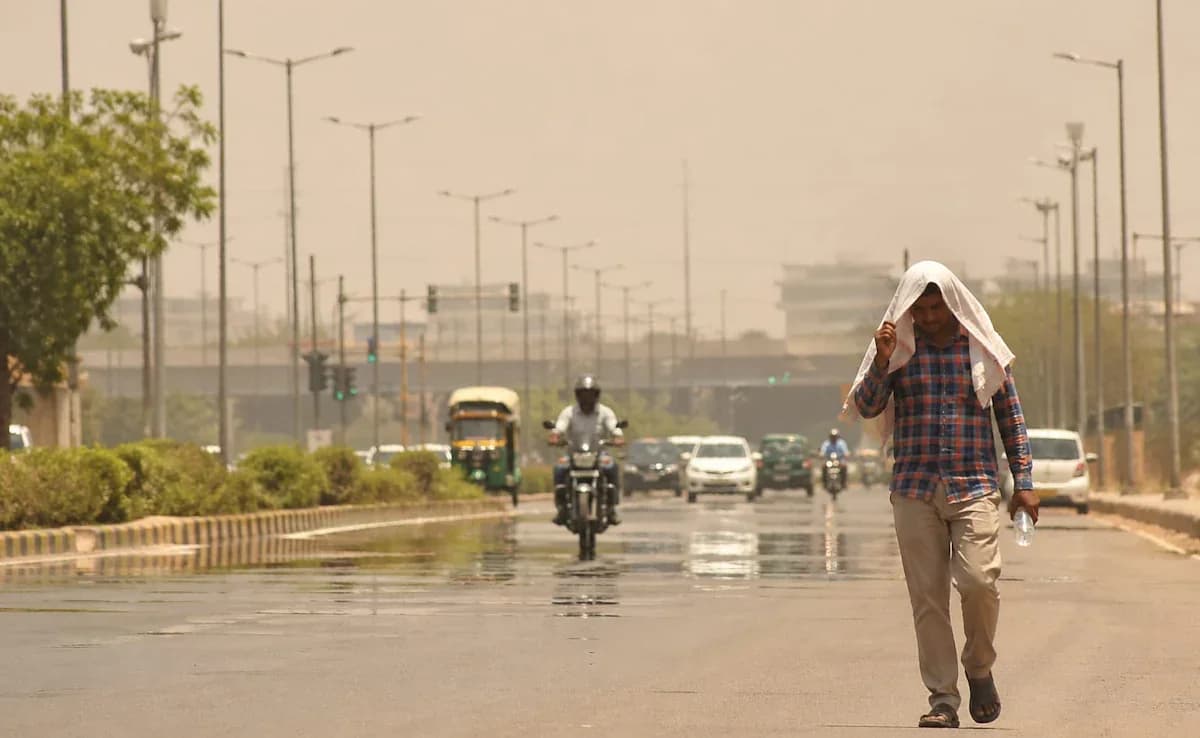
The unprecedented heat wave has triggered a multi-sector crisis threatening public health, food security, and infrastructure. As per CNN, extreme heat remains one of the deadliest forms of weather, placing immense physical stress on outdoor laborers and the elderly while simultaneously crippling power grids and drying up vital water supplies. The heatwave this year coincided with state assembly elections across several Indian states, with large numbers of election officials, voters and census enumerators working outdoors in peak heat. In Pakistan, deaths were recorded near mosque areas, highlighting vulnerabilities in crowded public spaces with limited ventilation. The heat also drove record electricity demand across the region as cooling needs surged and agricultural drought conditions affected more than one million square kilometres, threatening food security and livelihoods for millions who depend on farming. According to World Weather Attribution, climate crisis has tripled the likelihood of such extreme heat events, with the window of dangerous temperatures growing longer every year. Researchers warn that dangerous heat that would have once been rare is fast becoming regular weather, with the greatest acceleration happening in April, earlier in the season than expected, making early-season heat the most dangerous as populations have not yet acclimatised.