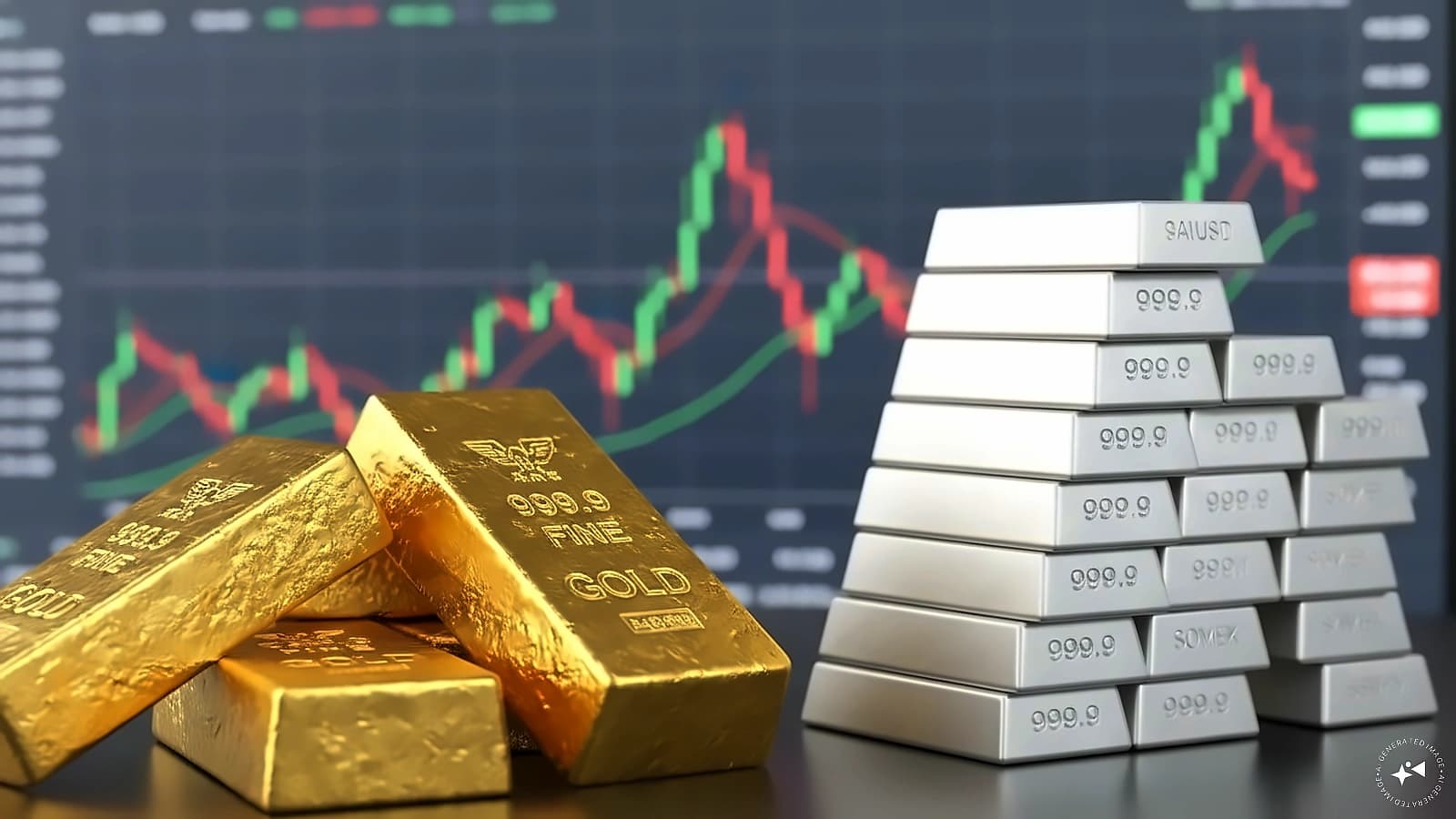
Gold prices gained 0.52% to $4,183.8 per ounce on October 5, as reported by Reuters. US gold futures for December delivery rose 0.6% to $4,186.40, indicating continued strength in precious metals markets. Spot silver gained 1.7% to $61.47 per ounce, platinum was up 0.6% to $1,708.48, and palladium firmed 0.6% to $1,175.04, indicating broad-based strength across precious metals. In the domestic market, gold prices stood at ₹1,50,570 per 10 grams, while silver was at ₹2,26,630 per kg on Monday, October 5. Around 6:25 a.m., 22K gold stood at ₹1,38,023 per 10 gm while silver 925 sterling was at ₹2,09,633 per kg, as per Bullion.co.in. In Mumbai, 22K gold was at ₹1,37,775 per 10 gm, Delhi price stood at ₹1,37,537, Chennai at ₹1,38,178, Kolkata at ₹1,37,592, Bengaluru at ₹1,37,885, and Hyderabad at ₹1,37,995 per 10 gm. On Thursday, October 1, gold futures expiring December 4, 2026 declined marginally but remained above the crucial ₹1,50,000 mark and ended the session at ₹1,50,390 on MCX.
The latest inflation statistics from the US showed US inflation increased less than expected in August, with price pressures being more moderate than previously reported, as reported by The Economic Times. This data has significantly shifted Federal Reserve expectations, with traders now seeing a 22% probability of a Fed rate hike in October, down from 64% a week ago, while still pricing in an 87% chance of an increase in December, according to the CME FedWatch Tool as reported by Reuters. US job growth slowed more than expected in September, and the nonfarm payrolls count for the prior two months was revised sharply lower, data showed on Friday. Fed policymakers were already leaning against delivering a second straight rate hike this month to give them time to sift through more economic data before pulling the trigger again, and a cooler than expected job market report Friday leaves that approach intact. The US central last month raised its benchmark overnight interest rate by 25 basis points to the 3.75%-4.00% range, its first rate increase in three years. Lower expectations of interest rate increases are generally positive for gold, as they reduce the appeal of yield-bearing assets relative to bullion, though higher US Treasury yields, coupled with a firm dollar, dragged precious metal stocks down despite the initial rally from softer labour data.
The precious metals recovery was supported by weaker US Treasury yields and a cooling trend in crude oil prices, which helped ease inflationary pressures and reduce expectations of aggressive monetary tightening by central banks, according to ET Now. Additional support came from weakness in crude oil prices, with Brent crude futures down around 0.6% and WTI crude futures also trading lower, mirroring the trend. However, gains in the yellow metal were capped by a firmer US dollar, with the US Dollar Index (DXY) trading near the 102 mark against a basket of six major currencies. A stronger dollar is typically bearish for gold because it makes the precious metal more expensive for buyers using other currencies, potentially weighing on demand. Two Fed policymakers this week staked out an unusually clear case for taking in more data before deciding about another rate hike, adding to market uncertainty. As Kyle Rodda, senior financial market analyst at Capital.com, noted, "US nonfarm payroll data will be critical for rate expectations. If it comes in hot, it may increase the chances of rate hikes from the Fed. That would potentially weigh even further on gold prices."
Investors will also track the Reserve Bank of India's monetary policy decision on Wednesday, with markets expecting a 25-basis-point rate hike, as reported by The Times of India. This domestic policy development adds another layer of uncertainty to precious metals pricing, particularly given the current dollar strength and Federal Reserve policy expectations. Key events on investors' radar this week include the Federal Open Market Committee (FOMC) meeting minutes, weekly jobless claims data, and other macroeconomic indicators that could influence expectations around US monetary policy. Services PMI readings from major economies, US trade data and mid-month consumer sentiment figures due later in the week will provide further cues, providing additional market direction for precious metals. The combination of these domestic and international factors is expected to shape the outlook for gold and silver prices in the coming week.
On the geopolitical front, Yemen's Saudi-backed, internationally recognised government said on Sunday it was launching a major military campaign to recapture all areas of the country controlled by the Iran-backed Houthis, according to The Economic Times. Oil prices slipped as rising crude exports from the Middle East and G7 nations' release of oil added to supplies despite ongoing concerns about further damage to Gulf oil infrastructure amid the Iran war. The US was weighing additional military deployments to the Middle East, including another aircraft carrier and 10,000 troops, raising concerns about a potential escalation in tensions involving Iran and the risk of further disruption to regional energy supplies. Middle East developments will continue to matter for gold, particularly through their impact on oil prices and the broader inflation outlook, said Tim Waterer, chief market analyst at KCM Trade. Volatility is likely to remain elevated while oil, yields and Fed expectations stay in flux.