Gold prices are set to close lower this week as traders weigh the prospect of further Federal Reserve rate hikes following a run of hotter-than-expected US inflation data. Spot gold was down 0.1% at $4,165.12 per ounce by 02:07 p.m. EDT (1807 GMT) but was down 0.7% so far in the week, according to The Economic Times. US gold futures for December delivery settled 0.3% higher at $4,181.10 per ounce, showing mixed signals amid market hesitance. The gold price slipped about 0.6% this week and has lost more than 2% over the past month, with the sharpest drop coming on CPI day before prices partly recovered. "We're very much rangebound and tilting toward the lower bound of support, the main reason being we still have a lot of ambiguity in what the Fed will do," said Bart Melek, global head of commodity strategy at TD Securities. Federal Reserve Chair Kevin Warsh voiced optimism about US economic strength but gave no clues about the central bank's rate-path trajectory, adding to market uncertainty.
Market predictions for Federal Reserve policy have shown a significant shift following recent inflation data. US September CPI rose 3.7% year-on-year, beating the 3.6% forecast, with core CPI increasing 0.3% MoM and 2.6% YoY. US September PPI jumped 6.3% annually, marking its largest rise since 2022, driven largely by energy costs. US import prices rose 1.1% in September, above the 0.8% consensus. Traders are pricing in a 90% probability of a rate hike later this month and 89% chance of an increase in December, according to CME's FedWatch Tool. Chicago Fed President Austan Goolsbee said this week's stronger-than-expected inflation data had been "discouraging," while Fed Bank of Cleveland President Beth Hammack said the Fed might need to hike rates more aggressively if there were a notable deterioration in the public's inflation expectations. Markets still lean against economist Peter Schiff's view that the Fed has already lost its inflation fight, with CME FedWatch pricing implying a 90% chance of a December hike.
Hotter CPI and PPI readings can strengthen expectations of higher-for-longer interest rates, pushing up bond yields and the US dollar, which reduces gold's appeal as a non-yielding asset. According to The Hindu BusinessLine, the US Dollar Index (DXY) was down 0.3% at 102.20, while the 10-year US Treasury bond yield fell about 1% during Thursday's trading session. Ole S Hansen, Head of Commodity Strategy at Saxo Bank, noted that "For gold, the immediate challenge remains the combination of rising real yields, a stronger dollar and the prospect of tighter monetary policy, even as longer-term investment demand continues to provide underlying support." The analysis suggests that a soft CPI or dovish tone from Fed Chair Kevin Warsh could take gold towards $4,220-4,310, while a hot print or hawkish surprise could pressure prices back towards support at $4,070-4,000. At the time of writing, the Dollar Index at 102.09 was down nearly 0.5%, with two-year yields at 4.75% down nearly 1% and ten-year yields at 4.08% down 2% for the day.
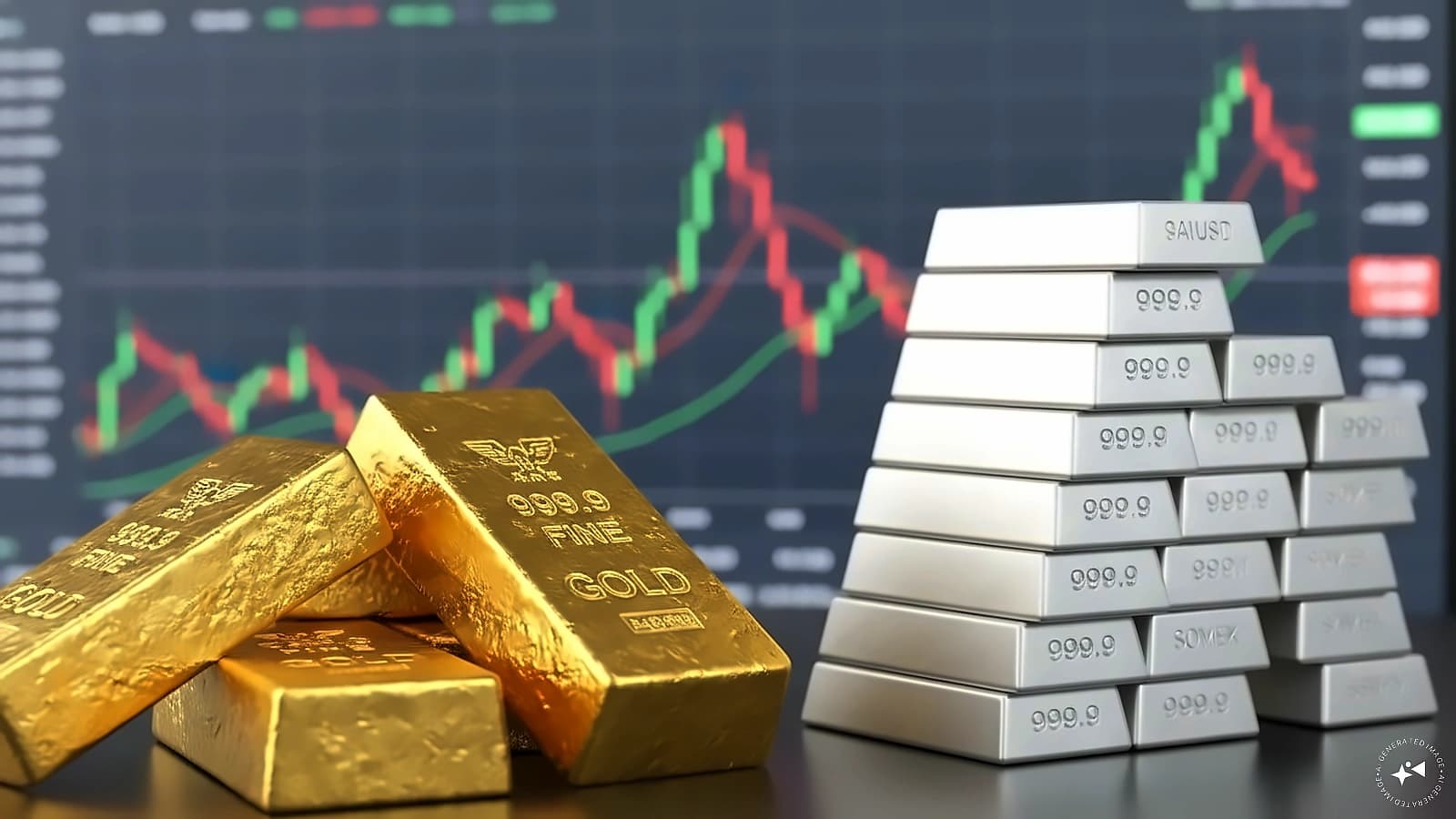
Despite gold's recent decline, economist Peter Schiff argues that gold at $4,145 represents a gift for investors, claiming the Federal Reserve has already lost its inflation fight. Schiff argued gold should have soared this week, adding that traders had instead handed buyers a gift, as three hot price reports in three days pushed it lower despite gold being a classic inflation hedge. Schiff's gold price call rests on one test: if inflation keeps beating forecasts despite higher rates, investors may start doubting the Fed rather than pricing in more hikes. The pressure has already hit precious metals hard, with gold and silver shedding $400 billion in paper value within minutes earlier this month. Silver then sank to its lowest 2026 close after the CPI release, reflecting broader pressure on precious metals amid rising interest rate expectations. Likewise, Hamad Hussain of Capital Economics expects the gold price to drift lower through year-end as the Fed keeps raising rates, while Bank of America also sees gold below $4,000 into year-end.
Among other metals, spot silver fell 0.7% to $57.05 per ounce, platinum was unchanged at $1,626.15 and palladium was down 1.1% to $1,113.61, according to The Economic Times. All three metals headed for weekly losses, reflecting broader pressure on precious metals amid rising interest rate expectations. In India, gold traded at a premium this week for the first time in more than three months as a pullback in prices boosted jewellery purchases, providing some domestic support. On the domestic market, precious metals were not trading at the time of writing, with gold and silver futures on the Multi-Commodity Exchange (MCX) having settled at ₹1,47,550 per 10g and ₹2,10,920 per kg, respectively in the previous session.