Gold prices came under intense pressure on Tuesday, falling to their lowest levels in nearly seven weeks as investors continued to flee non-yielding assets amid rising global bond yields and mounting expectations of tighter monetary policy. The sharp decline came as the US dollar strengthened to a six-week high, fueled by rising Treasury yields and growing speculation that central banks may keep interest rates elevated for longer in response to persistent inflation pressures and renewed energy market risks. Higher bond yields have significantly reduced the appeal of precious metals, particularly gold, which does not generate income for investors. As borrowing costs rise and returns on fixed-income assets improve, capital has increasingly rotated away from safe-haven metals toward yield-generating investments. On May 19, 2026, gold spot price traded at $4,489.21 per ounce, down $77.69 (-1.70%), while silver spot price fell to $73.36 per ounce, declining $4.37 (-5.62%). The stronger-than-expected U.S. inflation data reinforced the Federal Reserve's higher-for-longer rate stance, pulling precious metals decisively lower from last week's elevated levels.
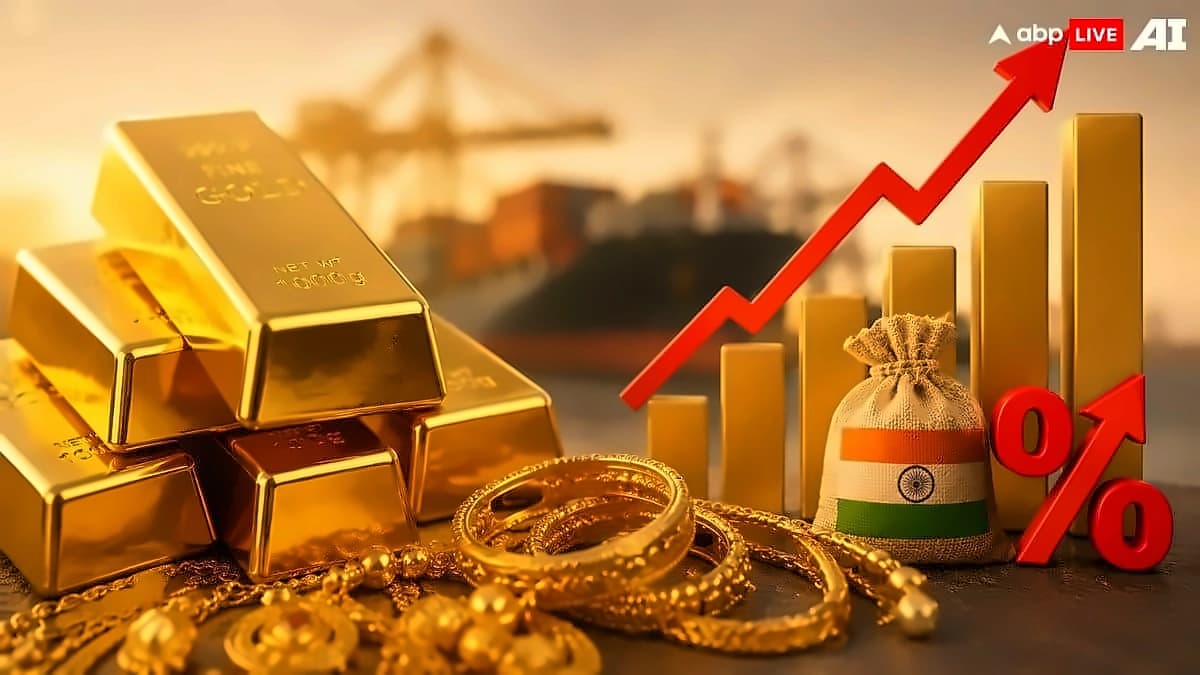
A major policy development has fundamentally altered the global precious metals landscape as India, the world's second-largest gold consumer, sharply raised its gold import duty from 6% to 15% last week, fully reversing the July 2024 cut that had driven record-breaking demand. The duty hike, framed by the government as a push to conserve foreign exchange reserves amid geopolitical uncertainty and sustained pressure on the Indian rupee, has created a demand shock that will contract global physical absorption capacity. Local gold prices in India were already up more than 60% year-over-year, and the duty increase amplifies that local premium further, squeezing affordability for one of the most price-sensitive gold-consuming populations globally. The July 2024 duty cut from 15% to 6% had been the single most powerful policy lever behind India's record-breaking surge in physical gold demand in the second half of 2024, driving retail jewelry purchases, investment bar and coin buying, and narrowing the discount between local and international prices. For physical investors outside India, the near-term implication is clear: when the world's second-largest gold market faces a demand shock from a tripling of import costs, global physical absorption capacity contracts significantly.
International spot gold is currently trading near $4,489.21/oz and has fallen nearly 15% since the Iran conflict began, as markets scale back expectations of aggressive monetary easing. MCX Gold is trading at ₹1,58,600 with support levels at ₹1,54,000 and ₹1,45,000, while resistance stands at ₹1,72,000 and ₹1,84,000. Silver has remained highly volatile, trading near $73.36/oz after rallying strongly toward $90/oz earlier last week on AI-related demand optimism, before correcting sharply. MCX Silver is trading at ₹2,70,000 with support at ₹2,57,000 and ₹2,44,000, and resistance at ₹2,96,000 and ₹3,05,000. The gold-to-silver ratio has widened to 61.2:1 as silver's deeper retreat reflects its heightened sensitivity to industrial demand expectations in a restrictive rate environment. Physical premiums in Asia held constructive despite the spot weakness, with Shanghai-London differentials staying positive—a persistent signal that physical bullion demand in the world's largest gold-consuming market remains active at lower price levels.

Unlike gold, silver faces a dual challenge because of its heavy reliance on both investment demand and global industrial activity. Concerns that tighter monetary policy could slow economic growth added further pressure to the metal, especially as investors pulled funds from exchange-traded products tied to silver. The stronger US dollar also weighed heavily on silver by making the metal more expensive for buyers using other currencies, adding to the downward momentum across commodity markets. At the same time, fears of prolonged inflation and tighter financial conditions have continued driving investors toward safer income-producing assets instead of metals that offer no direct yield. The fading prospects for a U.S.-Iran ceasefire further supported oil prices, compounding downward pressure on both gold and silver markets.
Despite the weakness, gold continued to receive some underlying support from strong central bank demand, particularly from China, which added 8 tonnes of gold reserves in April—the highest single-month addition in 15 months. The People's Bank of China's continued accumulation reflects ongoing efforts by central banks to diversify reserves and reduce dependence on major currencies during periods of geopolitical uncertainty. For silver, while the near-term bias remains weak due to high interest rates, the long-term structural demand outlook remains positive, supported by growing usage in solar energy, electronics, EVs, and advanced technologies. However, the selloff was further accelerated by concerns that ongoing Middle East tensions and rising energy prices could reignite inflation globally, forcing central banks to adopt even more aggressive policy stances in the coming months. Those holding pre-1933 gold coins and physical bullion should recognize this correction for what it is: a policy-driven demand shock, not a loss of fundamental monetary credibility, with corrections of this type historically creating superior entry points for patient physical buyers.