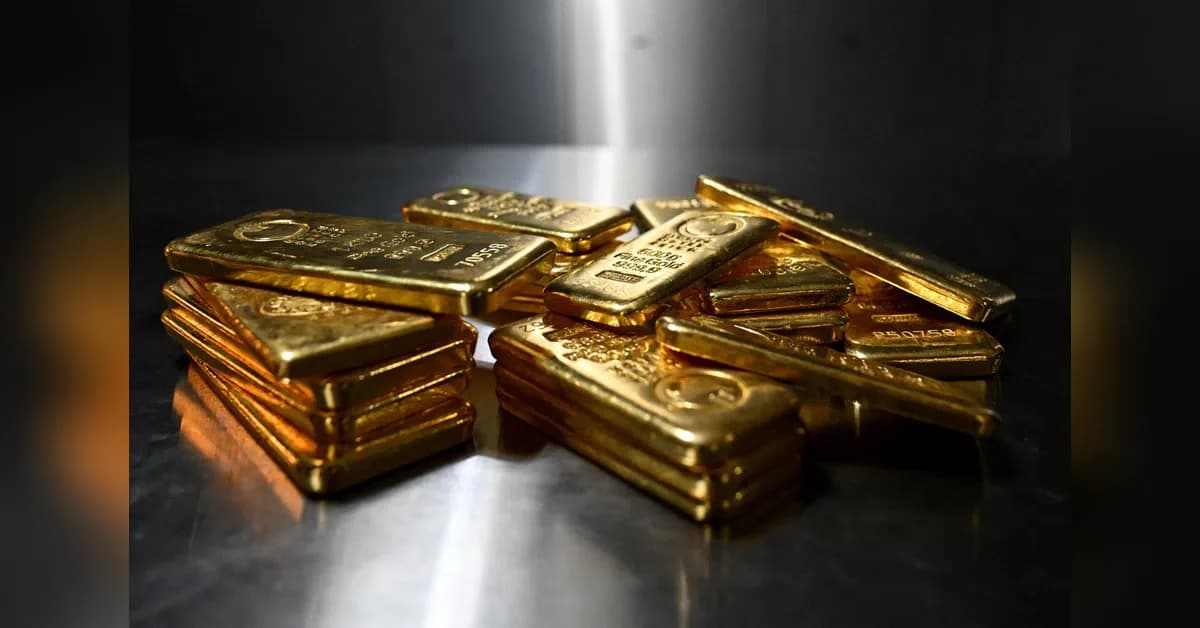
Gold has experienced a dramatic reversal, with futures trading at $5,391.60, marking a significant decline from previous levels. According to latest reports, the precious metal is now well above its 50-day average of $4,883.25 and nearing its 52-week high of $5,626.80. This represents a substantial recovery from the 20% decline from its all-time high of $5,602 that gold experienced earlier this year, with the metal showing strong momentum as geopolitical tensions escalate. The current trading level demonstrates gold's resilience and its role as an indispensable safe-haven asset during periods of global uncertainty.
The recent US-Israel strikes on Iran, followed by Tehran's retaliatory missile launches, have plunged the Middle East into a highly volatile conflict that is sending shockwaves through global markets. The immediate escalation has prompted a rapid reallocation of capital into traditional hedges like gold, with investors seeking refuge from potential widespread instability and economic disruption. The Strait of Hormuz disruption, which represents a critical chokepoint through which 20% of the world's oil flows, adds another layer of concern as any prolonged disruption could spike oil prices further and exacerbate global inflation fears. President Trump's suggestion that the conflict could last several more weeks, with attacks continuing until US objectives are met, signals that this geopolitical premium on gold may be more than just a fleeting event.
Major financial institutions have revised their gold price forecasts upward while maintaining bullish long-term outlooks. JP Morgan has lowered its 2026 average gold price forecast from $5,708 per ounce to $5,243 per ounce, though it maintains its base case year-end target of around $6,000 per ounce. From current levels of $5,391.60, gold would need to rise 33% to meet that target. Goldman Sachs analysts forecast gold may reach $5,400 per ounce by end-2026, citing expected central bank buying to help prices recover by year-end. Morgan Stanley has taken a more cautious approach, lowering its H2 2026 gold price forecast from $5,700 per ounce to $5,200 per ounce, citing reduced central bank purchases and negative ETF flows. However, with gold futures trading near $5,391.60, the upside potential remains compelling if tensions persist or intensify.

Exchange-Traded Funds tracking gold have mirrored the precious metal's upward trajectory, with SPDR Gold Shares (GLD) closing at $483.75, up +1.31%, and iShares Gold Trust (IAU) gaining +1.31% to reach $99.07. GLD's substantial daily volume of 16,646,457 shares and market capitalization of $186.34 billion underscore its status as a major player in the gold market. IAU's performance with 9,114,639 shares daily volume and $84.47 billion market cap demonstrates strong buying interest across both institutional and retail investors. Indian investors have rapidly reallocated capital into gold, with gold ETF inflows climbing to an all-time high of approximately ₹250 billion (around $2.7 billion), surpassing equity mutual fund inflows for the first time, showing a clear shift in investor preference towards safe-haven assets during periods of heightened uncertainty.
The future of gold prices in H2 2026 largely depends on the resolution of the Iran war, which could alleviate persistent inflation and prolonged high-interest rates. A resolution may support recovery forecasts from JP Morgan, Goldman Sachs, and Morgan Stanley. However, investors should brace for extreme volatility and potential whipsaw movements, especially near record highs. Ross Norman warns that such a surge could be followed by a quick sell-off, shaking out weaker long positions. The market is effectively paying for insurance, and gold is the policy of choice during crisis moments. While the immediate catalyst is conflict, deeper structural supports like central bank demand and inflation hedging are also at play, with the World Gold Council's research showing that an increase in the GPR index by 100 units typically correlates with a 2.5% positive impact on gold's return. The long-term thesis focusing on fiscal risks, currency debasement, and US policymaking uncertainty remains valid, but is described as being 'on hold' until the Iran conflict is resolved.