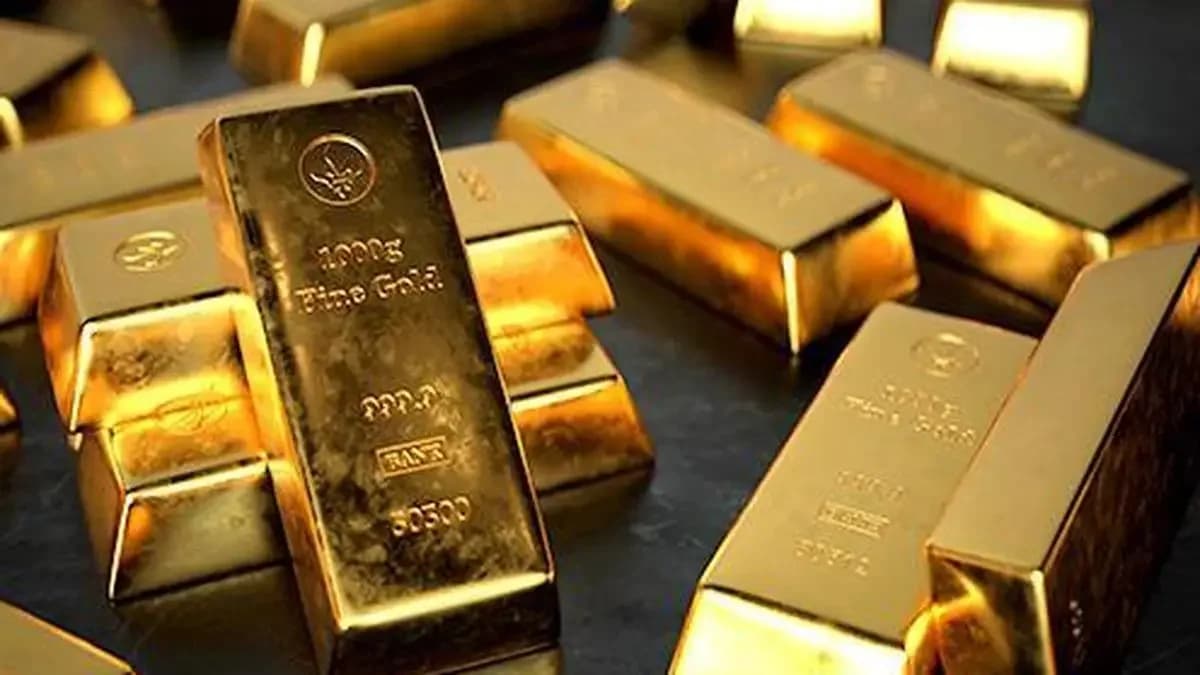
Spot gold steadied above $4,690 an ounce after its biggest daily advance since late March, with hopes of a US-Iran deal to end the conflict sending oil prices plunging and easing inflation concerns. According to the latest reports, Iran is evaluating a fresh proposal from the US to end the near 10-week conflict, as China added its voice to global pressure to wrap up the war. President Trump posted on social media that the US will end its military campaign and lift its blockade of the Strait of Hormuz "assuming Iran agrees to give what has been agreed to, which is, perhaps, a big assumption." The agreement involves Iran committing to suspending uranium enrichment activities, while the US agrees to lift sanctions on Iran and release billions of dollars in frozen Iranian funds, with both sides removing restrictions regarding transit through the Strait of Hormuz. TD Securities strategists noted that "headlines of a potential peace deal have the precious metals and base metal complex on the front foot this morning," though they caution these headlines remain extremely fragile to reversal as US and Iranian demands seemingly remain unchanged compared to prior proposals.
The geopolitical de-escalation has significantly impacted oil markets, with WTI crude futures falling over 10% to trade around $88-$89 per barrel at the time of writing, marking a sharp decline from recent highs. As Kelvin Wong, Senior Market Analyst at OANDA, noted, "The retreat in oil prices is itself a positive for gold. The previous mechanism was that high oil prices pushed up inflation expectations, which in turn raised the probability of Fed rate hikes and suppressed gold's valuation. This link is now being broken." The U.S. dollar fell to pre-war levels, further supporting precious metals as the U.S. expects to receive a response from Iran on several key issues within the next 48 hours. This development removes the inflationary pressure that previously drove PCE inflation from 2.8% in February to 3.5% in March — the highest reading in nearly three years. According to the CME FedWatch Tool, the probability of a rate cut at the September meeting rose to 19.9%, up sharply from 1.4% a week ago, as the sharp decline in crude oil helped ease concerns over energy-driven inflation and tempered hawkish Federal Reserve expectations.
Despite gold's strong performance driven by the Iran deal, the precious metal has entered a technical correction phase following its January record highs. As per recent technical analysis, sentiment has shifted from 'extreme greed' to 'neutral', with further downside possible until 'extreme fear' signals a true bottom. On the technical front, gold is trading around $4,690, up over 3% on the day and hitting its highest level in over a week, but the correction reflects cooling from the overheated conditions seen in January's record highs. The 4-hour chart shows XAU/USD has turned bullish after bouncing from the $4,500 support zone and climbing above the 21-period and 100-period Simple Moving Averages. The Relative Strength Index (RSI-14) near 69 suggests upside momentum remains strong, though gold is approaching overbought territory. On the upside, the first resistance is seen near the horizontal barrier around $4,800, followed by the key psychological level at $5,000. Market attention now turns to upcoming U.S. labor market data, with the ADP Employment Change report due later in the American session, followed by weekly Initial Jobless Claims on Thursday and the Nonfarm Payrolls (NFP) report on Friday.

External tracking data confirms the remarkable long-term performance of precious metals. GoldPrice.org recently placed spot gold around $4,628 per ounce with a gain of more than $1,200 over the past year. Silver prices have experienced even more dramatic growth, rocketing from the low-$30s to the mid-$70s in under twelve months, according to Fortune. This sustained upward trajectory reflects both structural demand factors and macroeconomic conditions that continue to support safe-haven demand, with the current rally representing a shift from safe-haven demand to inflation relief expectations. The gold-silver ratio has dropped from around 62.5 to roughly 61, confirming silver is leading this rally rather than following it, as the precious metal benefits from both monetary policy shifts and industrial demand recovery. In the latest trading session, silver rose 0.1% to $77.44 after jumping 6.2% on Wednesday, while platinum remained flat and palladium edged higher.
Major financial institutions have maintained bullish gold forecasts despite the recent volatility and technical correction. Goldman Sachs maintains its gold price target of $5,400 per ounce by the end of 2026, supported by central bank gold purchases, normalization of speculative positioning, and expectations of future Fed rate cuts. ActivTrades analyst Ricardo Evangelista said Wednesday that gold could reach $5,000–$5,500 by year-end if Hormuz normalizes. However, Federal Reserve Bank of Chicago President Austan Goolsbee struck a note of caution, noting that inflation has not only failed to continue cooling to the US central bank's 2% target, but moved up since the start of the war. Gold has fallen about 11% since the conflict erupted in late February, as the closure of Hormuz and resulting energy price shock dimmed the prospect of interest-rate cuts. The precious metal's role as a hedge against inflation and depreciating currencies, combined with its safe-haven status, continues to drive institutional and retail demand during periods of geopolitical uncertainty.