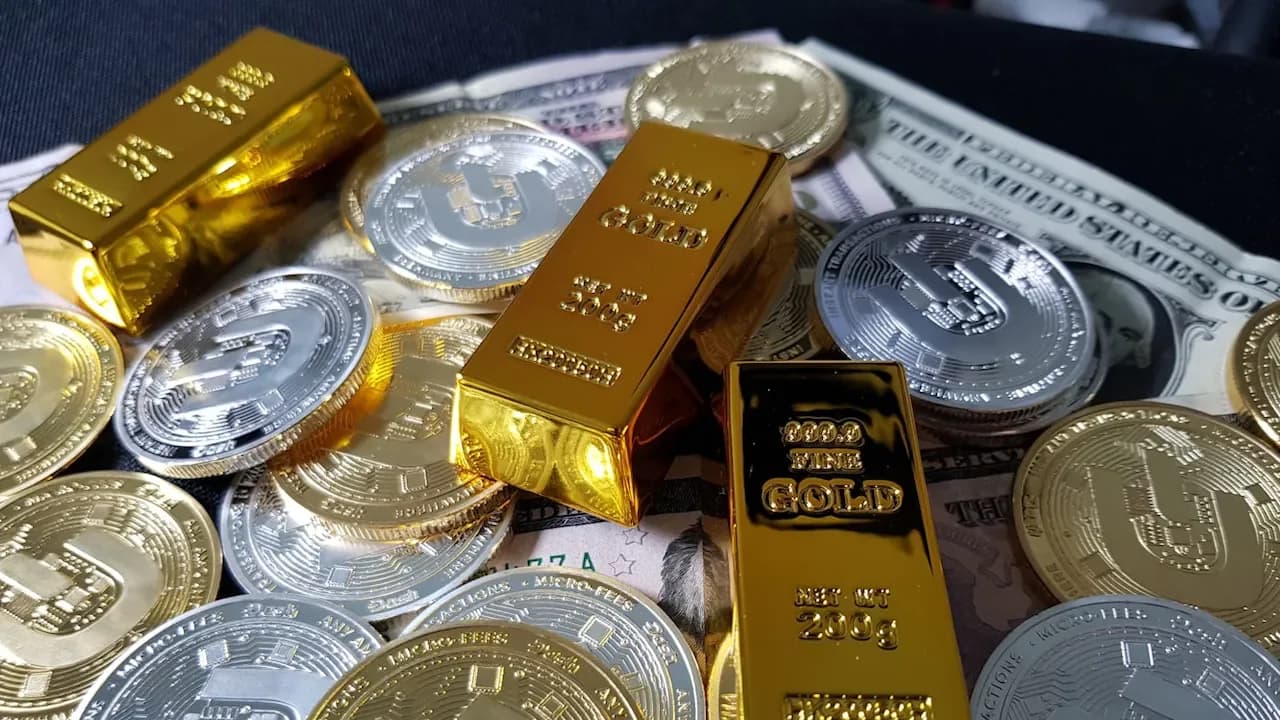
Gold prices slipped on Wednesday as renewed hostilities in the Middle East pushed crude oil prices higher, cementing fears that interest rates would stay higher for longer to tame inflation. Spot gold fell 0.5% to $4,475.30 an ounce as of 9:02 a.m. in Singapore, according to Bloomberg. Silver was 0.6% lower at $74.73 an ounce, while platinum and palladium were down marginally. This comes after MCX gold futures had declined by ₹3,104 or nearly 2% to close the week at ₹1.55 lakh per 10 grams, with silver also falling by ₹4,848 or 1.8% to end the week at ₹2.66 lakh per kilogram. The precious metals had earlier fallen as much as 0.6% in early trading before erasing losses, as reported by Bloomberg. Bullion has moved largely in an inverse relationship with oil since the conflict began in late February, with it remaining about 15% below its immediate pre-war level despite trading in a narrow range for recent weeks.

Gulf hostilities flared anew on Wednesday, with the U.S. military saying Iranian missile attacks on Bahrain, Kuwait and other regional targets were either thwarted or failed as diplomacy between Washington and Tehran showed little progress. U.S. Secretary of State Marco Rubio said on Tuesday that President Donald Trump's negotiating team has not offered Iran sanctions relief in exchange for reopening the Strait of Hormuz and insisted that any sanctions relief was tied to Tehran giving up its nuclear programme. Another round of talks between Israel and Lebanon is scheduled for Wednesday, adding to regional tensions. Despite earlier indications of diplomatic progress, Marco Rubio said it may take "a few days" to finalise an agreement to stop the war, despite both sides having made progress toward an initial framework aimed at ending hostilities and reopening shipping routes through the Strait of Hormuz.
Oil prices rose more than 1% in early trade on Wednesday, deepening concerns over inflation and interest rate hikes. U.S. crude rose 0.25% to settle at $88.90 per barrel, while Brent settled at $93.71 per barrel, down 0.62% on the day. The protracted disruption to energy flows via the Strait of Hormuz has raised concerns around global inflation, making central banks more likely to keep interest rates steady or even raise them — a headwind for precious metals, which don't pay interest. U.S. WTI edged higher while Brent, more vulnerable to Strait of Hormuz traffic disruptions, dipped, with the conflict upending energy flows and heightening inflation concerns across global markets.
Cleveland Federal Reserve President Beth Hammack said on Tuesday the U.S. central bank may need to raise interest rates soon should already-high inflation pressures continue to mount. Investors are now awaiting the U.S. nonfarm payroll data, due later in the day, and employment report on Friday to gauge the Fed's monetary policy path. US data released on Tuesday showed job openings jumped in April to the highest in almost two years and layoffs fell, reinforcing bets that the Federal Reserve will hold interest rates higher for longer. A raft of economic data showed first-quarter U.S. GDP grew at a more sluggish pace than originally reported, with the saving rate sinking to its lowest level since June 2022 and inflation continuing to heat up.
The Bloomberg Dollar Spot Index, a gauge of the US currency, was little changed, as reported by Bloomberg. International markets showed mixed signals as the S&P 500 and Nasdaq registered their third consecutive sessions of record closing highs, while European shares closed lower despite paring steeper losses. A positive outcome in US-Iran peace talks could weigh further on oil and gold prices as safe-haven demand weakens, with the combination of weak GDP and rising price growth presenting the U.S. Federal Reserve with a dilemma under the chairmanship of Trump appointee Kevin Warsh. Gold exports from Switzerland in April fell 20% from the previous month as shipments to Britain and China slowed, while India has tightened restrictions on silver imports by adding grain and powder forms to the list of restricted categories as the world's biggest consumer of the metal tries to rein in shipments and ease pressure on the rupee.