Gold prices extended their downturn on Thursday, with international futures slipping below $4,100 per ounce to a seven-month low, while MCX gold futures fell to ₹1,46,444 per 10 grams. This latest decline comes after global gold ETFs witnessed significant outflows in May 2026, with net outflows of US$ 2 billion recorded across countries except Europe, according to the World Gold Council. The correction has been sharp, with gold prices down nearly 20% from the US-Iran conflict driven high recorded in end-February, bringing prices below levels seen before the government hiked import duty. Despite geopolitical tensions continuing in regions like US-Iran and Russia-Ukraine, the escalating Middle East tension is now being overshadowed by macroeconomic conditions, with bullion traders noting that the risk of supply chain problems and crude oil price shocks is bound to trigger inflation, leading to higher interest rates.
Silver ETFs faced continued pressure, registering net outflows of ₹2,133 crore in May, significantly higher than the ₹126 crore outflow recorded in April. Over the past four months, silver ETFs have witnessed cumulative outflows of ₹3,770 crore, with May accounting for the largest monthly redemption during this period. However, silver ETFs still delivered strong performance with an average return of 9.59% in May, with DSP Silver ETF emerging as the top performer at 9.72% and Bandhan Silver ETF posting the lowest return at 9.42%. Latest trading data shows MCX silver price crashed by ₹3,834, or 1.62%, to open at ₹2,31,671 per kg as against its previous close of ₹2,35,505 level.
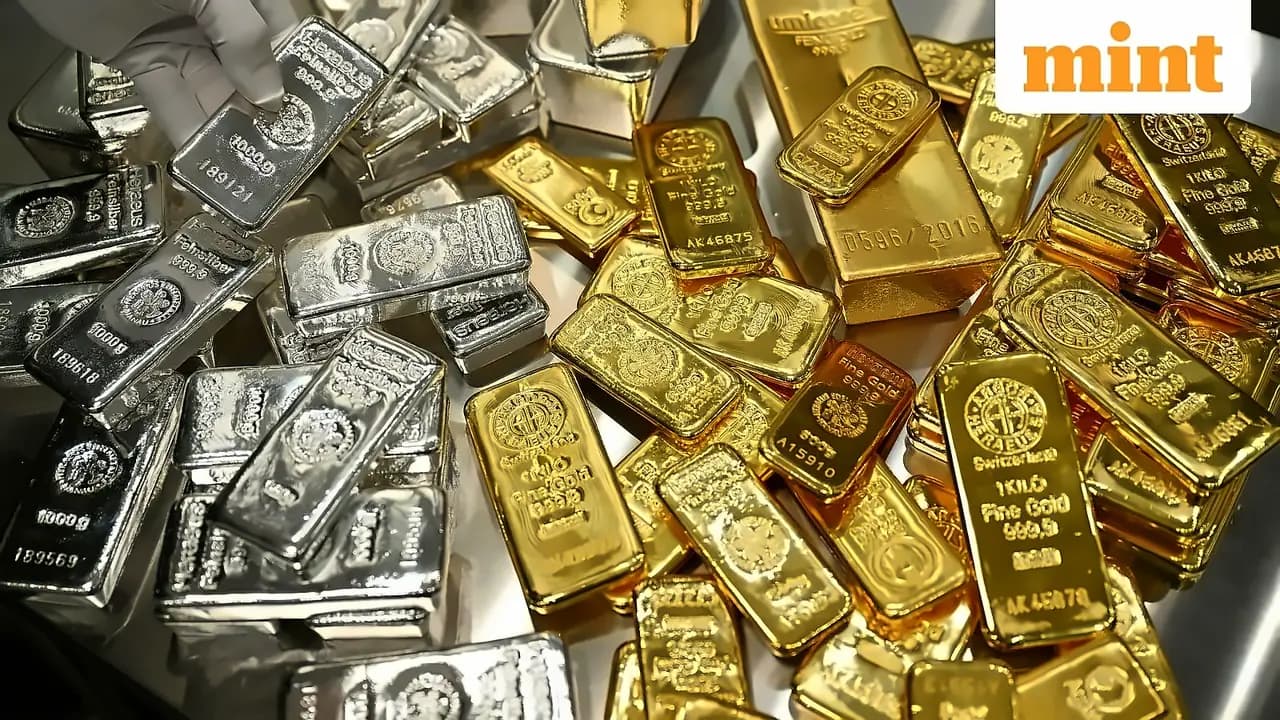
According to Feroze Azeez, Joint CEO of Anand Rathi Wealth, the recent trend reflects a more practical approach by investors following the sharp rise in gold prices. He noted that with gold prices touching record highs, government requests discouraging purchases and some asset management companies stopping inflows into certain ETF schemes, investors appear to be reassessing return expectations. Nitin Agrawal, CEO of Mutual Funds at InCred Money, believes the outflow should not be interpreted as a negative signal for the asset class, stating it reflects profit-booking after a sharp price run-up. Both experts maintain that the long-term investment case for gold remains intact, with Shishir Asthana noting that the structural case for gold remains intact despite current market conditions. Market experts now attribute much of the sell-off to a turning in the technical trend and expectations that the US Federal Reserve might raise interest rates, with traders pricing in a more than 70% chance of a US rate hike by December according to the CME FedWatch tool.
Despite the outflows, Gold ETFs delivered positive returns with the category generating an average return of 4% during May. Zerodha Gold ETF offered the highest return at 4.07%, while The Wealth Company Gold ETF posted the lowest return at approximately 3.92%. As reported by LiveMint, Gold ETFs have attracted significant investor interest over the past few years as investors increasingly turned to the yellow metal as a hedge against inflation, geopolitical uncertainty and currency volatility. The recent outflow has sparked debate over whether investor sentiment towards gold has weakened or whether fresh inflows could return if prices cool from record highs. Latest trading data shows MCX gold rate trading lower by ₹721, or 0.49%, at ₹1,47,296 per 10 grams.
Experts suggest that while the latest AMFI data points to a temporary pause in investor enthusiasm for precious metal ETFs, the broader rationale for holding gold remains unchanged. For long-term investors, they recommend focusing on portfolio diversification and asset allocation goals rather than reacting to a single month's inflow or outflow trend. According to LiveMint, Gold ETFs have enjoyed significant investor interest over the last few years as investors increasingly turned to the yellow metal as a hedge against inflation, geopolitical uncertainty and currency volatility. The recent outflow has sparked debate over whether investor sentiment towards gold has weakened or whether fresh inflows could return if prices cool from record highs. Market analysts believe the near-term bias remains cautious to negative, with prices trading below key psychological levels and requiring a sustained recovery above ₹1,50,000 to stabilize the structure.