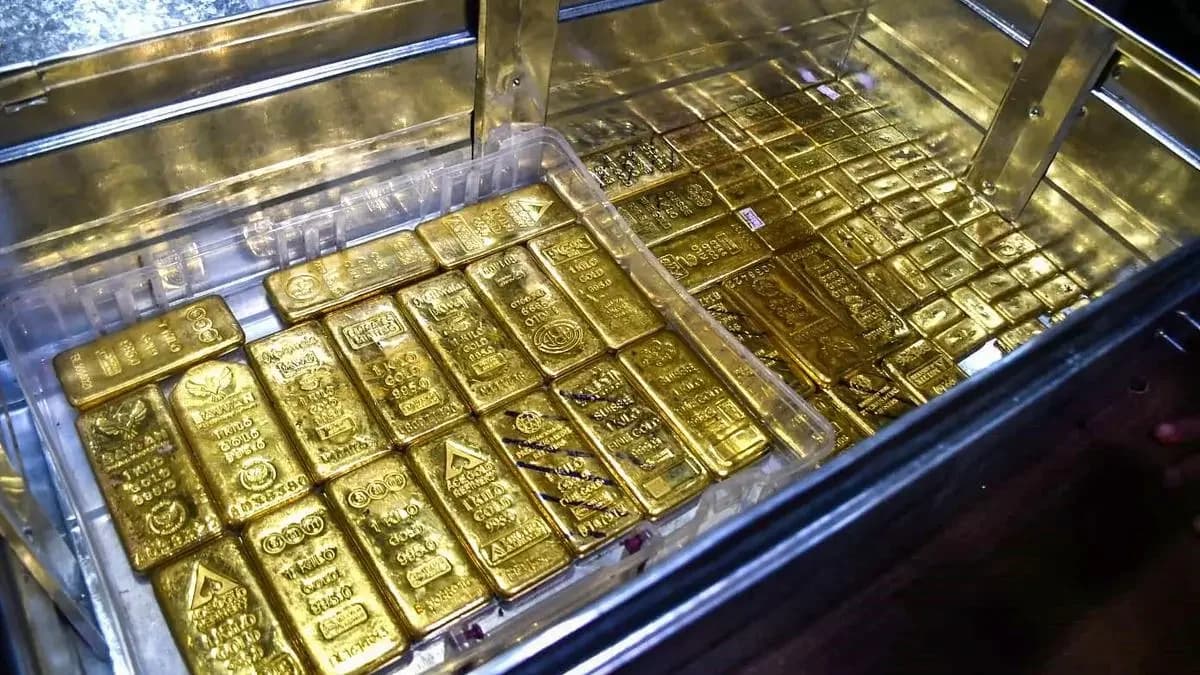
The government's decision to raise import duties on gold and silver to 15% has triggered a broad slowdown in India's jewellery market, with traders and jewellers across key centres reporting weaker demand and liquidity stress. According to The Hindu BusinessLine, the steep hike has pushed gold prices up by nearly 10%, forcing consumers to cut back on purchases and shift towards lighter jewellery and lower-carat options. In Ahmedabad, jewellers said the sharp rise in prices has quickly altered retail buying behaviour, with customers who earlier bought standard 8-10 gram jewellery pieces increasingly opting for lighter designs to stay within budget. The exchange of old gold has also emerged as a dominant trend in transactions, as reported by industry participants.
The government raised import duties on gold and silver to 15% from Wednesday, as part of efforts to conserve foreign exchange amid a widening import bill triggered by the West Asia crisis. According to reports from Upstox News Desk, the move increases the basic customs duty on gold to 10% from 5% and the Agriculture Infrastructure and Development Cess (AIDC) to 5% from 1%, taking the total import levy to 15%. This effectively restores the duty level that was in place in 2022, when the government had raised the tax to 15% to contain the current account deficit and support the rupee following the outbreak of the Russia-Ukraine conflict. The move follows Prime Minister Narendra Modi's rare weekend appeal to households to postpone gold purchases and reduce discretionary foreign exchange spending, including overseas travel.
The Gem and Jewellery Export Promotion Council (GJEPC) warned that gold import duty hikes are unlikely to curb bullion inflows into India and may instead push up prices, encourage smuggling and worsen liquidity pressures for small jewellery manufacturers. As reported by The Hindu BusinessLine, GJEPC cautioned that higher duties could further inflate prices and encourage smuggling, while exporters are already grappling with tighter working capital conditions. The council noted that exporters sourcing duty-free gold from nominated agencies are now required to furnish bank guarantees of ₹28-30 lakh for every kilogram of gold, severely blocking working capital. The sharpest impact would be felt by micro, small and medium enterprises (MSMEs), which account for around 80% of its membership and are already facing a "critical liquidity crunch." According to Sachin Sawrikar, founder and managing partner at Artha Bharat Investment Managers, higher duties historically widen the gap between official and informal channels, thereby increasing the risk of smuggling.
The new import duty structure will make gold costlier by around ₹27,000 per 10 grams from the earlier ₹13,500/10 gm, as reported by The Economic Times. India is the world's second-largest gold consumer after China and imports most of its bullion needs to meet demand from the jewellery sector. Gold imports rose 24% to a record USD 71.98 billion in 2025-26, even though import volumes declined 4.76% to 721.03 tonnes, reflecting a sharp rise in international prices. The average price of imported gold increased to USD 99,825.38 per kg in FY26 from USD 76,617.48 per kg in the previous fiscal. In the domestic market, gold prices in New Delhi climbed to ₹162,070 per 10 grams on Wednesday, while silver rose to ₹295,720 per kilogram. Across markets, traders reported gold prices jumping by around ₹800 to ₹16,500 per gram after customs duty was raised to 15% from 6% in Hyderabad, resulting in weaker buying activity and liquidity constraints.
Industry leaders are predicting significant shifts in consumer behavior and business models to navigate the higher duty environment. Suvankar Sen, MD and CEO of Senco Gold and Diamonds, estimated a 10-15% decline in volumes, with consumers preferring lighter jewellery and lower-carat gold. "For gifting purposes, demand for diamond jewellery is expected to increase amid high gold prices," he said, adding that overall value could remain elevated due to higher prices. In Bengaluru, jewellers said near-term sentiment may soften, though structural demand linked to weddings and rituals remains intact. "Indian gold buying is culturally deep-rooted and not easily deferred," said Varghese Alukkas, Managing Director of Jos Alukkas. In Chennai, N Anantha Padmanabhan, Managing Director of NAC Jewellers, said the duty hike is likely to hurt sales volumes and could encourage smuggling activity, suggesting reviving the gold monetisation scheme would be a more sustainable alternative. Across markets, jewellers maintained that India's long-term appetite for gold remains structurally resilient despite the near-term disruption caused by the duty hike.
The latest increase follows Prime Minister Narendra Modi's recent appeal to households to postpone gold purchases and reduce discretionary foreign exchange spending, including overseas travel. The RBI has been steadily intervening to bolster the currency, with foreign-exchange reserves dropping to $690.7 billion as of May 1, the lowest level in more than a month. The reserves are enough to cover 10 to 11 months of imports. The central bank has also taken several other measures to support the currency, including curbing speculation in the forex market by limiting banks' daily open positions to $100 million. The move comes as the government faces pressure to manage foreign exchange reserves amid the West Asia crisis and rising global gold prices. According to The Economic Times, the durability of these measures will ultimately depend on global oil trends, capital flows and how long external pressures on the currency persist.