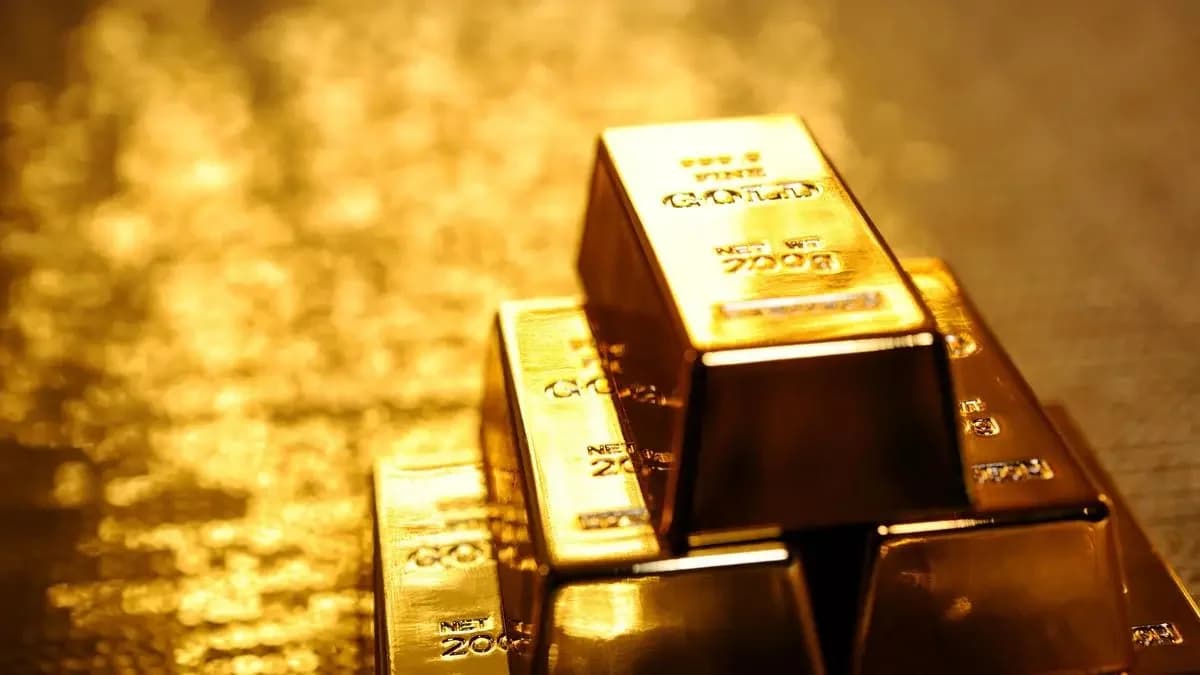
Gold and silver prices declined on Wednesday as stronger-than-expected US jobs data reinforced expectations that the Federal Reserve will keep interest rates elevated for longer. In India, silver price on MCX fell 0.24% to ₹2,66,066 per kg, while MCX gold rate remained flat at ₹1,55,549 per 10 grams. Spot silver was down 0.6% at $74.60 an ounce, while spot gold slipped 0.3% to $4,475.30 an ounce as of 9:02 a.m. in Singapore. The precious metals market remained caught between competing forces, with escalating tensions in the Middle East continuing to support demand for safe-haven assets, while rising inflation concerns and strong US jobs data reinforced expectations that borrowing costs may remain higher for longer, limiting the appeal of non-interest-bearing assets such as silver and gold.
US jobless claims rose 13,000 to a seasonally adjusted 225,000, topping the 213,000 estimate of economists polled by Reuters, adding to signs of labor-market resilience that has strengthened expectations for prolonged elevated interest rates. The stronger-than-expected jobs data reinforced market expectations that the Federal Reserve may keep interest rates elevated for an extended period, creating headwinds for precious metals. The ADP Research gauge of private-sector job growth in May showed an increase of 122,000, which slightly exceeded economists' median estimate, marking the second of three major US employment gauges this week. Swaps tied to policy-meeting dates carry rates that imply a more than 80% chance of a quarter-point hike by year-end, up from 60% last week, with an increase considered certain by January 2027 versus March previously. The Bloomberg Dollar Spot Index, a gauge of the US currency, was little changed, as investors closely monitor US non-farm payroll and employment data due Friday to assess the strength of the labour market and the potential impact of inflationary pressures linked to ongoing geopolitical tensions.
Market attention remained firmly focused on developments surrounding the conflict involving Iran and ongoing diplomatic efforts to restore stability in the region. Israel and Lebanon agreed to implement a ceasefire to end hostilities, the Trump administration said on Wednesday, raising hopes for a broader agreement to end the Iran war. However, the pro-Iran Hezbollah movement rejected a new ceasefire in Lebanon on Thursday and Israel said it would not withdraw troops from the country, complicating peace efforts. US President Donald Trump expressed optimism that Washington and Tehran could reach an interim peace agreement in the near term, his comments contradicting reports carried by Iranian state media suggesting that discussions had been suspended due to fighting in Lebanon. Iran launched ballistic missiles toward Kuwait and Bahrain, although the projectiles either broke apart during flight or were intercepted, while US forces carried out strikes on Iran's Qeshm Island, according to a statement from US Central Command. Despite hopes for diplomacy, military activity in the region intensified, with the latest developments adding to concerns over disruptions in global energy supplies.
Oil prices extended gains for a third straight session, with Brent crude moving closer to $97 per barrel, as the latest developments added to concerns over disruptions in global energy supplies. However, oil prices retreated on Thursday after Israel and Lebanon agreed to implement a ceasefire, with US crude falling 3.1% to settle at $93.04 a barrel and Brent dropping to $95.03 per barrel, down 2.84%. The Strait of Hormuz, a critical global energy shipping route, remains a key focus for investors, with prolonged disruption to energy flows through the region potentially pushing oil prices higher and fuelling inflation worldwide. Rising inflation remains a major concern for financial markets because it could prompt central banks to maintain restrictive monetary policies, with higher interest rates generally acting as a headwind for precious metals since gold and silver do not offer interest income, making interest-bearing assets relatively more attractive. The inflation rate targeted by the Fed rose 3.8% year-on-year in April, the fastest pace since 2023, with a separate gauge, the consumer price index, also rising 3.8% in April, and estimated to show an increase of 4.2% in May data to be released next week.
Fed officials signaled that inflation remains their primary concern, with San Francisco Federal Reserve President Mary Daly saying that the US interest-rate path will depend on how the economy evolves, adding that monetary policy is 'in a good place' and the Fed is prepared to respond 'either way'. Kansas City Federal Reserve President Jeffrey Schmid said the US central bank's choice now is between being patient and holding interest rates steady or hiking rates to tamp down inflation that has been above the central bank's 2% target for years. After beginning the year pricing in about 50 basis points of cuts from the Fed this year, market expectations have shifted and are now pricing in nearly 20 basis points in hikes, according to LSEG data. The breakeven rate on five-year US Treasury Inflation-Protected Securities was last at 2.496% after closing at 2.527% on Wednesday, its lowest close in three months, while the 10-year TIPS breakeven rate was last at 2.378%, indicating the market sees inflation averaging about 2.4% a year for the next decade. The yield on the benchmark US 10-year Treasury note slipped 2 basis points to 4.471%, with the two-year U.S. Treasury yield losing 3.9 basis points to 4.045%, as investors reassess monetary policy expectations.