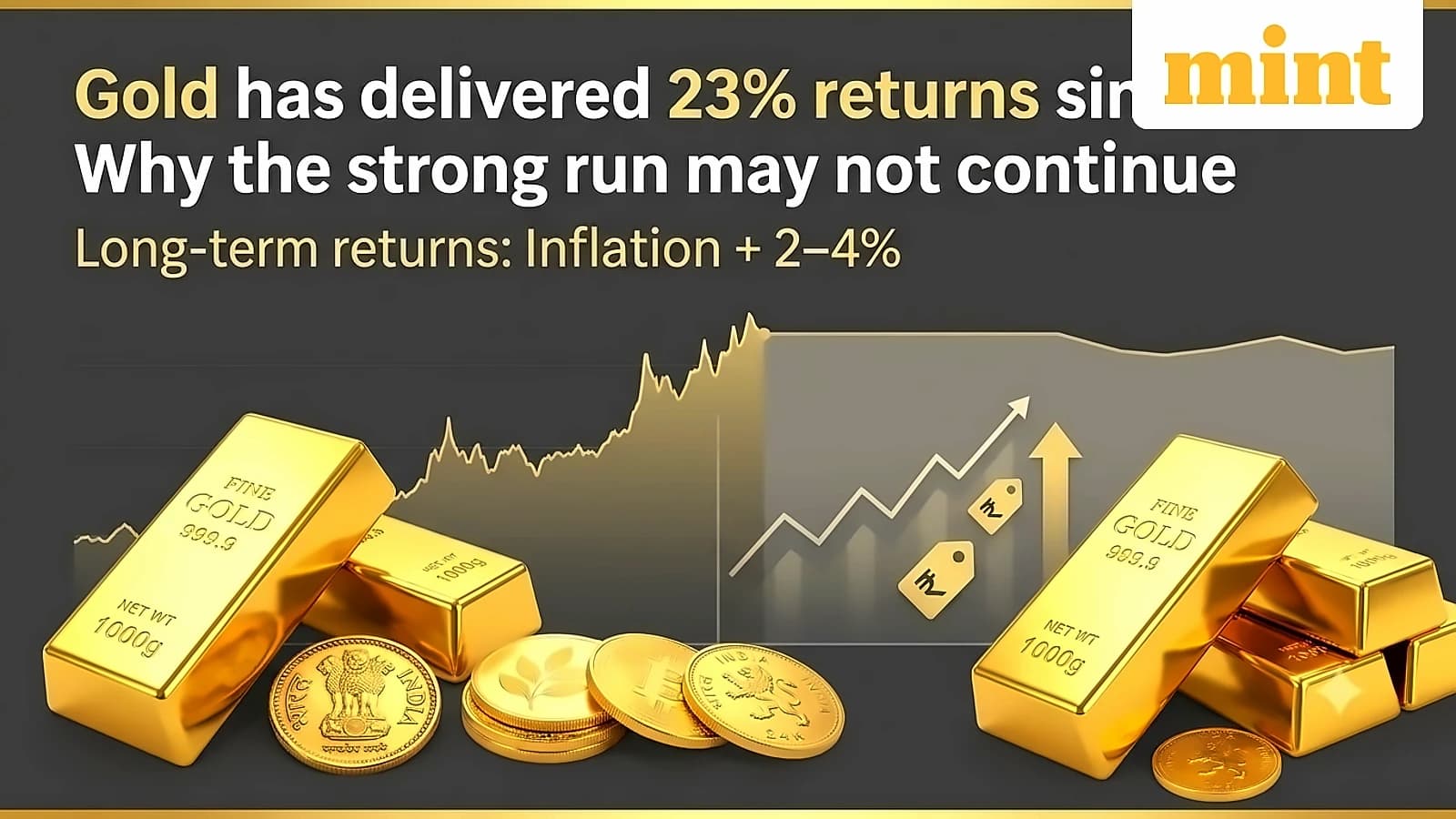
Gold has delivered impressive returns in recent years, achieving a 23% CAGR between 2019 and 31 August 2026. According to the September 2026 FundsIndia Wealth Conversations report, gold has historically generated 17.3% annualised returns over 10 years, 14.5% over 20 years, 12.2% over 30 years and 11.9% over 40 years. However, the precious metal's journey has been anything but smooth, with gold generating around 0% returns between 1980 and 1989, followed by a 12% CAGR from 1989 to 1996. The pattern repeated again between 1996 and 2002, before gold delivered around 0% returns between 2002 and 2012, followed by another period of subdued performance from 2012 to 2019.
Gold prices have experienced significant volatility in recent months, as reported by FundsIndia. As of 31 August 2026, gold was priced at ₹13,961 per gram, compared with ₹12,349 per gram a month earlier. The price was higher at ₹15,292 per gram six months ago, highlighting the interim volatility investors can face even when gold delivers strong long-term returns. According to The Hindu BusinessLine, gold was ruling around $4,000 an ounce at the start of August, zoomed to over $4,700 towards the end of that month before falling to $4,200 some 10 days ago. The yellow metal has recovered to around $4,300 currently, with the precious metal experiencing a 2% decline over the past month and currently ruling at levels seen at the start of the year.
Investment flows into gold ETFs have maintained positive momentum for the eighth consecutive week, demonstrating sustained investor confidence despite market volatility. As per the World Gold Council (WGC) data, investments were net positive at $1.55 billion last week, following $4.02 billion in the week ending September 4 and $3.99 billion in the week ending August 28. The total global inflows reached $118.1 billion as of September 11, while outflows were $84.87 billion, leaving net inflows positive at $35.2 billion. Regional performance showed Europe leading with $10.2 billion inflows, followed by Asia at $14.24 billion and North America at -$1.1 billion in outflows. Notably, investors from the UK ($771 million), China ($444 million), Germany ($162.5 million), France ($145.3 million) and Switzerland ($128.3 million) were the primary contributors, while US investors exited to the tune of $122.4 million.
FundsIndia estimates that gold has outperformed inflation by around 5-6% over the long run when considered over an investment horizon of at least 21 years. For a more conservative long-term return expectation, the report indicates inflation plus 2-4 percentage points. With India's CPI inflation at 4.82% in August 2026, this framework translates into a potential long-term gold return range of approximately 6.82% to 8.82% annually. This represents a long-term expectation, not a forecast for the next year or two, as reported by FundsIndia.
According to Darshan Desai, CEO of Aspect Bullion & Refinery, gold is likely to remain volatile in the near term due to stronger dollar, crude prices and expectations around US interest rates. However, the broader outlook remains supportive, backed by geopolitical uncertainty, central-bank demand and gold's safe-haven appeal. As reported by The Hindu BusinessLine, gold witnessed a continuous rally from the beginning of 2024 till February 28, 2026, on hopes of US Fed rate cuts and volatile geopolitical situations. Looking ahead, Desai expects a range-bound to cautiously positive trend, with dips likely to attract physical buying as the festive season approaches. Given elevated prices, consumers may prefer staggered buying and customised gold products rather than waiting to time the market, with overall sentiment remaining cautiously bullish despite short-term volatility.