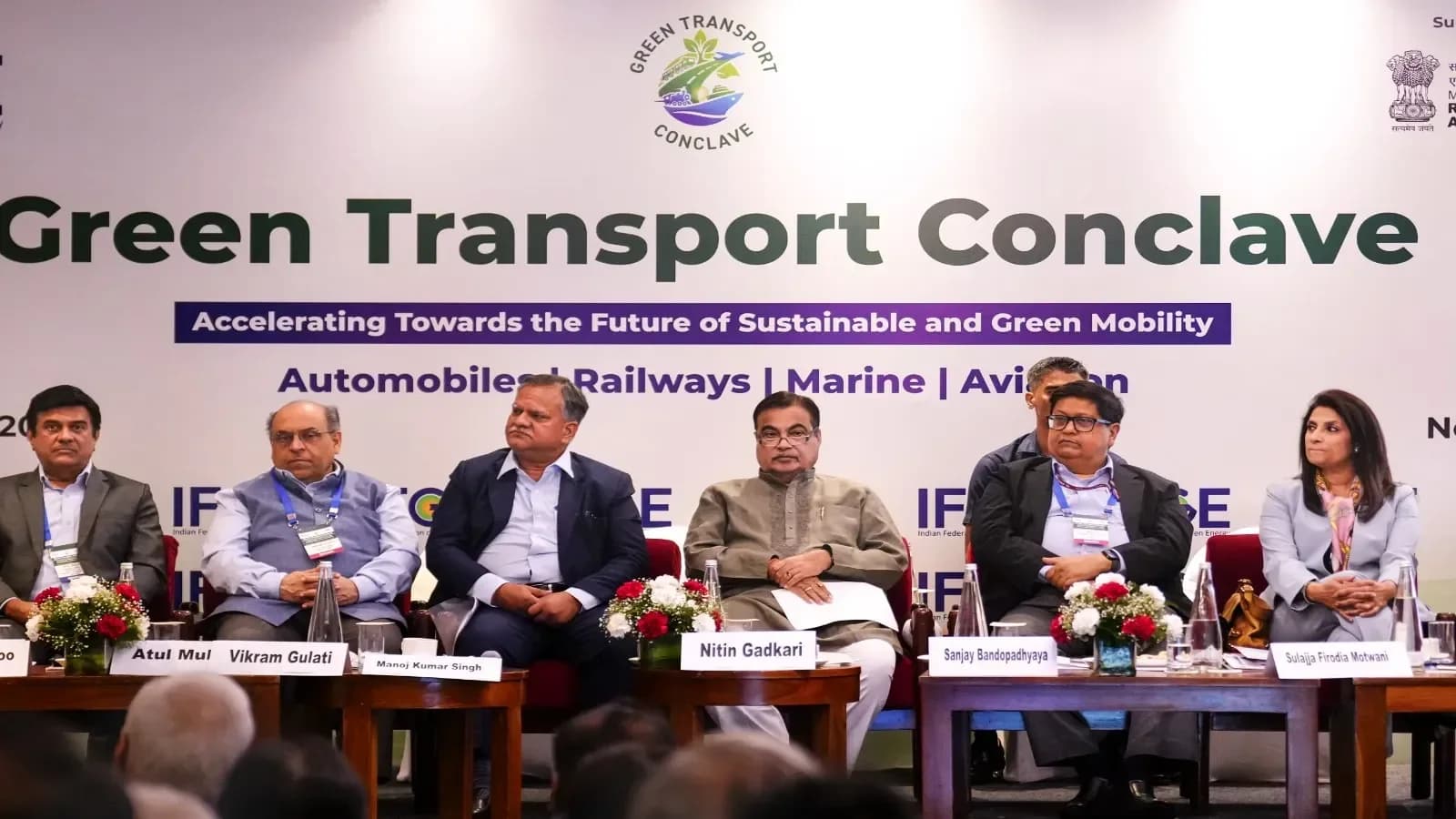
Union Minister of Road Transport and Highways Nitin Gadkari announced on Tuesday that India should aspire to achieve 100% ethanol blending in the near future to reduce dependence on imported fossil fuels. Speaking at the Indian Federation of Green Energy's Green Transport Conclave, Gadkari emphasized that this strategy becomes necessary due to the current energy crisis caused by the war in West Asia. According to reports from Press Trust of India, the minister highlighted that countries like Brazil have already achieved 100% ethanol blending, providing a successful international model for India to follow. Latest reports indicate that India has already met its E20 target (20% blending) ahead of schedule in 2025 and plans for E30 by 2030, demonstrating the country's accelerated progress toward higher ethanol blends.
India currently faces significant energy vulnerabilities, with Gadkari revealing that the country imports fossil fuels worth ₹22 lakh crore, which also contributes to pollution. As reported by Press Trust of India, India relies on imports to meet 87% of its oil requirement, making self-reliance in the energy sector crucial for national security. The unstable situation in West Asia adds urgency to cut this dependence and grow domestic energy sources. India's ethanol production capacity now stands at over 13 billion liters annually, with key sugar companies like Shree Renuka Sugars and Balrampur Chini Mills being vital to this growing biofuel industry.
Regarding the Corporate Average Fuel Efficiency III standards that will be implemented from April 1 next year, Gadkari clarified that these standards will have little impact on electric and flex-fuel vehicles. According to Press Trust of India, the minister noted that the current E20 petrol blending with 20% ethanol launched in 2023 is already available in Indian vehicles with minor engine modifications to prevent corrosion and other issues. However, the upcoming Corporate Average Fuel Efficiency (CAFE) III standards, starting April 2027, require automakers to significantly cut carbon dioxide emissions across their vehicle fleets, potentially increasing car prices and favoring electric vehicles over flex-fuel vehicles. This creates a complex scenario where India's push toward higher ethanol blends conflicts with global emission rules favoring electrification.
Gadkari highlighted green hydrogen as the fuel of the future but emphasized the need to reduce the cost of running hydrogen fuel stations to make them financially viable. As reported by Press Trust of India, the minister stressed that transport of hydrogen fuel is a problem and that India needs to produce 1 kg of hydrogen at USD 1 dollar to make India an exporter of energy. India is also developing a long-term plan for green hydrogen through the National Green Hydrogen Mission, aiming to build major production capacity and lower costs to about $1.37 per kilogram by 2030. While green hydrogen is key for India's long-term climate goals, its high current cost and infrastructure needs set it apart from the more immediate, but complicated, ethanol blending program.
Addressing growing concerns on social media about E20, Gadkari revealed that the petroleum sector is lobbying against this move. According to Press Trust of India, the minister acknowledged that while there is a need to discourage petrol and diesel vehicle use, India cannot force people to stop buying these vehicles. He advised automobile companies to focus on quality rather than cost, as this approach would help them penetrate new markets and support the transition to alternative fuels. However, the petroleum industry's reported lobbying against high blending targets, combined with debates over the sustainability of agricultural sources and ethanol's fuel limits, create major risks that make the government's 100% blending goal unlikely in the near term.