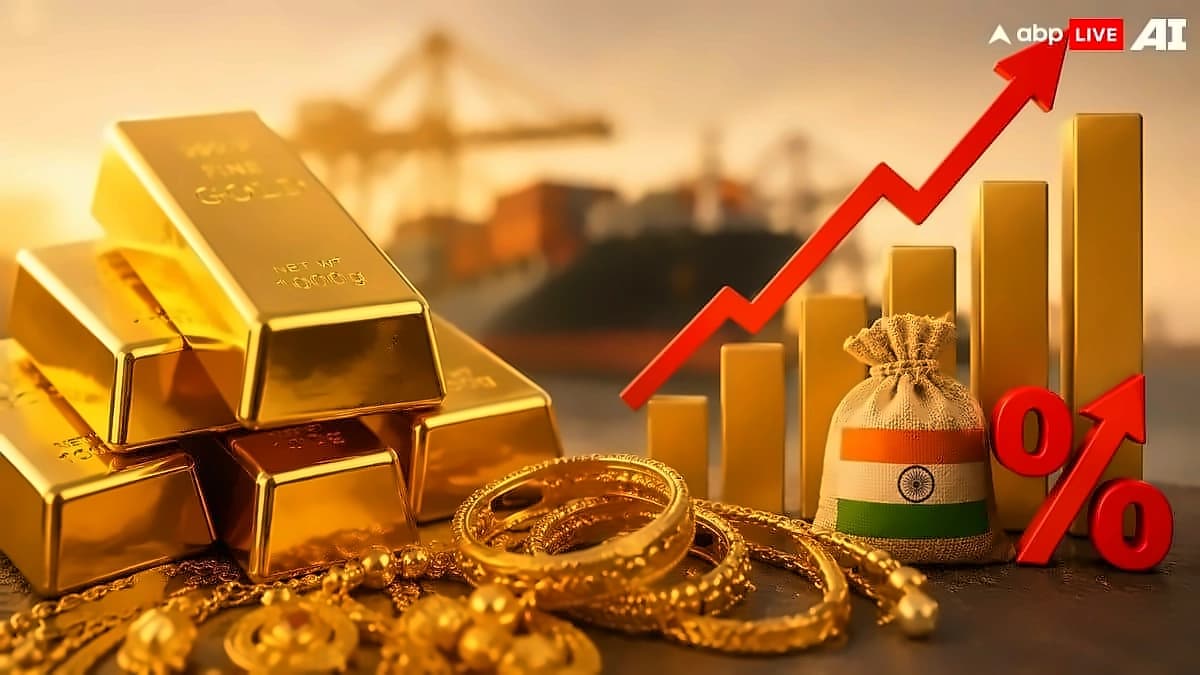
The Centre has revised customs duty rates on gold, silver and other precious metals through a notification issued by the Ministry of Finance on May 13, 2026. Under the new structure, the government has imposed a 10% basic customs duty along with a 5% Agriculture Infrastructure and Development Cess (AIDC) on gold and silver imports, taking the effective import tax to 15% from the earlier 6%. The move aims to curb precious metal imports and ease pressure on India's foreign exchange reserves. As reported by CNBC TV18, this represents a major policy reversal that partially reverses the customs duty cut announced in the 2024-25 Budget, when the government had reduced import duty on gold to 6% to support the gems and jewellery industry. The new rates came into effect from May 13, 2026, just days after Prime Minister Narendra Modi urged citizens to hold off on gold purchases for at least a year to reduce pressure on imports and the foreign currency. Gold accounts for 9% of India's total imports, making the duty hike a significant policy measure as India imports most of the gold it consumes and remains heavily dependent on imported crude oil and LPG.
Gold prices have surged significantly following the duty hike announcement, with gold trading at ₹1,63,000 and silver at ₹2,96,600 at the multi commodity exchange (MCX), representing an over 6% increase from previous levels. At the time of filing this report, gold prices in India were around ₹15,475 per gram for 24K carat, while silver was trading near ₹278,000-₹290,000 per kg. The duty hike has made gold instantly costlier, with retail jewellery prices expected to reflect this quickly. The new structure includes 10% Basic Customs Duty (BCD) and 5% Agriculture Cess, up from the earlier 5% and 1% respectively. The notification also revises duties on jewellery findings and certain industrial inputs, and offers concessional rates (4.35-5%) for recycling/recovery categories like spent catalysts/ash containing precious metals, clearly nudging the industry toward recycling over fresh imports.
The duty hike comes as India faces significant economic pressures from the ongoing West Asia crisis. India's gold imports surged more than 24% to a record $71.98 billion in FY26, even though import volumes fell, with the increase largely driven by soaring global gold prices. At the same time, the rupee hit a record low against the US dollar this week, intensifying concerns over the current account deficit (CAD) and the balance of payments (BoP). Chief Economic Advisor V Anantha Nageswaran described the West Asia crisis as a "live balance of payments stress test" with implications for inflation, the current account and the exchange rate. The International Monetary Fund (IMF) projects a wider current account deficit (CAD) if the war drags on, making India's pre-emptive steps crucial. The government's strategy is simple: a 30-40% drop in gold imports can save $20-25 billion in a year, as less gold buying means fewer dollars leaving India. The move saves forex for essential imports like crude oil (India imports 88% of its oil), narrows CAD, supports the rupee, and reduces speculative gold hoarding.
Consumers are likely to see an immediate impact through higher jewellery prices as import duties directly increase the landed cost of gold and silver, which eventually gets passed on through higher retail prices. Suvankar Sen, MD and CEO of Senco Gold, said the duty hike could lead to a 10–15% decline in gold imports while encouraging customers to exchange old gold for new jewellery. Jewellers and analysts expect many households to postpone fresh purchases, exchange old jewellery or shift toward lighter-weight products. The government is targeting both cultural buying (weddings, festivals) and financial buying (safe haven) through this policy. Higher prices discourage investment buying while PM's appeal discourages ceremonial buying. Recent surge in gold ETFs shows investors had already been shifting to paper gold, and investors may now shift to gold ETFs/digital gold. The move could create short-term pressure on jewellery retailers because elevated prices may weaken discretionary demand, though organised jewellers are likely to push gold exchange programmes, recycled gold and monetisation schemes more aggressively.
Industry voices, including leaders from the India Bullion and Jewellers Association, have cautioned about the smuggling risks associated with the duty hike. "Business is now going to become difficult on the back of the Prime Minister's austerity measures and following the import duty hike in bullion. What the industry fears is that this will give rise to grey market... smuggling is likely to grow, setting up a parallel economy in the country," said Rajesh Rokde, chairman, All India Gems and Jewellery Council. Bullion dealers warn that when duty gaps widen, smuggling becomes profitable. The illegal practice had reduced after tariff cuts in 2024, but with a 15% duty, illegal routes via neighbouring countries can re-emerge. This represents a direct hit on their business with working capital pressure as inventory costs rise. However, some traders have publicly backed the PM's call despite short-term pain, with Malabar Gold & Diamonds submitting a comprehensive proposal to the Government of India recommending strategic enhancements to the Gold Monetisation Scheme (GMS).