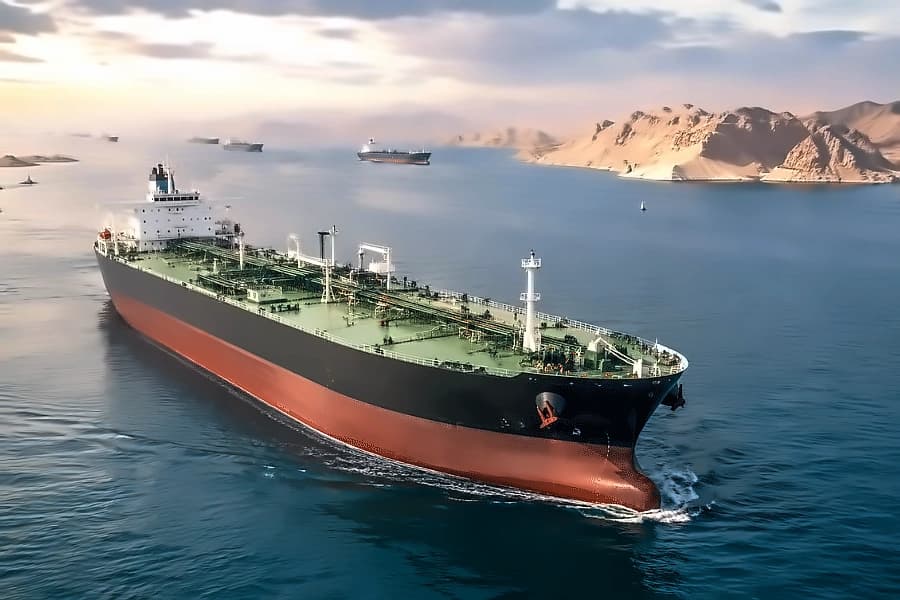
Iran on Wednesday said it had attacked 10 ships near the Strait of Hormuz, following the US statement that it sank five Iranian oil tankers. Reports indicate Iran had fired ballistic missiles at a US military base in Jordan, adding to the ongoing military activity in the region. The Iran's Islamic Revolutionary Guard Corps said it would escalate its response to any further attacks, escalating tensions further. US President Donald Trump warned that the US may hit Iran's Pickaxe Mountain, located near its heavily damaged Natanz uranium enrichment facility, and said the war would likely last beyond the November midterm elections. The United Kingdom Maritime Trade Operations (UKMTO) Centre has released advisories stating it had received reports involving several merchant vessels in the Northern Arabian Gulf and the Gulf of Oman, with vessels subject to disabling fire as part of ongoing military activity.
Oil prices extended their gains on Friday, with both major benchmarks on track to finish the week above $100 a barrel for the first time since mid-May, as escalating US-Iran fighting and attacks on tankers raised fears of wider supply disruptions. Around 7:30 am IST, Brent crude was trading at $107.70 a barrel, up 0.03%, while WTI crude stood at $102.50 a barrel, unchanged. Both benchmarks had surged more than 6% on Thursday, taking their weekly gains to nearly 13%, the steepest increase since the week ended July 17. Brent prices have surged by more than 30% from lows touched in early August as a permanent agreement between the US and Iran to cease attacks never materialized and fighting resumed. The attacks from Yemen on Saudi energy facilities introduce a fresh source of market risk, expanding concerns beyond Iran and the Strait of Hormuz, said Simon-Peter Massabni, head of business development at XS.com. The threat is no longer confined to a single choke point, but now includes the potential for disruptions to ripple across regional export routes, oil production sites and other energy infrastructure.
Iran-aligned Houthis seized control of Yemen's port of Mocha on Thursday, posing further threat to Red Sea traffic, while Gulf traffic remains restricted through the Strait of Hormuz as tanker attacks in the region have intensified in recent days. The Iran-aligned Houthis' control of Yemen's port of Mocha poses fresh challenges to global energy supply chains, adding to the existing disruptions from the Strait of Hormuz. The attacks from Yemen on Saudi energy facilities have added another layer of risk to the oil market, with concerns now extending beyond Iran and the Strait of Hormuz. Oil prices jumped 5% on Thursday, with both major benchmarks trading at over $100 a barrel as the biggest spike in attacks on shipping since the Iran war began fed worries about further disruptions to already tight supplies. The escalation represents a significant expansion of the conflict's impact beyond the Strait of Hormuz, creating multiple chokepoints for global energy transportation.
Goldman Sachs has outlined a scenario in which oil prices could rise to as much as $120 a barrel if attacks on Middle Eastern vessels intensify, according to Daan Struyven, co-head of global commodities research at Goldman Sachs. If exports return to normal, however, the bank expects oil prices to move back towards $80 a barrel. JPMorgan estimates that every additional month of disruption could add around $7 to $8 a barrel to Brent prices, with the bank expecting average monthly Brent prices to reach around $114 a barrel if the disruption lasts three months. Citi has raised its average Brent crude price forecast for the third quarter to $86 a barrel from $80, citing a longer-than-expected timeline for the reopening of the Strait of Hormuz. ANZ analysts have also increased their short-term Brent forecast to $95 a barrel and warned that prices could rise further if the Middle East conflict escalates. They said a prolonged standoff involving calibrated military action by the US and Iran appeared to be the most likely scenario, which could delay the return of full Middle Eastern supply.
The impact of the attacks has also been reflected in US fuel prices. The US national average price of diesel surpassed $6 a gallon for the first time ever on Thursday, according to price tracker GasBuddy, as the US-Iran war and Ukrainian attacks on Russia's refineries have squeezed supply. The flare-up in tensions in the Middle East rattled the stock market: The S&P 500 fell 0.5% on Wednesday after falling 0.6% on Tuesday. The S&P 500 is down just over 2% since hitting a record high in mid-August, as stocks continue to trade close to record highs but the market has taken a step lower over the past month as the rise in oil prices has put nerves about inflation and higher interest rates back in focus. Central banks across the globe are expected to hold rates steady, or even raise rates, in response to the rise in energy prices sparked by the closure of the Strait of Hormuz. Bond yields across the globe have surged in recent weeks as traders brace for central bank rate hikes and assess the inflationary impact of higher oil prices. The 10-year yield traded at 4.84% on Wednesday, its highest level since 2023. Oil returning to the $100 mark raises concern because experts have warned that a prolonged period of steep prices would worsen the economic fallout. Crude is the main ingredient of widely used fuels like gasoline and diesel, both of which have become more expensive in recent weeks.