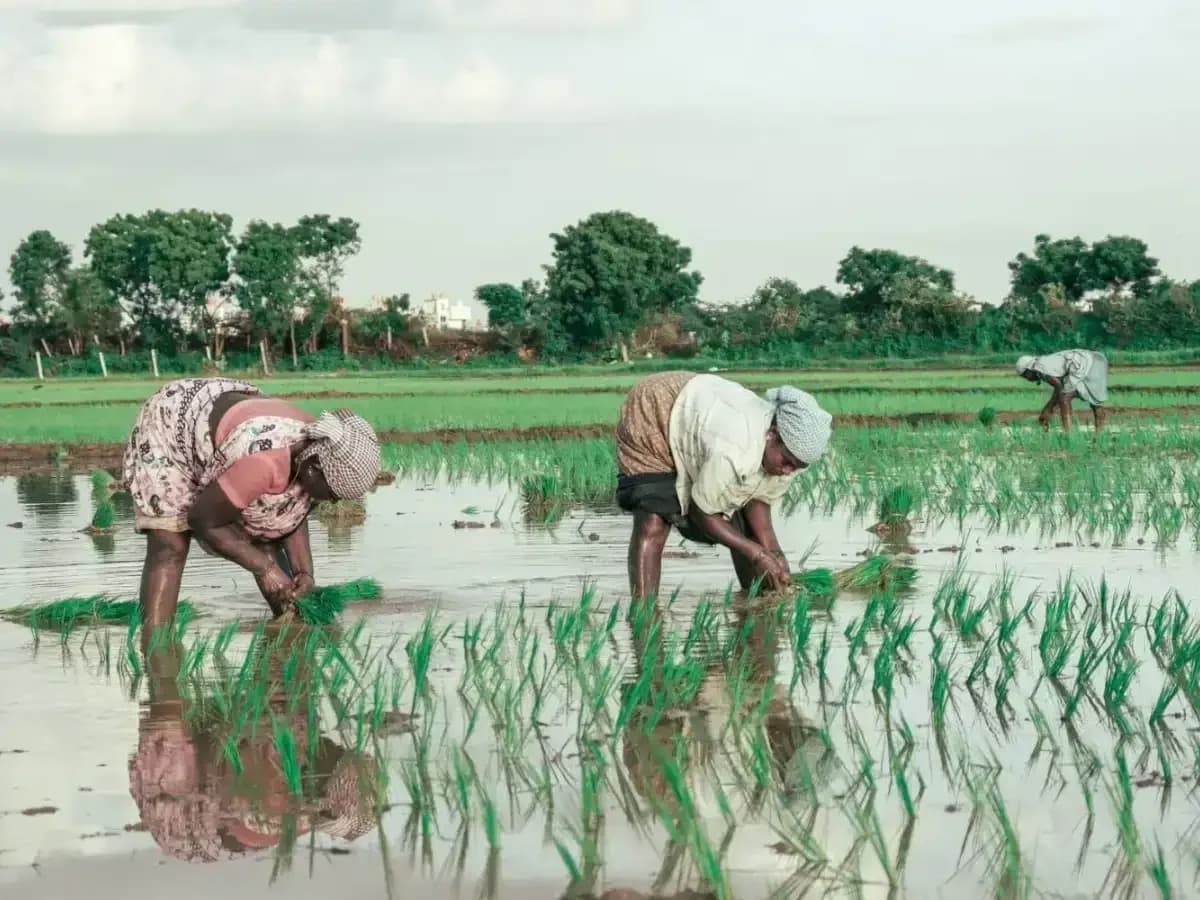
The 2026 monsoon season has concluded with a 13% rainfall deficit, marking the driest monsoon since 2015 according to the India Meteorological Department (IMD). The total monsoon rainfall measured 759.4 millimetres, representing 87% of the long-period average, as confirmed by T. Srinivasa Kumar, secretary at the Ministry of Earth Sciences. 15 states and Union Territories out of 36 received below-normal rainfall, accounting for 40% of the country's geographical area. As many as 313 districts out of 741 in the country are either deficient or large deficient, having received at least 20% below normal rainfall. The country as a whole received 92% rainfall during September, which is 8% below normal according to the weather bureau. The monsoon was 35% deficient in June, 1% surplus in July and 16% less than normal in August, with the season's withdrawal stalled for the past one week. India recorded 12% lower rainfall on a long period average basis, primarily due to development of El Niño conditions, marking the largest deficiency since the 2015 El Nino year, as confirmed by Citi Research.
The monsoon deficit is creating significant ripple effects across India's economy, with erratic rainfall patterns affecting both farmers and retailers during the crucial wedding and festival season. For Ajay Kumar Chutani, whose family has run a sari shop in Karnal since the 1970s, the months after the monsoon are traditionally his busiest period, but this year he's keeping a close eye on his till. "The next three months decide our annual profit," said Chutani, adding he is hopeful for a sales increase. Across India's northern grain belt, including Haryana's breadbasket state, farmers are bringing their harvest to market, but rice yields are down and costs are rising. Jitender Sandhu, who farms 125 acres in Haryana, reported yields running about a fifth below last year, with crop diseases thriving in the dry weather forcing him to buy more pesticides and extra fuel for irrigation systems. Satpal Rana, who sells household appliances near the market, sold only five to six fridges and TVs in the first three weeks of September, compared to five or six a day during the festival period. Bajaj Auto's domestic two-wheeler sales also declined 12% in September, reflecting the broader pullback in farm spending.
The agricultural sector is experiencing severe demand destruction as Mahindra & Mahindra, India's largest tractor maker, reported a 21% drop in tractor sales during September, while smaller rival Escorts Kubota posted a 16.7% decline. According to Business Standard, performance was dented by a patchy monsoon and relatively lower monsoon crop sowing. "Lower farm incomes and, as a result, rising rural indebtedness hurt purchasing power and demand for consumer goods and services, while supply shortages can push up food prices and stoke inflationary pressures," said Rohit Azad, an economics professor at Delhi's Jawaharlal Nehru University. The slowdown mirrors a broader pullback in farm spending, with agriculture company Rallis India reporting that farmers were reducing purchases of pesticides, fertilisers and seeds to conserve cash after the weak monsoon and poorer harvests. Kranthi Bathini, director of equity strategy at WealthMills Securities, highlighted how uneven rainfall and drought-like conditions in parts of India had hurt the agrarian economy, with that weakness visible in segments closely tied to rural demand, such as two-wheelers and tractors.
The Centre has revised down India's foodgrain production target for FY27 to 373.93 million tonnes, representing a 2.63 million tonne reduction from the actual 376.56 million tonnes achieved in 2025-26. According to Agriculture Minister Shivraj Singh Chouhan, the target includes rabi production of 177.72 million tonnes, which is higher than the actual rabi output of 174.51 million tonnes in the previous year. The revised target reflects the impact of El Niño weather patterns strengthening and likely to become 'very strong' in late 2026 and early 2027, as confirmed by the International Research Institute for Climate and Society (IRI) at Columbia University. The crop year runs from July to June, with the government setting targets based on feedback from states and ground conditions, and kharif season production target is 196.21 million tonnes. External Affairs Minister S Jaishankar warned of a 'possible major food crisis' at an Asia Society event in New York on September 29, citing fertiliser shortages, disrupted grain shipments and the prospect of a 'super El Niño' as key concerns for the coming months. While total Kharif crop area sown is dropped 1.2% year-on-year, remaining around normal levels, states accounting for three-fourths of onion, two-thirds of pulses, and half of rice production have witnessed more than 10% deficiency in rainfall, as confirmed by Citi Research.
The monsoon deficit is creating broader economic concerns, with food accounting for more than a third of the retail inflation basket and higher prices later in the year could spill over into other goods and services. Inflation rose to 4.82% in August, its third straight month above the central bank's 4% medium-term target, driven by food prices. Most economists expect the central bank to attempt to contain the threat, raising interest rates as early as its next policy review on October 7, after holding steady throughout the year. The June-September monsoon, which delivers nearly 70% of India's annual rainfall, was 12.6% below normal this year, fuelling concerns over crop yields, rural demand and food inflation in Asia's No.3 economy. The delayed start of the festive season further weighed on sales, with festivals beginning in October this year, compared with September last year, when they boosted demand for vehicles and other big-ticket purchases. Passenger vehicle sales, however, remained strong on urban demand, with Hyundai Motor India posting record monthly sales, while Maruti Suzuki, Tata Motors Passenger Vehicle and Mahindra & Mahindra reported double-digit growth. The full economic impact of the shortfall over the monsoon months will only become clear later this year, when winter crops are growing and more produce has reached the market.