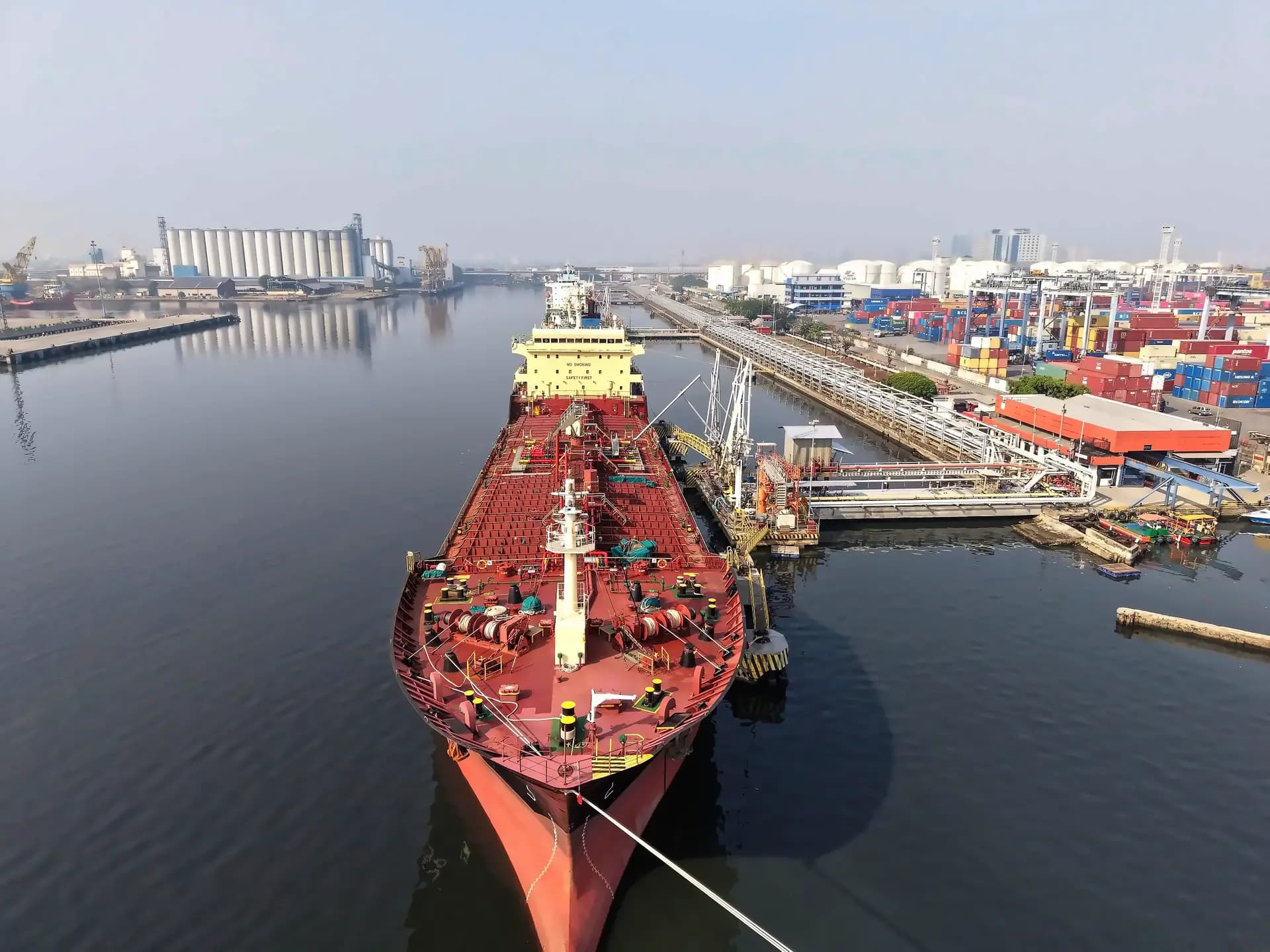
Iran's unused oil storage capacity has declined to just 12-22 days, raising the prospect that the country may be forced to cut daily oil output by another 1.5 million barrels by mid-May, according to research firm Kpler. Crude exports from Iran have fallen sharply since early-April, when US President Donald Trump ordered a Naval blockade of Iranian ports, with shipments most recently dropping to about 567,000 barrels a day, compared to 1.85 million barrels a day in March. Loadings of Iranian crude onto tankers have plunged by roughly 70% since the US blockade took hold, with Kpler noting it has not observed any tankers successfully evading the US naval blockade in the region around the Strait of Hormuz. Iran already has curtailed as much as 2.5 million barrels of daily crude production, with neighboring producers such as Saudi Arabia, Iraq, Kuwait and the UAE also among nations that have had to reduce output since the conflict erupted on February 28.
Oil prices jumped nearly 3% on Monday as peace talks between the US and Iran stalled and shipments through the Strait of Hormuz remained limited, keeping global oil supplies tight. According to Reuters, Brent crude rose $3, or about 2.9%, to $108.36 a barrel by 0828 GMT, its highest in three weeks, while US West Texas Intermediate was up $2.45, or 2.6%, at $96.85. This follows Brent and WTI gaining nearly 17% and 13% respectively last week for their biggest weekly gains since the start of the war. Hopes of reviving peace efforts receded over the weekend when US President Donald Trump said Iran could telephone if it wants to negotiate an end to their two-month war, as reported by The Economic Times. The diplomatic stand-off means that every day 10-13 million barrels of oil fail to get to the international market, worsening an already tight oil balance, said PVM Oil Associates analyst Tamas Varga.
Reports indicate that US President Donald Trump convened a meeting to discuss Iran's latest proposal to end the West Asia conflict, but maintained red lines on any deal, including preventing Iran from obtaining a nuclear weapon. According to CNBC TV18, US Secretary of State Marco Rubio indicated that Iran still wants to retain control of the Strait of Hormuz, which technically is International Waters, and that is something not acceptable to the US. Iran's Foreign Minister Abbas Araqchi would convey to Pakistan that the conflict could end if the US lifts its blockade, agrees to a new legal framework for traffic transit through the strait and issues a guarantee that Iran will never face any military attack in the future, as reported by Iran's media. The proposal seeks the extension of the ceasefire for a long period or till the parties agree on a permanent end to the war, with nuclear negotiations postponed for a later stage. The White House has received the proposal, but it's unclear whether the US is willing to explore it, with Trump not setting an end date for the extended ceasefire, White House press secretary Karoline Leavitt told reporters.
Goldman Sachs Group Inc. lifted its oil-price forecasts as the prolonged closure of the Strait of Hormuz spurs "extreme" inventory draws. According to Bloomberg, Brent is expected to average $90 a barrel in the fourth quarter, up from a previous outlook for $80, with analysts including Daan Struyven and Yulia Zhestkova Grigsby making the revision in an April 27 note. The bank also hiked forecasts for the current and third quarters, marking the latest in a series of revisions. "We estimate that 14.5 million barrels a day of Persian Gulf crude production losses are driving global oil inventories to draw at a record 11 to 12 million barrel-a-day pace in April," they said. "Because extreme inventory draws are not sustainable, even sharper demand losses could be required if the supply shock persists longer." Brent was seen at $100 a barrel this quarter and $93 in the third under the new outlooks, with futures last trading just below $108 a barrel, on course for a sixth daily gain. Goldman Sachs raised its oil price forecasts for the fourth quarter to $90 a barrel for Brent crude and $83 for WTI, citing reduced output from the Middle East, as reported by The Economic Times. "The economic risks are larger than our crude base case alone suggests because of the net upside risks to oil prices, unusually high refined product prices, products shortages risks and the unprecedented scale of the shock," GS analysts led by Daan Struyven said in a note on Sunday.
The market is now expected to see a deficit of about 9.6 million barrels per day in the current quarter, compared to a surplus last year, as reported by ABP Live. With spare production capacity largely inaccessible due to the Strait of Hormuz closure, the burden of adjustment has shifted to inventories and demand destruction. JPMorgan noted that even modest supply shocks can lead to outsized price moves in oil, given its inelastic demand, warning that further price increases may be needed to fully rebalance the market if disruptions persist. Morgan Stanley sees oil average $110 a barrel this quarter, $100 in the next and $90 in Q4, according to CNBC TV18. Morgan Stanley said oil exports from the Persian Gulf have dropped by over 14 million barrels per day due to the Hormuz closure, contributing to a sharp fall in global inventories. Despite the dire outlook for Iranian oil output, the regime in Tehran probably won't begin to fully feel the financial pinch for months, with the impact to revenues not due for about three to four months, as Kpler noted. Goldman Sachs expects a slower recovery in Gulf oil exports, with normalisation now seen by the end of June, compared to earlier expectations of mid-May, reflecting prolonged geopolitical uncertainty.

Despite a ceasefire being in place for most of the month, a blockade by the Strait of Hormuz which both the US and Iran claim to have enforced, the daily transit of ships through the key energy chokepoint has come down to near-zero. According to CNBC TV18, crude, natural gas and oil product flows have all been impacted, thereby raising prices and stoking fears of inflation. The lack of progress means the market is tightening every day, requiring oil prices to reprice at higher levels. There's little alternative to fill a roughly 13 million barrels a day shortfall, said ING Think's Warren Patterson and Ewa Manthey in their Monday commodities feed. John Kilduff, partner with Again Capital, said the market was being buffeted by alternating news reports of Trump extending the ceasefire this week and threatening to sink Iranian mine-laying ships, calling it 'headline roulette'. The diplomatic stand-off means that every day 10-13 million barrels of oil fail to get to the international market, worsening an already tight oil balance, said PVM Oil Associates analyst Tamas Varga.