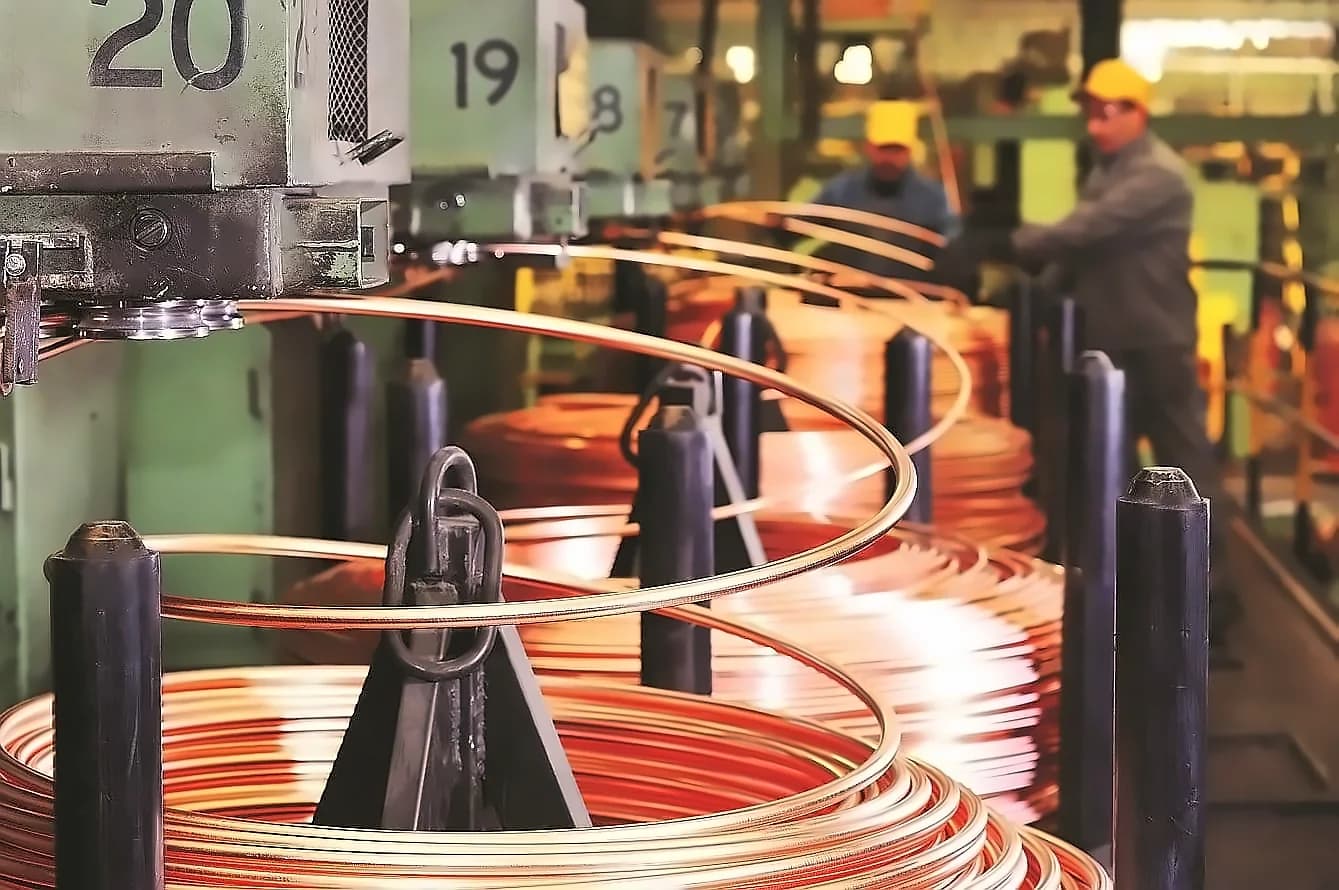
Copper futures achieved a fresh record high of $6.95 per pound on September 22, marking a significant milestone in the metal's remarkable 2026 performance. According to reports from CNN, this surge has revived discussions about copper potentially closing the gap with gold as a store of value. The metal's nearly 20% climb this year puts it on track for one of its strongest years on record, with gains widening to more than 46% over the past year. This performance stands in stark contrast to gold's minimal movement, which has added just 0.02% over the same period, as reported by BeInCrypto.
Deutsche Bank has issued an even more bullish outlook for copper prices, predicting they could surge to $22,050 per metric ton by Q2 2027, representing more than 50% above current levels. As reported by The Economic Times, analyst Daniel Ghali calls the current environment a "historic scramble for metal" and expects copper prices to climb to $22,050 per metric ton by the second quarter of 2027. Ghali warns that the squeeze could become even more pronounced if stockpiling continues at the current pace, with copper supply available to other global users potentially exhausted by late 2028. The bank expects the market to move away from a "demand-driven" dynamic towards a "supply liquidity crisis" as buyers compete for an increasingly limited pool of spot supply.
The copper rally has been supported by significant supply tightening across major markets. As reported by CNN, Shanghai warehouse stocks of copper cathode fell to 43,900 tonnes, marking the lowest level since 2023. Additionally, London Metal Exchange (LME) inventories available to the market dropped to 133,725 tonnes. Earlier in September, a stalled US tariff plan briefly knocked almost 8% off the price, but the metal has since erased that pullback and continued setting fresh records. The tightening supply conditions have created a fundamental shift in market dynamics that has benefited copper prices significantly. According to The Economic Times, Deutsche Bank estimates that copper inventories held by the United States and major Asian consumer markets could account for 71% of total global supply by year-end, as China accumulates strategic reserves and US tariff threats encourage more metal into American warehouses.
According to CNN reports, tightening supply, tariff uncertainty, and demand tied to artificial intelligence are driving copper toward record levels. Investment manager Michael Burry highlighted the structural shift, noting that new copper deposits take roughly 18 years to reach production, while AI data centers add fresh demand within two to three years. This fundamental mismatch between supply timelines and demand growth has been central to Burry's investment strategy, leading him to favor copper miners over AI stocks. The AI-driven industrial demand is reshaping which commodities investors treat as scarce, with copper benefiting from this transformation. As reported by The Economic Times, the current copper prices are still not high enough to trigger large-scale substitution with aluminium, despite aluminium's lower electrical conductivity, keeping supply tight and supporting copper prices.
As reported by CNN, Washington now holds the next major catalyst for copper markets. A long-delayed Commerce Department ruling on tariffs for refined copper imports remains pending, with traders expecting the decision to move prices sharply once it is announced. Despite copper's strong performance, it remains significantly smaller than gold's market, with gold's global stock worth close to $30 trillion compared to copper's much smaller market size. While copper is winning the growth argument, gold still dominates on scale, though the 2026 divergence suggests AI-driven industrial demand is fundamentally reshaping commodity investment patterns. For now, copper is winning the growth argument even if gold still wins on size. According to The Economic Times, the Iran conflict has added further pressure to an already tight supply picture, while growing shortages of sulfuric acid, a key input in copper extraction, have tightened availability.