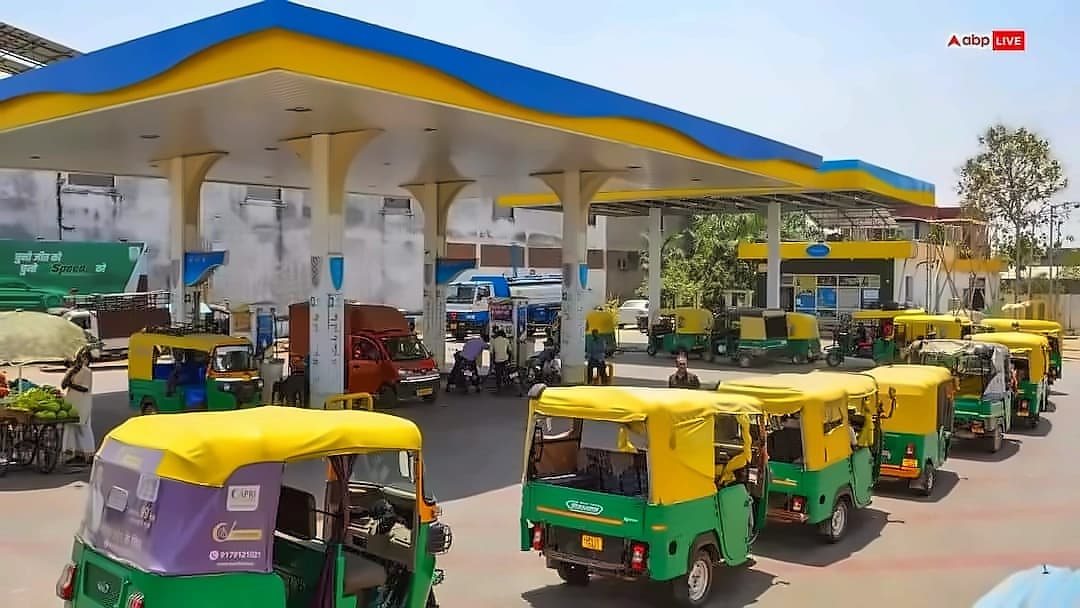
Compressed Natural Gas (CNG) prices have been increased by Rs 2 per kilogram in Mumbai and adjoining areas, raising the retail selling price (RSP) from Rs 84 per kg to Rs 86 per kg. According to reports from The Times of India, the revised rates came into effect from midnight on May 29-30. The price hike is expected to impact a large number of CNG users, including private vehicle owners, taxi operators, auto-rickshaw drivers, and commercial transport operators who rely on the fuel for daily operations. Additionally, Mahanagar Gas Limited (MGL) has also increased Domestic Piped Natural Gas (PNG) by Rs 0.50 per standard cubic metre (SCM), with the revised rates now priced at Rs 52 per SCM. The fresh revision takes the CNG rate from Rs 84 per kg to Rs 86 per kg across the Mumbai Metropolitan Region (MMR), including Mumbai, Thane, Navi Mumbai and other parts of the region. As per Mahanagar Gas Ltd (MGL), about 12 lakh vehicles in the Mumbai Metropolitan Region run on CNG, including nearly three lakh auto-rickshaws, making this hike particularly impactful for the region's transport sector. The latest hike covers Mumbai, Thane, Navi Mumbai and other parts of the MMR, while MGL's gas supply network also extends to cities such as Kalyan, Raigad, Ratnagiri, Latur, Osmanabad, Chitradurga and Davanagere.
According to the latest rates effective June 1, 2026, CNG prices vary significantly across Indian cities. New Delhi and NCR cities are the cheapest at Rs 83.09 per kg, while Mumbai maintains its rate at Rs 86 per kg. Cities like Hyderabad, Firozabad, and Mathura are the most expensive at Rs 97 per kg, with Chennai and Bengaluru priced at Rs 95 per kg. The price differential reflects regional supply chains and local market conditions. Indraprastha Gas (IGL) has also increased CNG prices by Rs 2 per kg on May 26, making it the fourth upward revision in two weeks for northern cities. This represents the second price increase in just over two weeks, with the first hike occurring on May 14 when gas distribution companies raised prices by Rs 2 per kg from Rs 82 to Rs 84 per kg.
According to officials of Mahanagar Gas Ltd (MGL), rising input costs and disruptions in the global gas market have contributed to the latest hike. As reported by The Times of India, officials said ongoing geopolitical tensions in West Asia have affected supply conditions and increased import-related expenses, prompting the company to revise prices. The company has specifically attributed the increase to reduced allocation of domestic natural gas, increased dependence on costlier gas sources, and the depreciation of the Indian Rupee, which have contributed to higher operational expenses. As per company officials, increased procurement costs, reduced domestic gas allocation, higher-cost gas sources, and rupee depreciation are the main factors driving the price revision. The price of piped gas will be revised to Rs 52 per unit, which will impact more than 31 lakh households across MMR. The West Asia conflict continues to be extremely intense, as a ceasefire agreement between US and Iran is still foggy, keeping the fate of the Strait of Hormuz dangling. Fuel prices continued their upward trajectory on Monday, with petrol becoming Rs 2.61 per litre costlier and diesel rising by Rs 2.71 per litre, marking the fourth revision in under 14 days amid the delayed transmission of higher global oil costs driven by the US-Iran war.
Company officials have instructed all dealers and distributors to implement the revised rates immediately and inform consumers about the changes. The latest revision marks the second CNG price hike this month, following an earlier increase on May 14 when gas distribution companies raised prices by Rs 2 per kg from Rs 82 to Rs 84 per kg. With the latest revision, CNG prices in Mumbai have increased by a total of Rs 4 per kilogram within just over two weeks. The price adjustment affects the entire Mumbai metropolitan region and surrounding areas where CNG is available for retail sale, with the revised rates expected to impact lakhs of motorists, daily commuters, commercial vehicle operators, and households using natural gas across the region. Notably, this represents the second price increase in just over two weeks, highlighting the rapid pace of fuel cost adjustments in the current market environment. Fuel prices have been raised as part of a wider effort to manage India's energy expenditure during a period of geopolitical uncertainty, with the Middle East conflict erupting on February 28, following joint US-Israeli military action against Iran, intensifying with Iran responding through strikes targeting Israel and US bases in the region.
Despite the price increase, Mahanagar Gas Limited (MGL) stated that CNG remains one of the most economical fuel options available. The company estimates that CNG still offers savings of around 45% compared to petrol and nearly 12% compared to diesel at current fuel prices in Mumbai. However, the consecutive increases are expected to add financial pressure on auto-rickshaw and taxi operators who rely heavily on CNG as their primary fuel. Following the previous increase, representatives of auto-rickshaw and taxi unions had urged transport authorities to approve a fare hike of Rs 1 per kilometre, arguing that rising fuel and operating costs were affecting their earnings. Mumbai Rickshawmen's Union leader Thampy Kurien said the increase in gas prices has led to fresh calculations as per the fare hike formula, with the formula showing a need for a fare hike of around ₹1.12 per km on base fare, which is rounded off to a rupee fare hike. Industry representatives argue that repeated fuel price revisions are affecting their earnings and making operations increasingly difficult. In Mumbai, petrol and diesel are currently priced at Rs 111.21 and Rs 97.83 per litre, respectively, with the latest revision coming amid the delayed transmission of higher global oil costs.
The fresh increase has reignited demands from auto-rickshaw and taxi unions for a fare revision. Mumbai Rickshawmen's Union leader Thampy Kurien said the increase in gas prices has led to fresh calculations as per the fare hike formula, with the formula showing a need for a fare hike of around ₹1.12 per km on the base fare, which is rounded off to a rupee fare hike. According to company officials, the transport department will forward the proposal to the Mumbai Metropolitan Region Transport Authority (MMRTA), which makes the final decision on auto and taxi fare revisions. Taxi unions have also sought an increase of ₹2-3 in the minimum fare, arguing that repeated fuel price hikes over the past year have sharply increased operating costs. Union leaders said consecutive CNG price hikes are squeezing drivers' incomes and making it increasingly difficult to sustain operations without a corresponding fare increase. Another union leader noted that the back-to-back hikes are making it impossible to survive without a corresponding fare correction, as drivers cannot absorb these rising fuel costs indefinitely. Prime Minister Narendra Modi has urged both government offices and the public to adopt measures aimed at reducing fuel usage, his recommendations including encouraging remote working and curbing discretionary travel to help ease pressure on India's external finances.