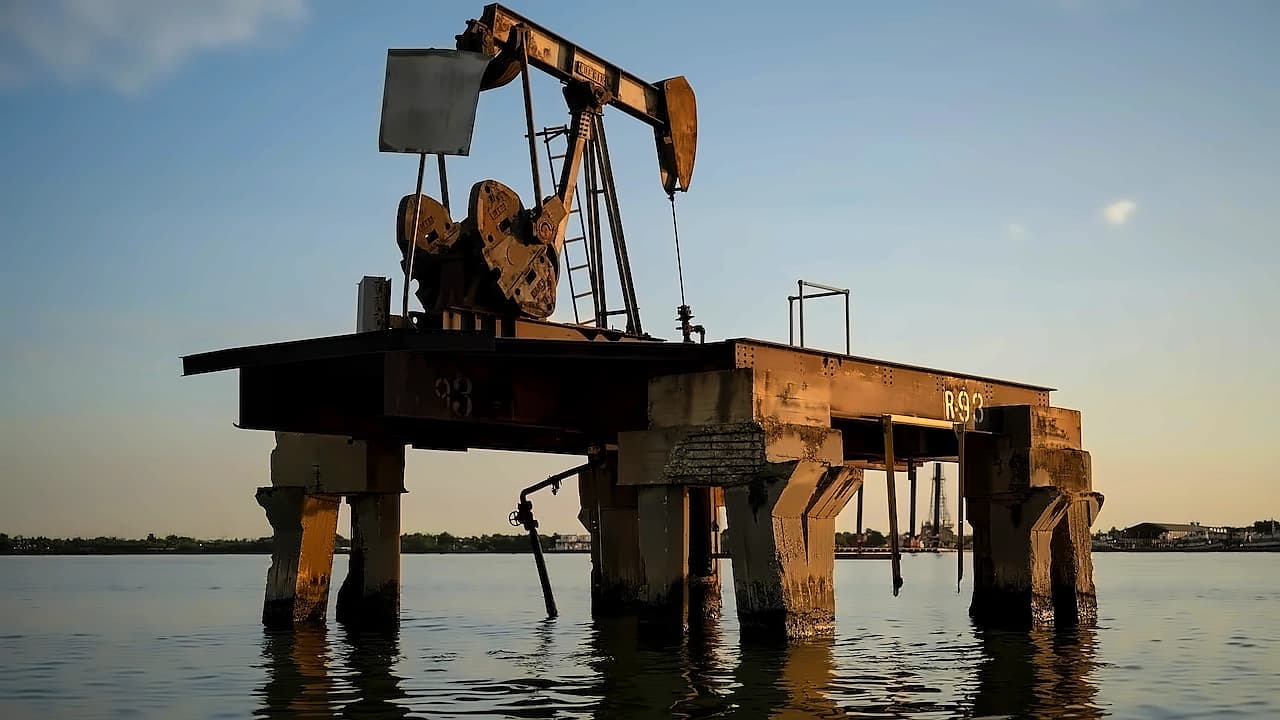
BP has formally launched a sale process for its North Sea oil and gas business, marking the end of 60 years of regional production. According to reports from BBC News, the decision was announced Friday after the company reviewed its global operations. The North Sea unit operates five production hubs and employs approximately 1,100 workers. BP CEO Meg O'Neill framed the sale as part of a shift toward BP's 'highest-value opportunities', with the company's global headquarters remaining in the UK where it employs about 13,960 people. As per IG market analyst Chris Beauchamp, this represents 'a watershed moment' that signals BP's lack of confidence in the UK government's ability to re-energize energy policy.
The sale comes as Prime Minister Andy Burnham has signaled a more pragmatic approach to North Sea drilling policy. As reported by BBC News, Burnham told US President Donald Trump this week he would take a 'pragmatic approach' to North Sea oil and gas, stating 'There is a resource there. When people are struggling – you can't ignore that'. On Thursday, Burnham reiterated his stance, adding that 'the government could not ignore the potential energy resources' in the North Sea. This shift follows months of debate, with the Iran war pushing oil prices past $110 a barrel earlier this year, reviving calls for expanded drilling from Conservatives, Reform UK, and Trump himself.
The sale could fetch BP up to £2 billion, according to earlier reporting on failed talks with Ithaca Energy. Energy Secretary Miatta Fahnbulleh said she was staying in close contact with BP, with her priority being protecting workers and the local community during the sale process. The sale represents a significant strategic pivot for BP, ending decades of regional production while maintaining its UK operations and global headquarters. BP's new CEO Meg O'Neill, who took over on April 1, is trying to simplify the company and cut debt levels through this divestiture.
The North Sea has produced 47.7 billion barrels of oil equivalent (BOE) from the UK continental shelf as of end-2024, with the North Sea Transition Authority estimating 2.9 billion BOE of UK oil and gas reserves remaining. Additionally, there are 6.2 billion BOE of contingent resources and 4.6 billion BOE of prospective resources that could be extracted with government approval. BP's involvement in the North Sea dates back to 1964 when it was granted its first UK North Sea exploration licence, discovering the West Sole gasfield in 1965 and the giant Forties field in 1970. The company has been cutting its UK exposure this year, including plans to sell stakes in two carbon capture projects in May.
The planned exit faces criticism from environmental groups, with Greenpeace UK's Angharad Hopkinson calling BP's withdrawal 'the canary in the coalmine for a toxic, declining basin'. She argued that 'if the North Sea really were the saviour of jobs, opportunity and energy security that the fossil fuel lobby claims, its biggest beneficiaries wouldn't be heading for the exit'. The policy shift reflects internal Labour Party divisions, with some Labour MPs wanting a looser approach to drilling, while others, including former energy secretary Ed Miliband, still defend the party's pledge against new licenses. BP's exit comes as the climate crisis leads to wildfires and drought conditions across Europe, adding urgency to the debate over fossil fuel production.