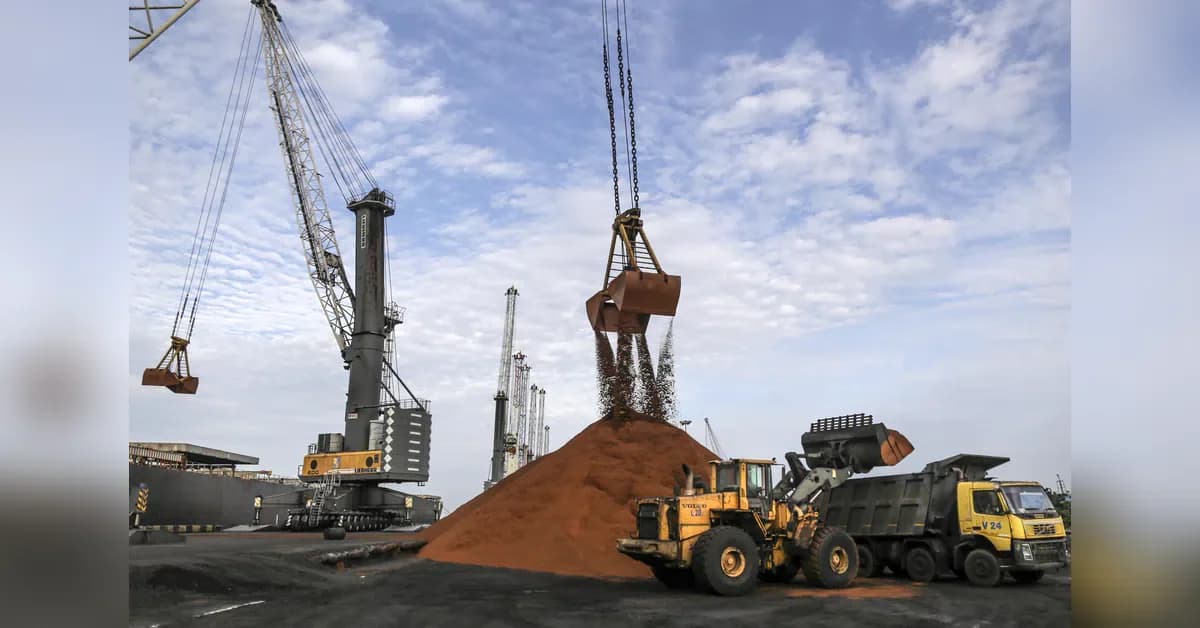
Iron ore futures rebounded toward CNY 770 per ton amid supply disruption concerns, as potential strikes at Australia's Port Hedland threaten to impact global supply chains. According to latest reports, two labor unions reported that a majority of their members voted in favor of industrial action, which could begin within days. Workers are seeking better pay and working conditions at the world's largest mining operation. This development comes as BHP Group and Rio Tinto Plc are positioning India as the next major growth driver for global steelmaking, marking a significant strategic shift as these companies prepare for a future beyond China's dominance.
India has set an ambitious production target of 500 million tons by 2047, representing a significant increase from the 165 million tons of raw steel produced last year. As reported by Business Standard, this target is slightly more than triple the current production levels, though it remains far below China's 961 million tons produced in the same period. The government's commitment to steel production growth is supported by rapid urbanization and government-backed infrastructure spending, creating sustained demand opportunities for global miners supplying iron ore and metallurgical coal.
Rio Tinto Chief Commercial Officer Bold Baatar emphasized that the global market would require about 950 million tons of new iron ore capacity in the coming decade. According to Business Standard, this capacity expansion is necessary not only to meet new demand but also to counter the depletion of existing mines. Baatar argued that analysts have consistently underestimated the strength of the iron ore market, with forecasters not accounting fully for supply risks, declining quality of iron ore deposits, and the resilience of China's steel production. The growth is expected to come primarily from the Global South, especially India and ASEAN countries.
Iron ore stockpiles at major Chinese ports increased to 160 million tons last week, indicating abundant supply availability. However, China's iron ore imports fell nearly 6% in May compared to the previous month, contrary to expectations for a rise, as steelmakers limited purchases to near-term requirements ahead of a seasonally softer demand period. The potential BHP strike at Australia's Port Hedland, combined with these supply chain disruptions, is creating additional pressure on global iron ore markets and supporting the recent price surge toward CNY 770 per ton.