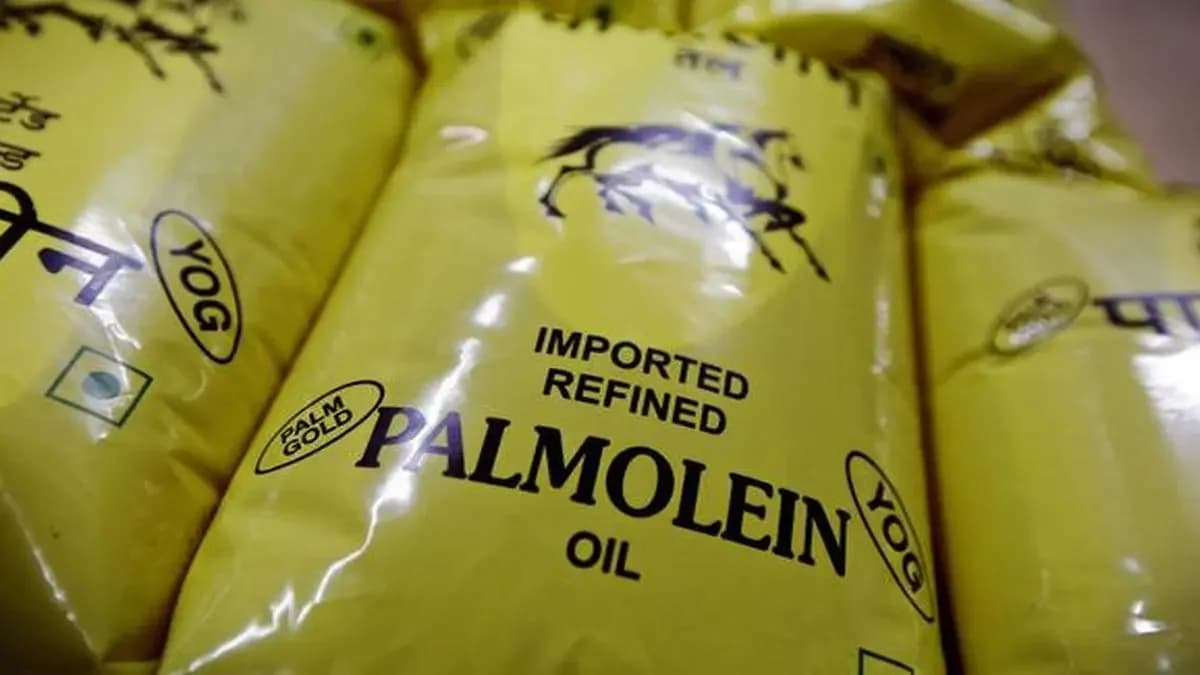
According to the US Department of Agriculture's November report titled 'Oilseeds: World Market and Trade', Argentina has displaced Indonesia to become India's largest vegetable oil supplier in marketing year 2025-26 (October-September). As reported by The Hindu BusinessLine, Argentina imported 3.42 million tonnes of edible oils during November 2025 to September 2026, followed by Malaysia at 2.97 million tonnes and Indonesia at 2.90 million tonnes. The Solvent Extractors' Association of India's data corroborated these figures, showing Argentina's dominant position in India's vegetable oil imports. According to the latest USDA report, total palm oil imports reached 8.4 million tonnes, soybean oil at 5 million tonnes, and sunflower oil at 3.85 million tonnes during the period.
According to the USDA report, Argentina's position as the largest supplier is driven by strong demand for soybean oil and recent cuts to export taxes that have increased its competitiveness. Sudhakar Desai, President of Indian Vegetable Oil Producers' Association (IVPA), told businessline that Argentina's number one ranking is more likely to move from year to year, but its structural advantage lies in having a large, export-oriented crushing industry capable of supplying both soybean and sunflower oil. BV Mehta, Executive Director of SEA, noted that Argentina's major advantage is its availability, as it has a big crushing facility and is a major producer of soybean oil. In 2025-26, strong Indian soybean oil demand, lower Argentine export taxes and an opening in sunflower oil as Black Sea shipments eased all worked in Argentina's favour, giving it more than one route to retain a large share of the Indian market.

The USDA report reveals that India modestly increased sunflower oil imports in 2025-26, with Argentina becoming the dominant supplier since July 2026. According to IVPA's Desai, the Government's September 24 decision to cut basic customs duty on crude sunflower oil to zero percent from five percent gave sunflower oil further advantage against competing oils. The report indicates that competitive Argentine prices have led India to double sunflower seed oil purchases compared to the previous marketing year, with Ukraine having a smaller sunflower seed crop and Russian shipments slowing in recent months. Since July 2026, Argentina has been the dominant sunflower seed oil supplier to India, with the cut applied across origins and coming after Argentina had already gained ground through competitive offers and available cargoes.
The USDA report highlights that new suppliers including China and Nepal have emerged as important players in India's vegetable oil market. China is now the largest soybean oil exporter outside South America due to record crush, while Nepal has boosted its market share through duty-free refined oil access under the South Asian Free Trade Agreement. DN Pathak of Soybean Processors Association of India noted that Chinese soybean oil can be competitive for particular shipment windows, with record crushing creating exportable surplus and Chinese sellers offering discounts when needed to move stocks. However, Pathak termed China's ability to compete over a full season as purely temporary, noting that China is a net importer of edible oils as well as oilseeds. The comparison depends on soybean imports, crush rates, domestic demand and how much surplus is available for export.
According to the USDA report, Indonesia's trade with India has been declining since 2022-23 due to rapid implementation of biodiesel blending mandates that have resulted in larger palm oil domestic consumption. In 2025-26, Malaysia and Thailand have increased palm oil shipments to India, aided by stronger production and price competitiveness against Indonesian origin. Sudhakar Desai noted that while Indonesia's biodiesel programme keeps more palm oil at home, its export scale means it will remain a core supplier to India, with Malaysia capable of taking a meaningful share. Interestingly, India also imported palm oil from Colombia, which has started producing around 1.8-2 million tonnes of palm oil. SEA's Mehta confirmed that both Malaysia and Indonesia are supplying palm oil to India, while Thailand, which exported small quantities, is unlikely to export larger quantities.