Analysts anticipate the RBI may hike its policy repo rate by 50 basis points in 2026, marking a significant shift from the current stance. As per The Economic Times, Goldman Sachs forecasts the Indian economy to grow by 5.9% in 2026, as compared to its pre-Iran war forecast of 7%, while inflation is seen rising to 4.6% in 2026 from their earlier expectation of 3.9%. The Indian central bank reduced rates by a cumulative 125 basis points in 2025 but paused at its February meeting. Malhotra said in December that India's economy was in a "Goldilocks" phase - combining strong growth with low inflation - giving the central bank room to keep policy loose for an extended period. However, little did investors then know what was coming for them in 2026. War broke out in the oil-rich Middle East between Iran and US, sparking a skyrocketing rally in oil prices, a massive selloff on Dalal Street and raising questions over the possible impact on India's macroeconomics.
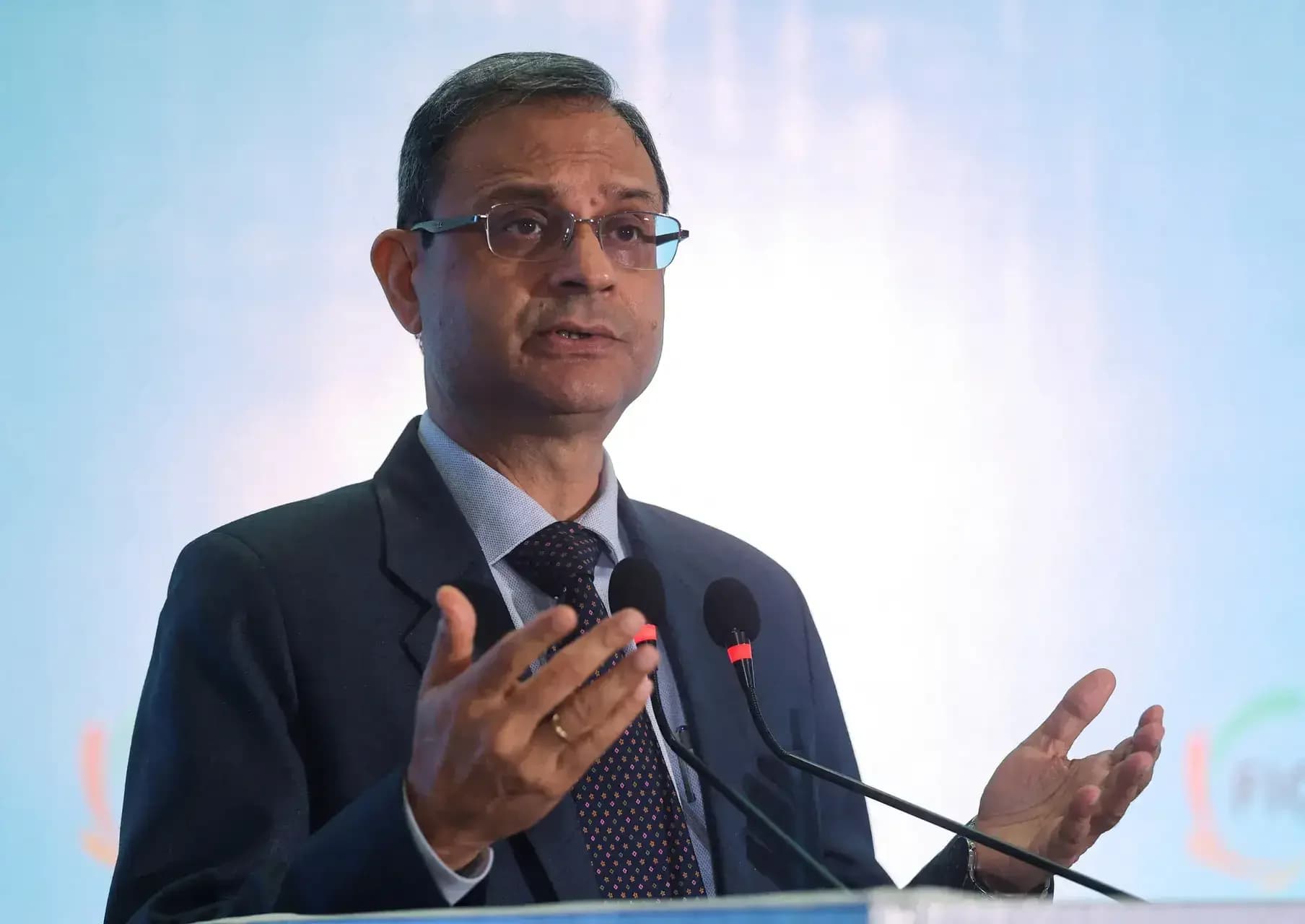
The Reserve Bank of India's Monetary Policy Committee (MPC) decided to keep the benchmark repo rate unchanged at 5.25% for the second consecutive meeting in April 2026, as announced by RBI Governor Sanjay Malhotra on Wednesday, April 8. The central bank maintained the policy stance as "neutral", dismissing earlier market speculation about potential rate hikes. As per The Times of India, the decision came after the MPC's detailed assessment of evolving macroeconomic and financial developments, with the committee voting unanimously to keep the policy repo rate under the liquidity adjustment facility unchanged at 5.25%. Since February 2025, the RBI has cut the repo rate by 1.25%, but rates were kept unchanged in August 2025, October 2025, February 2026, and now April 2026 policy reviews. The decision to keep rates unchanged was unanimous, with the standing deposit facility rate and the marginal standing facility rate also retained at 5% and 5.5%, respectively. This was the first policy decision since the US Iran conflict entered its sixth week, with a temporary pause in hostilities announced to facilitate negotiations.
Standard Chartered's Anubhuti Sahay noted that while the RBI's growth projection of 6.9% for FY27 appears optimistic compared with market estimates of 6.4%, the central bank's cautious and measured communication provides reassurance to markets amidst ongoing global uncertainties. As per The Economic Times, Sahay highlighted that "The MPC has projected 6.9% growth for FY27. We are at 6.4%. It looks optimistic, but RBI aims to stabilise market sentiment. Sharp downgrades are not typical for central banks, so a gradual adjustment was expected." On the tone of the policy, she said "This is a very good, balanced policy. The MPC is on wait-and-watch mode, noting upside risks to inflation, downside risk to growth, and staying vigilant on FX volatility. The communication is clear and comforting for the markets." Addressing the impact of global energy supply and the war, Sahay said "Two big ifs remain—the timeline of the war and its aftermath. Even if the war ends, energy prices could stay high if infrastructure is damaged. We can't predict this precisely."
For home loan borrowers, the decision offers clarity and stability amid global economic uncertainties. As per Mint, those with repo-linked loans continue to benefit from earlier rate cuts in 2025, with no immediate increase in EMIs. Adhil Shetty, CEO of BankBazaar, noted that "This is not a routine pause," pointing to supply-side shocks driven by the West Asia conflict and sharp rise in crude oil prices. The Monetary Policy Committee's unanimous decision signals a deliberate choice to wait before acting in either direction. Shetty highlighted tangible gains for borrowers, stating that on a ₹50 lakh, 20-year loan, the EMI saving is around ₹3,050 per month and lifetime interest savings of ₹7.34 lakh. For a ₹75 lakh loan, the monthly saving is approximately ₹5,800, with total interest savings of ₹13.94 lakh. Atul Monga, CEO and co-founder of BASIC Home Loan, said the RBI's decision aligns with expectations and reflects a balanced, confidence-driven approach.
RBI Governor Sanjay Malhotra pointed out five ways in which the Indian economy will be impacted by the ongoing conflict, elaborating on the channels through which the shock can be transmitted. As per The Times of India, the first risk involves elevated crude oil prices that could increase imported inflation and widen the current account deficit. The second risk stems from disruptions in energy markets, fertilisers and other commodities that may adversely impact industry, agriculture and services, reducing domestic output. The third risk encompasses heightened uncertainty, increased risk aversion and safe haven demand that could impact domestic liquidity conditions, economic activity, consumption and investment. The fourth risk involves weaker global growth prospects that may dampen external demand and reduce remittance flows. Finally, adverse spillovers from global financial markets could tighten domestic financial conditions and raise the cost of borrowing. The governor has cautioned that what has begun as a supply shock can potentially transform into a demand shock over the medium term if the restoration of supply chains is delayed.
The Reserve Bank of India's six-member Monetary Policy Committee (MPC) headed by Governor Sanjay Malhotra unanimously decided to keep repo rate unchanged at 5.25% for the second straight meeting on Wednesday, April 8. The MPC raised India's real gross domestic product (GDP) forecast for financial year 2026 to 6.9% from its earlier growth forecast of 6.7%, but for the current financial year, GDP growth is expected to moderate to 6.9%. The MPC projected quarterly growth at 6.8% in April-June, 6.7% in July-September, 7.0% in October-December and 7.2% in January-March. In a first, the RBI also provided a projection for core inflation, which it expects at 4.4% for the year, with core inflation excluding precious metals even lower, indicating subdued underlying price pressures. Governor Sanjay Malhotra noted that India recorded a GDP growth of 7.6% in FY26, reflecting "strong momentum" driven by robust consumption and investment, supported by policy measures, structural reforms and favourable financial conditions. However, he flagged emerging headwinds, particularly from elevated energy and commodity prices and disruptions to input supplies linked to tensions in West Asia, including the Strait of Hormuz. "Risks are on the upside," Malhotra said, citing global commodity price volatility and weather-related uncertainties. He also cautioned the rising global crude oil prices, supply chain disruptions and the Super El Nino weather phenomenon could stoke inflation. The RBI's inflation forecast is based on an assumed crude oil price of $85 per barrel and an exchange rate of ₹94 to the dollar for 2026-27.
RBI Governor Sanjay Malhotra highlighted that India's current account deficit (CAD) is at risk due to trade disruptions and the conflict with elevated crude oil prices, increasing fears of a widening deficit. "Rising global uncertainties and elevated prices of key energy commodities pose some upside risks to India's current account deficit in 2026-27," Malhotra stated. Apart from oil, fertilisers, and other commodity disruptions, may also impact the Indian industries, agriculture and services sector due to the reduced domestic output, amid the heightened uncertainty, increased risk aversion and safe haven demand. With merchandise imports witnessing 22.2% growth, driven by higher gold imports, have resulted in a widening trade deficit. Governor Malhotra also highlighted that although the gross foreign direct investment (FDI) witnessed strong growth, the Foreign portfolio investment (FPI) outflow from emerging markets like India was a result of the elevated global geopolitical, trade and investment uncertainties. "Foreign portfolio investment (FPI) to India, driven by outflows in the equity segment, recorded net outflows of $16.5 billion in 2025-26, followed by outflows of $5.4 billion in 2026-27 (till April 6)," Malhotra noted. However, the RBI also said that the bilateral and regional trade agreements with major trading partners are expected to boost India's trade and investment opportunities in the future.
The policy review, at the margin, is positive for your investments. Low inflation is positive for both equity and bond markets, as per Mint. The inflation projection was bound to be revised upwards, but at 4.6% it remains just a shade higher than the RBI's target of 4%, providing comfort that there is no pressing need for a rate hike. The RBI's projection of $85 oil for 2026-27—regardless of whether it proves accurate—signals their expectation that current price spikes will eventually subside. Assuming the MPC maintains the status quo on interest rate over the next year or so, there is no need to shuffle your portfolio based on this. The market's reaction has been positive, with equity indices up not only due to the RBI policy but also the thaw in geopolitical tensions with a two-week ceasefire between the US and Iran. Bond yields have eased—meaning prices have increased—since the policy announcement. If the ceasefire holds and crude oil prices ease, there could be relief on inflation as India imports a large chunk of its crude oil requirement, apart from other goods. Going forward, even if the two-week ceasefire holds, geopolitical tensions are here to stay. The international rule-of-law framework is broken, this means gold prices will likely remain supported as central banks move away from other assets towards gold. You should have a 10-15% gold allocation in your portfolio. While any economy will be affected by a global crisis, India remains a structural growth story with fundamentals strong enough to withstand significant shocks.