The Reserve Bank of India's Monetary Policy Committee (MPC) kept the repo rate unchanged at 5.25% on Wednesday, marking the second consecutive pause after February's decision. This decision reflects a cautious approach as the central bank maintains its neutral stance amid rising global uncertainties, particularly due to escalating geopolitical tensions and disruptions in global supply chains. The unanimous decision comes after a 25 basis points cut in December 2025, with policy rates remaining unchanged in four of the last five meetings following cumulative rate cuts of 125 basis points during 2025. According to ANI, economists have opined that the central bank is most likely to maintain the 'status quo' on repo rates, with the RBI pursuing a 'wait and watch' approach given the volatile global environment. The central bank appears to be in a wait-and-watch mode, prioritizing stability while retaining flexibility to act as conditions evolve.
The MPC flagged a rise in upside risks to inflation, reflecting caution amid global and domestic uncertainties. CPI inflation projections have been revised sharply higher compared to earlier estimates, particularly for FY26 and near-term quarters. The RBI expects CPI inflation at 4.6% for FY27, with quarterly prints ranging between 4% and 5.2%, remaining within the mandated 2-6% band. Core inflation is estimated at 4.4%, and the central bank will now provide core inflation projections regularly going forward. The inflation outlook faces upside risks, primarily due to higher global energy prices, potential supply disruptions, and weather-related uncertainties such as the possibility of El Niño. As per Crisil's Principal Economist Dipti Deshpande, the RBI's GDP projections will be about 7% for Q1 and Q2, with numbers different from February estimates. The central bank may consider providing scenario-based projections for growth given the increased uncertainties around its forecasts.
The RBI has slightly moderated its growth outlook for FY2026–27, with GDP growth projected at 6.9% for the full year. The quarterly breakdown shows 6.8% in Q1 (vs 6.9% earlier), 6.7% in Q2 (vs 7.0%), 7.0% in Q3, and 7.2% in Q4. This reflects the potential impact of higher energy prices, supply chain disruptions, and global uncertainty arising from the ongoing West Asia conflict. However, GDP growth for FY2025–26 is estimated at 7.6%, indicating strong underlying momentum. Despite these headwinds, domestic demand, government infrastructure spending, and continued strength in services are expected to provide stability to growth. India's economic growth remains resilient, supported by robust consumption, sustained investment activity, and healthy balance sheets of corporates and financial institutions. The central bank noted that steps taken by the government to support exports and safeguard supply chains could help cushion the economy against external shocks.
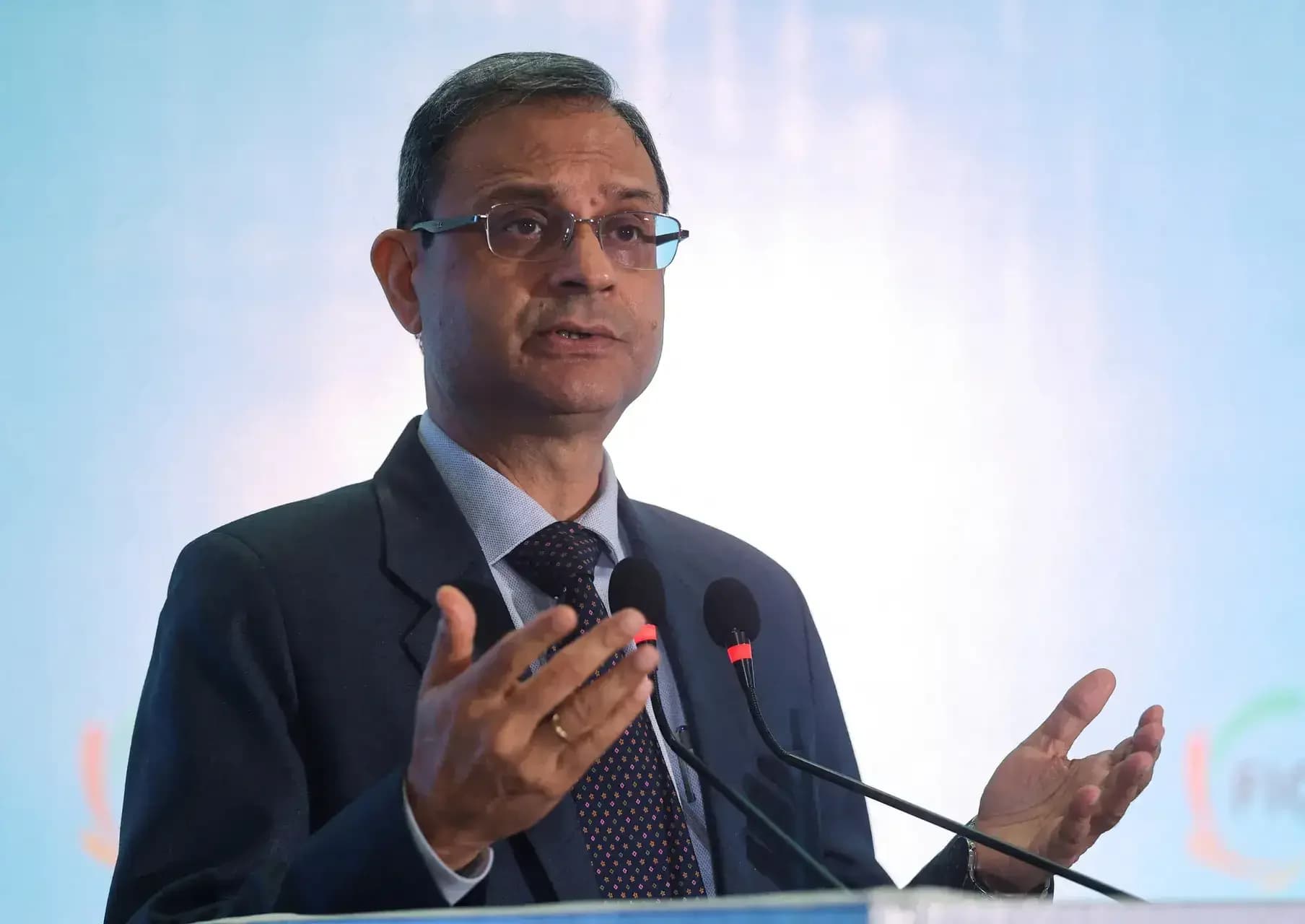
The Reserve Bank of India on Wednesday clarified that call rate levels below the repo rate should not be interpreted as impending rate-cut signals. According to reports from The Economic Times, RBI Governor Sanjay Malhotra stated during his post-policy press conference that the short-term rates are being deliberately maintained at the lower end of the liquidity adjustment facility (LAF) corridor to provide comfort to banks. The governor emphasized that 'Our attempt, of course, is to keep the WACR as near as possible to the policy rate. However, in times like this when there is so much uncertainty, we want to give comfort to banks that liquidity will not be in deficit.' As per CareEdge Ratings, the RBI is expected to adopt a 'wait and watch strategy' which will enable the central bank to preserve flexibility to gauge emerging risks to growth and take a calibrated call on future rate reactions. The policy direction is likely to remain stable unless there is a significant shift in inflation or growth dynamics, with any future action being data-dependent and guided by evolving global and domestic conditions.
The weighted average call rate (WACR) stood at 5.25% in March and at 5.00% in February, as reported by The Economic Times. The policy repo rate is positioned in the middle of the LAF corridor at 5.25%, while the short-term facility rate (SDF) serves as the lower floor rate at 5% and the marginal standing facility (MSF) rate acts as the upper ceiling rate at 5.50%. Consequently, banking system liquidity stood at a daily average surplus of ₹1.57 lakh crore in March and ₹2.53 lakh crore in February. The RBI governor dismissed any link between lower WACR and a higher rate-cut probability, stating that 'It is not any signal for a rate reduction and it should not be taken as that.' The central bank has actively undertaken measures such as open market operations and forex interventions to ensure adequate liquidity and smooth transmission of policy rates.