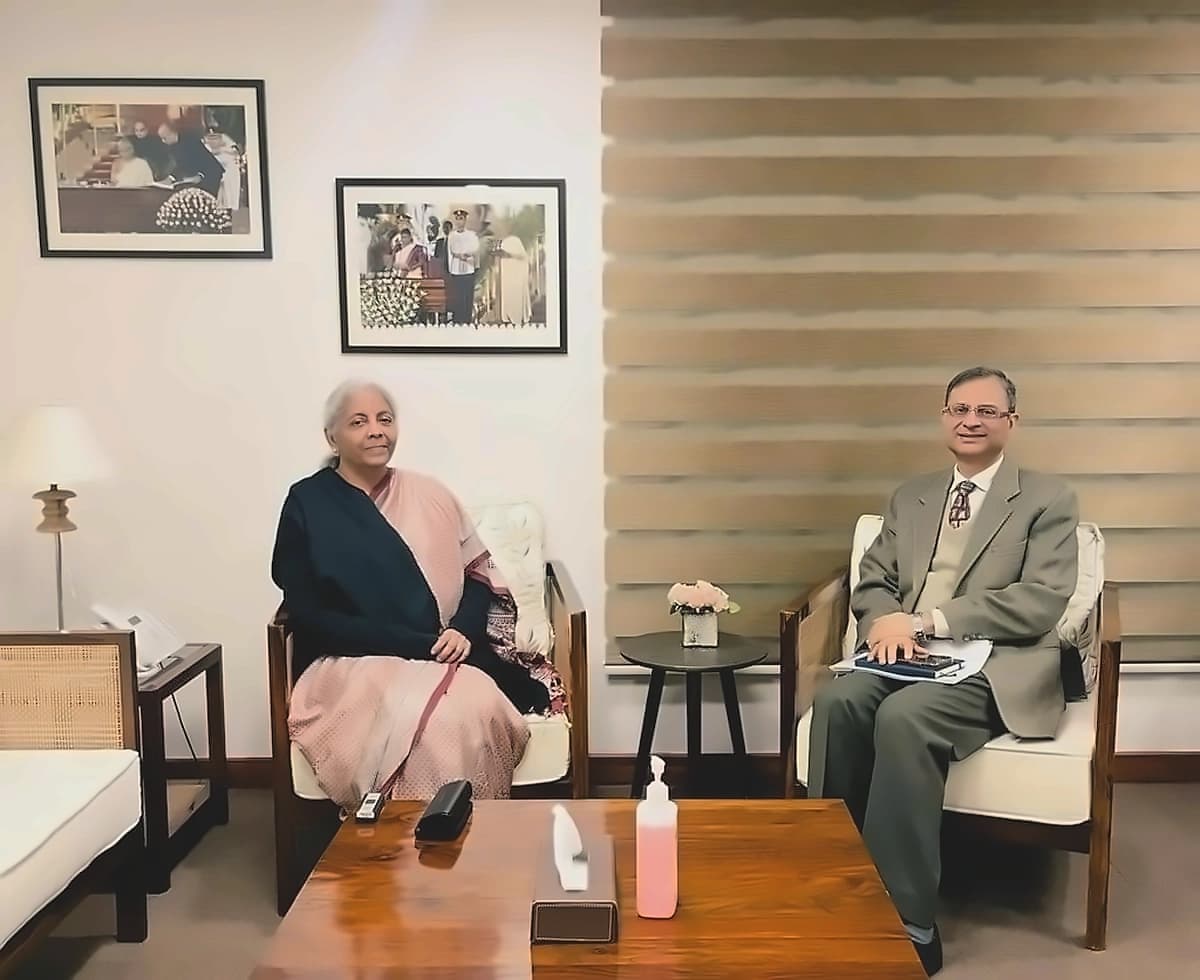
Reserve Bank of India Governor Sanjay Malhotra met Finance Minister Nirmala Sitharaman on Monday, according to the Finance Minister's office. The meeting took place weeks after India logged a record 7.8 per cent GDP growth in the first quarter of the current financial year, despite global uncertainties. As reported by Rediff Moneynews, the meeting precedes the Monetary Policy Committee meeting scheduled for October 5-7, 2026, where more economic moves could be on the table. This meeting comes as the central bank prepares for its rate-setting panel's next session amid growing inflation concerns.
Chief Economic Adviser V Anantha Nageswaran provided reassuring comments on food inflation trends during his address to industry leaders. According to Business Standard, food inflation in India, which stood at about 6% in August, is not expected to continue through the rest of the year, as the monsoon shortfall is "manageable" and crop production is anticipated to remain strong. Food and beverages make up 36.75% of India's consumer price index basket, making this development particularly significant for overall inflation management. The CEA noted that summer crop planting has fared surprisingly well, showing only a slight drop of 2% to 3% compared to the previous year, with yields for most summer-planted kharif crops expected to stay strong despite the seasonal rainfall fluctuations.
Despite facing significant headwinds, the Indian economy is expected to stay resilient according to the CEA's assessment. As reported by Business Standard, the economy is confronting a 15% shortfall in monsoon rainfall and rising geopolitical uncertainties in the Middle East, but Nageswaran emphasized that "the Indian economy is more likely to be resilient rather than becoming more vulnerable." The CEA highlighted strong bank credit growth, solid GST collections, and sound corporate and banking sector balance sheets as key factors supporting this resilience. Observers and policymakers are closely monitoring whether the domestic economy can handle this new wave of instability as well as it managed during the market disruptions from March to July.
An SBI research report suggests the Reserve Bank should raise the benchmark interest rate by 25 basis points next month and again in December as a countermeasure to persistent external shocks, elevated crude oil prices and signs of broader inflationary pressures. According to the SBI Ecowrap report published on Friday, September 14, 2026, the situation has changed drastically since most analysts expected a 'prolonged pause' just one month ago. The SBI analysis notes that their call for rate hikes is independent of any forthcoming US Federal Reserve action, while crude prices have recently crossed USD 100 per barrel amid heightened geopolitical uncertainties. SBI believes the October and December MPC meetings could be a 'perfect pitch' for nuanced rate hike calls of 25 basis points each, followed by a pause to assess incoming data.
The SBI research highlights concerns about crude oil prices crossing USD 100 per barrel amid heightened geopolitical uncertainties. The report estimates that crude prices could reach USD 123 per barrel over the next 15 days under current conditions. If oil prices remain at high levels, inflation prints for October and November should move towards 6.5 per cent or higher, according to the SBI analysis. The ongoing West Asia conflict, which has gained both depth and breadth, could keep crude oil prices above $100 per barrel in the near term, while also increasing price volatility. SBI projects CPI inflation may cross the 6.5 per cent mark before dropping to less than 6 per cent in early 2027.