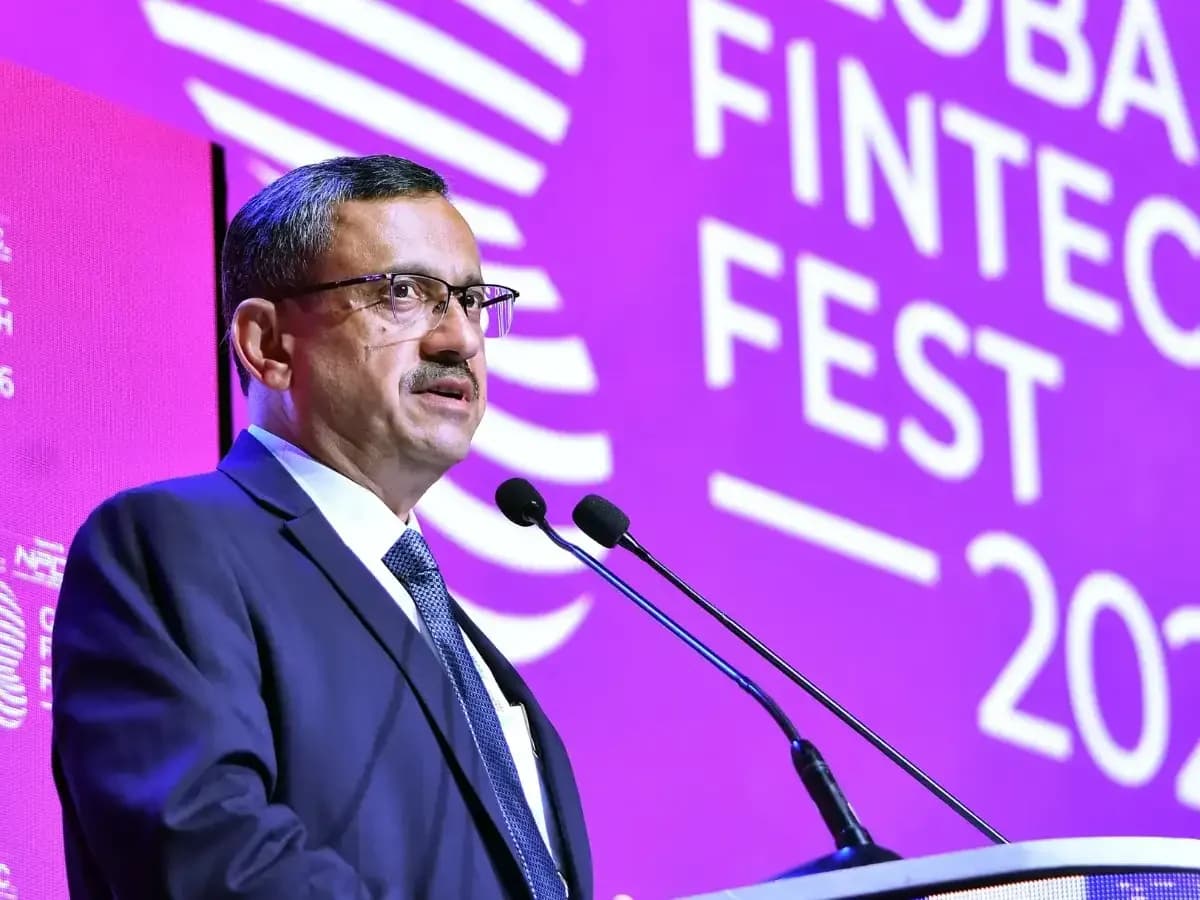
Reserve Bank of India Deputy Governor Shirish Chandra Murmu has outlined five critical areas of focus for non-banking finance companies (NBFCs) and housing finance companies (HFCs) to ensure sustainable growth. Speaking at the 7th Edition of the Confederation of Indian Industry's NBFC & HFC Summit, Murmu emphasized that NBFCs must focus on governance, liquidity management, asset quality, customer protection and digital transformation to achieve sustainable growth. According to The Economic Times, he stressed that strong liquidity risk management is not optional and that entities must diversify their funding sources to reduce vulnerability to market sentiment shifts and funding concentration. "Past liquidity events have shown how exposed NBFCs and HFCs can lead to shifts in market sentiment and funding concentrations. Strong liquidity risk management is not optional... Entities must diversify their funding sources. A deep, liquid corporate bond market will help, and we will keep working with market participants to build one," Murmu stated, highlighting that past liquidity events had exposed weaknesses in asset-liability management and the sector's reliance on short-term wholesale funding.
Shirish Chandra Murmu, Deputy Governor of the Reserve Bank of India, has emphasized that a strong and diverse credit system is essential for India as the financial sector undergoes rapid transformation. According to The Economic Times, Murmu noted that the financial sector is changing fast, driven by technology, new customer expectations, and a national push for inclusive growth. He highlighted that NBFCs and HFCs are no longer on the sidelines of this story, as they extend credit to the last mile, reach the underserved, and bring innovation to lending across the country. NBFC credit currently stands at around 16.7% of nominal GDP, up from 15.9% a year earlier, while their credit is equivalent to about 27% of credit extended by scheduled commercial banks, compared with 26% a year earlier. "The role of NBFCs is changing again, from alternative lenders to specialized financial partners," Murmu emphasized, pointing to sectors such as supply-chain finance, infrastructure debt, affordable housing, vehicle financing and gold- and silver-backed lending where NBFCs have developed specialised expertise. "The opportunities ahead of NBFC and HFCs are real and large. India's growing economy, demographic dividend, rapid urbanization, and digital growth, all offer room to grow. This growth will be shaped by technology and by trust," Murmu said, noting that technology can close credit gaps in other segments.

Murmu warned that as credit growth speeds up, so does the risk to asset quality, emphasizing that growth must never come at the cost of underwriting standards. According to The Economic Times, he stated that lenders need rigorous stress testing, early warning systems, and dynamic provisioning. The Deputy Governor highlighted that AI and machine learning tools should be used more to detect early signs of borrower stress. He identified five areas critical for sustainable growth: governance and culture; liquidity management; asset quality and credit risk; customer protection and fair conduct; and digital transformation and cyber resilience. "Let me be clear: Growth must never come at the cost of underwriting standards," Murmu stressed, noting that faster credit growth should not come at the expense of asset quality. He noted that boards and senior management must build a culture of sustained compliance and ethics across the organization which strengthens as the sector scales up. He warned that substantial credit needs of MSME are still not met by the formal lenders today, with this gap alone showing the scale of opportunity for NBFCs.
Murmu emphasized that innovation must serve both efficiency and fairness and should not exclude vulnerable segments or add new risks. According to The Economic Times, he stated that innovation must be responsible and that customer trust is fundamental to sustainable business. Technology would help expand formal credit, particularly to segments where credit gaps remain. The Deputy Governor highlighted digital public infrastructure such as the Account Aggregator framework and Unified Lending Interface (ULI), which can help lower the cost of credit, speed up disbursals and improve lending decisions. "Technology adoption must keep deepening — from blockchain in supply chain finance to AI in fraud detection," Murmu observed, noting that digitalisation brings cyber risk. He emphasized that cyber resilience must stay a top priority and that entities must invest in strong cyber-security to protect customer data and maintain trust. The RBI will continue to follow a proportionate regulatory approach for NBFCs, choosing not to create a separate regulatory framework for digital finance instead applying the principle of "substance over form" and adapting existing rules to digital contexts.
Murmu acknowledged that the non-banking sector has faced real challenges in the recent past, noting that liquidity shocks expose weak acceptability management, heavy reliance on short-term wholesale funding and deep links with wider financial systems. According to The Economic Times, he stated that these episodes show the need for stronger governance. However, he emphasized that the opportunities ahead of NBFCs and HFCs are real and large, highlighting India's growing economy, demographic dividend, rapid urbanisation, and digital growth as drivers of future credit demand. "Conduct regulation, grievance redressal and responsible lending remain top priorities for us. Our recent guidelines on conduct of recovery agent reflect this priority. In an age where feedback travels instantly, there is no substitute for public trust," Murmu said. "Securitisation should also grow beyond a liquidity tool into a genuine way to transfer risk and free up capital, with proper skin-in-the-game and transparency rules," he emphasized, noting that a deeper, more liquid corporate bond market would help strengthen funding structures. "Regulation is not only about managing risk. It is also about enabling sustainable growth," Murmu said, adding that the RBI would continue to support responsible growth and innovation while maintaining financial stability.