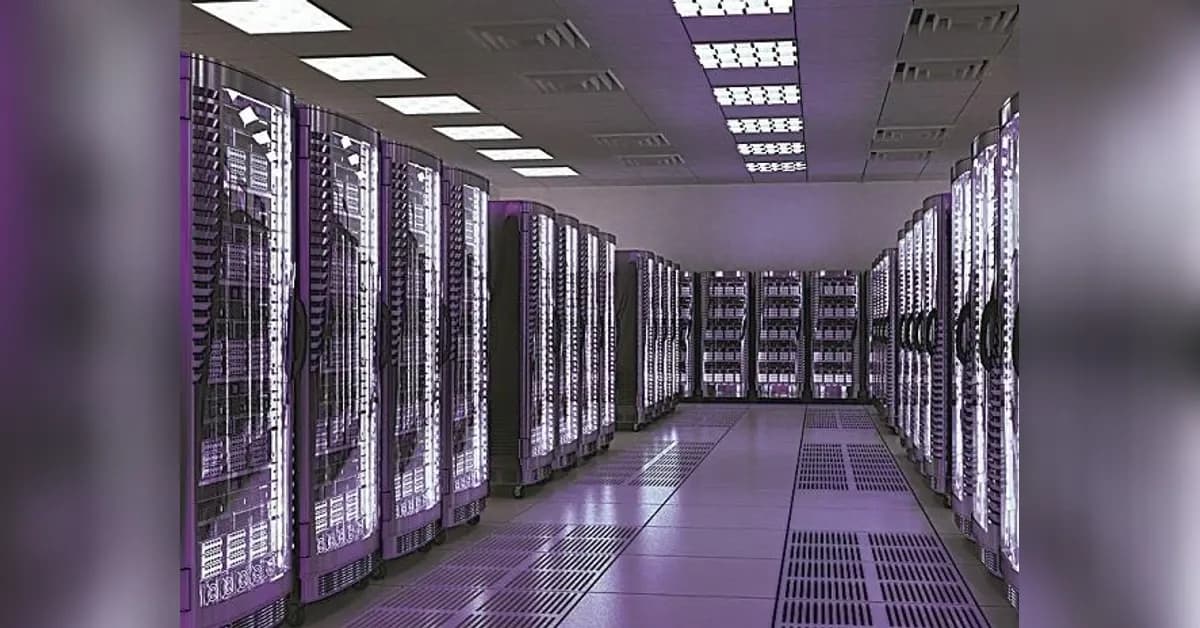
Prime Minister Narendra Modi inaugurated the Reserve Bank of India's ₹169-crore data centre and Cybersecurity Training Institute in Bhubaneswar on October 25, 2026. According to the latest reports, Modi landed at Biju Patnaik International Airport around 4:30 pm aboard a special Indian Air Force aircraft. From the airport, he took a helicopter to Khurda helipad and then proceeded by road to the RBI facility at Info Valley-II in Jatni for the inauguration ceremony. The PM spent approximately one hour at the RBI's data centre and returned to Bhubaneswar by road before departing the state around 6:30 pm. Chief Minister Mohan Charan Majhi and Chief Secretary Anu Garg have reviewed the state's preparedness before the prime minister's scheduled visit.
Police have made elaborate security arrangements, deploying around 2,100 personnel for the PM's visit, as reported by The Economic Times. Traffic restrictions have been imposed from 5:40 pm to 6:40 pm along the route connecting the RBI data centre to the airport. The RBI's facility is spread across 18.55 acres, and the foundation stone was laid by then RBI governor Shaktikanta Das on March 22, 2023. The site in Info Valley-II was chosen for its geographical stability, away from seismically active zones and high-risk international border areas, reducing exposure to natural disasters and geopolitical vulnerabilities. After about three and a half years of construction, the centre is now ready for inauguration.
According to The Economic Times, this marks Modi's ninth trip to Odisha since 2024 after the formation of the BJP government in the state. Chief Minister Mohan Charan Majhi stated that the data centre will add to Odisha's journey of development and strengthen the state's digital infrastructure. The RBI's data centre at Jatni will be the second of its kind after the one in Navi Mumbai, designed to meet the bank's computing requirements and provide a secure, resilient, scalable and future-ready computing ecosystem for the bank and the broader financial sector. The facility matters for the banking sector because India's digital payments are expanding at an unprecedented pace with growing UPI transactions and cyber threats, making a stronger RBI-owned data infrastructure important for national financial stability.
As reported by The Economic Times, the data centre is designed to strengthen data management, disaster recovery, cybersecurity, and business continuity for core functions such as currency management, payment and settlement systems, and regulatory operations. The facilities have been designed to meet the bank's computing requirements and provide a secure, resilient, scalable and future-ready computing ecosystem for the bank and the broader financial sector. The government stated that the data centre will contribute to widening the reach, efficiency and reliability of digital financial services and form the secure digital foundation on which India's increasingly technology-driven financial economy can grow. The Uptime Institute Tier IV certification received by the facility indicates the highest tier in the organisation's data-centre classification system, emphasizing strong operational resilience. The Navi Mumbai facility has so far served as the main centre, while the second centre will guarantee uninterrupted operations even in a disaster scenario, ensuring geo-redundancy for critical banking operations.

According to The Economic Times, the Cybersecurity Training Institute will boost capability building, providing a dedicated institutional platform for cybersecurity and enterprise-technology training, research, and sector-wide capability development. The institute will provide a comprehensive approach to cybersecurity training and research, supporting the broader financial sector's digital transformation initiatives. Experts believe an RBI-grade data centre will increase the Bhubaneswar–Khordha region's attraction for IT and electronics companies, with the state government already developing the Info Valley area as a technology hub. The facility is designed to operate as a secondary backup to the RBI's primary data centre at Kharghar in Navi Mumbai, ensuring data recovery and continuity of operations when the primary site is disrupted. The accompanying cybersecurity institute will focus on training, research and capability-building for the banking and financial services sector, with areas of interest including artificial intelligence, quantum computing and other emerging technologies.