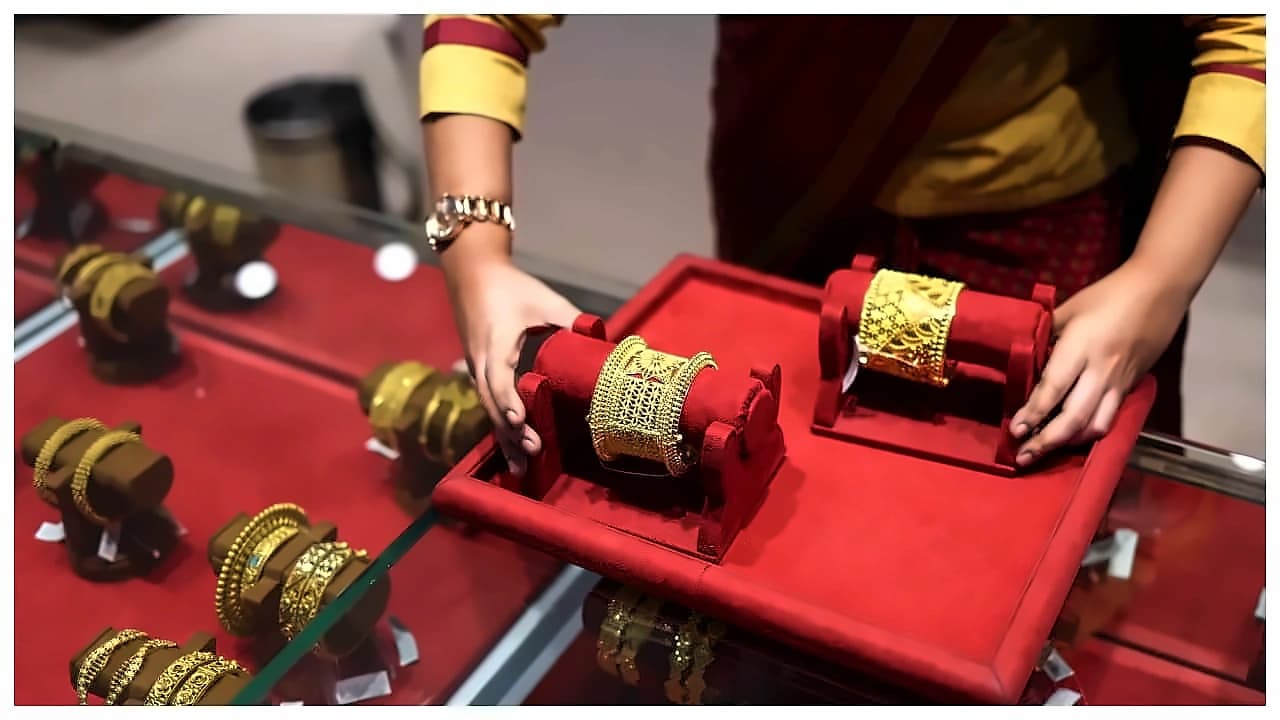
About 30,000 jewellers in Tamil Nadu have decided to stop selling gold coins and not promote gold savings schemes following the government's import duty hike, according to The Times of India. Tamil Nadu Jewellers Federation president B. Sabarinath announced this measure on Wednesday (May 13, 2026), stating it is a suggested approach to help reduce gold imports. The association cited concerns over the overnight import duty increase and rumours of potential GST hikes, along with the Reserve Bank of India's acquisition of 125 tonnes of gold last month. S.M. Kamal Hasan, president of the Coimbatore Goldsmiths' Association, reported that retail gold prices rose by ₹1,000 per gram on Wednesday, with gold prices increasing from ₹14,400 per gram on Tuesday to ₹15,400 per gram on Wednesday. Taxes alone constitute ₹3,000 of the ₹15,400 per gram price, with the government's tax increase contributing significantly to the price surge.
The Centre has raised effective gold import duty from 6% to 15%, including 10% basic customs duty and a 5% Agriculture Infrastructure and Development Cess, as reported by NDTV Profit. Additionally, new restrictions have been announced capping gold imports at 100 kg under the Advance Authorisation scheme, which previously allowed jewellery exporters to import raw materials at zero duty. Prime Minister Narendra Modi has also appealed to citizens to defer gold purchases for a year amid rising import pressures. Industry leaders are responding with measured understanding of the policy rationale. Kirit Bhansali, Chairman of Gem & Jewellery Export Promotion Council (GJEPC), stated that the industry "fully understands the reason and respects the appeal made by Prime Minister Narendra Modi in view of the current global situation and the larger national interest." He emphasized that the sector supports millions of livelihoods and is working with stakeholders to arrive at practical solutions.
India's gold imports reached an all-time high of $71.98 billion in 2025-26, surging over 24% despite volume shipments declining 4.76% to 721.03 tonnes, as reported by multiple sources. Switzerland remained the largest source accounting for about 40% of total imports, followed by the UAE at over 16% and South Africa at about 10%. The gems and jewellery industry had flagged concerns about the duty hike, with the All India Gems and Jewellery Council warning that the increase could give rise to a grey market and spur smuggling. Gold ranks among the 3rd biggest inbound shipments with $72 billion in 2025-26, making it a significant drain on foreign exchange reserves. The escalation of geopolitical tension in West Asia has created additional pressure, with crude oil prices soaring due to the West Asia crisis and disruptions through the Strait of Hormuz.
Under the new rules, Advance Authorisation (AA) for gold import will be subject to a ceiling of 100 kilograms per licence, with first-time applicants requiring mandatory physical inspection of manufacturing facilities by regional authorities to verify existence, capacity, and operational status. Repeat applicants face a new threshold condition: any subsequent gold import authorisation will be issued only after at least 50% of the export obligation prescribed under a preceding authorisation has been fulfilled. AA holders must submit fortnightly performance reports to Regional Authority, certified by an independent Chartered Accountant, detailing gold imports and exports. Regional authorities must submit monthly consolidated reports to DGFT headquarters on all AA issuances and corresponding import-export transactions, enabling centralised oversight. The new conditions are inserted in the Handbook of Procedures 2023 and apply with immediate effect across all SIONs from M1 to M8 in the gems and jewellery product group.
Retailers are aligning their response with the broader economic context behind the policy, with Aman Kataria, Director of D.P. Jewellers, stating that the industry views the development as reflecting an effort to control gold consumption while creating short-term challenges. Rajesh Rokde, Chairman of All India Gem And Jewellery Domestic Council (GJC), believes the increase in customs duty is a temporary and calibrated measure, urging the trade to remain calm and confident. GJC Vice Chairman Avinash Gupta emphasized that gold and jewellery are deeply connected with India's economy, traditions, and savings culture, urging the trade fraternity to avoid panic and continue business with confidence and responsibility. Tamil Nadu's Coimbatore region, which has nearly 35,000 gold smithies employing nearly 1 lakh people, faces particular challenges as sales have fallen by 60% over the last one year due to fluctuating gold prices. The coming months will test the industry's ability to adapt, with past phases of regulation showing the sector's capacity to adjust through innovation in sourcing, product design, and consumer engagement.