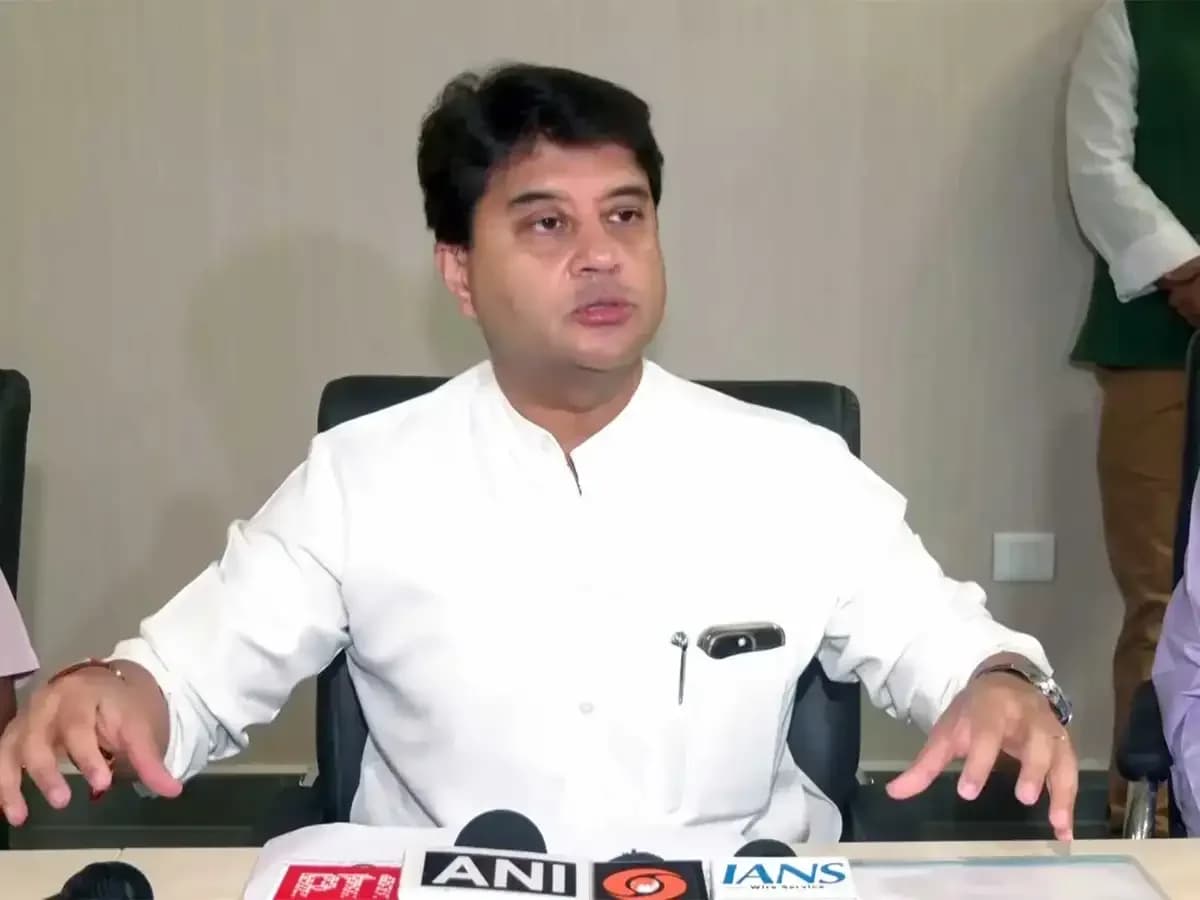
Union Minister for Development of North Eastern Region Jyotiraditya M. Scindia inaugurated the North East Bankers' Conclave 3.0 in Mizoram, outlining significant banking developments across the region. According to reports from The Economic Times, between December 2024 and March 2026, 131 new bank branches were opened, 126 new ATMs were installed, and 6,905 out of 9,479 villages identified to be linked with banking and postal services have already been connected. The existing guideline requiring a minimum population of 3,000 to establish a brick-and-mortar branch has been lowered to a population threshold of 2,000 specifically for Northeast states. Scindia emphasized that this marks his 32 months of engagement with the region, highlighting the crucial importance of collaboration between banks and the government for regional development.
Scindia highlighted that 90.2% of non-branch transactions in Northeastern states are conducted through the Unified Payments Interface (UPI), as reported by The Economic Times. He emphasized the need to accelerate efforts to connect the remaining 2,574 villages that lack bank or postal service links. The DoNER Minister noted that extensive research and planning were conducted with NEDFi and the Department of Financial Services to organize the NE Bankers' Conclave 3.0, with the DoNER Secretary holding individual consultations with state representatives to set specific targets. Scindia also lauded Mizoram as a state successfully implementing digital payments, as well as the PMJJBY and PMSBY schemes, while stressing the importance of boosting efforts for registration under the PM Jan Dhan Yojana and PM Vishwakarma.
Scindia explained that targets have been set to increase the Credit-Deposit (CD) Ratio of banks: from 47% to 60% for Tripura, 60% for Arunachal Pradesh, and 67% for Mizoram, according to The Economic Times. He remarked that raising the CD Ratio increases the circulation of money within the state, making it a vital tool for development, and explained that the acronym CD Ratio could even stand for 'Credit for Development'. The Minister noted that Mizoram's CD Ratio stood at 55.83% during the 2025-26 fiscal year, with targets set to scale it up to 67% by the 2028-29 fiscal year. He urged banking operations to place greater emphasis on expanding credit and lending, particularly for Micro, Small, and Medium Enterprises (MSMEs), noting that fresh impetus is needed to support MSMEs and generate stable livelihood opportunities for farmers and skilled youth. Scindia also called for a Northeast-specific credit-risk framework, noting that community-based landownership patterns in the region can create challenges for conventional collateral-based lending.
Scindia highlighted that approximately ₹40,000 crore in investments have been grounded across the eight northeastern states following the Rising North East Investors Summit held in May 2025, as reported by The Economic Times. He described the Northeast as a promising market for the banking sector, noting that the region's economy was growing at an annual rate of 9-11%. The Minister emphasized that the Northeast receives more than ₹1 lakh crore annually through the allocation of 10% of Gross Budgetary Support, monitored by the Ministry of Development of North Eastern Region, along with approximately ₹6 lakh crore in fiscal devolution to the eight states. He also highlighted improvements in regional connectivity, including an increase in the number of airports serving the Northeast from nine to 17, and cited the Bairabi railway line in Mizoram, which has carried approximately 15 lakh passengers through 1,100 trips.
The deliberations at the NE Bankers' Conclave 3.0 were divided into four session themes: Last Mile, Loans, Livelihoods, and Lifelines, according to The Economic Times. Scindia urged the gathering to formulate ten recommendations from each session and forty actionable paths to fulfill them, expressing hope that the North East Bankers' Conclave 4.0 will showcase even greater progress. The sessions encompass connecting unbanked villages to banks, Business Correspondents, or the India Post Payments Bank; intensifying loan disbursements to MSMEs and women entrepreneurs; undertaking initiatives to ensure sustainable livelihoods for farmers; and building better connectivity and infrastructure. Scindia outlined four priorities for the Department of Financial Services (DFS): preparing a plan for 70 bank branches, Business Correspondent outlets and IPPB points; strengthening commercial banking presence; developing a Northeast-specific credit-risk framework; and preparing a comprehensive action plan for the region's financial system. He urged financial institutions to ensure that expanding banking access translates into greater economic participation, stronger local enterprises and increased opportunities for people across the Northeast.