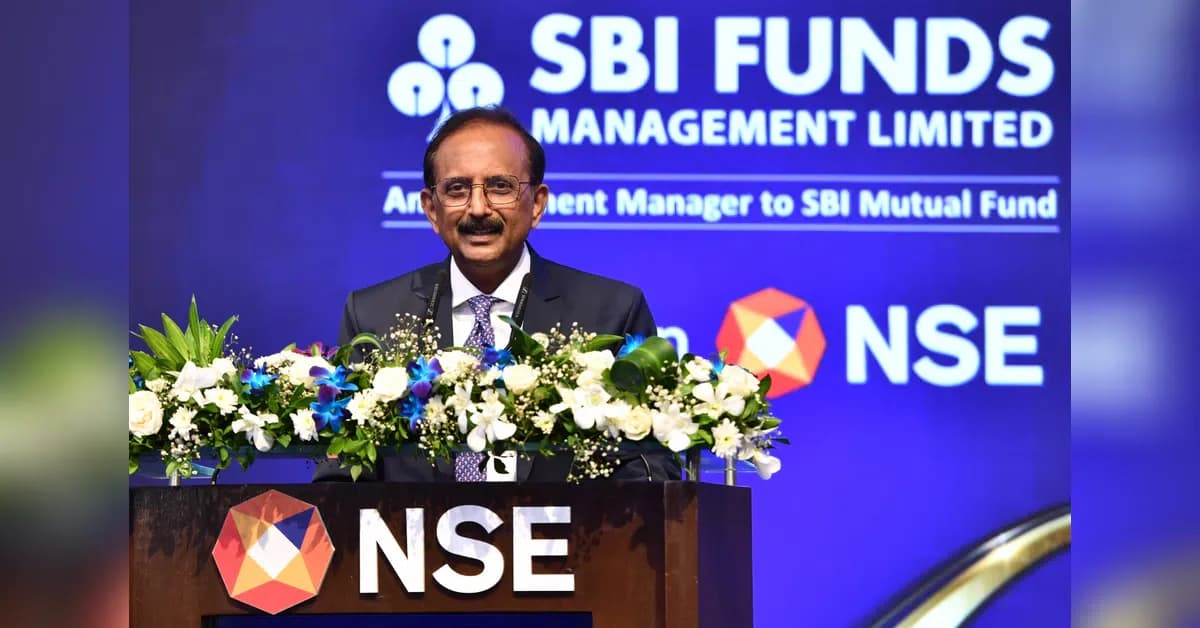
State Bank of India plans to hire approximately 12,000 personnel and add around 250 new branches to its network during the ongoing financial year, according to C S Setty, Chairman of the country's biggest lender. As reported by PTI, Setty stated that the recruitment would be across both clerical and officer cadres, with the number potentially varying depending on retirements and emerging requirements. "In terms of recruitment, I think we would be looking at around 11,000 to 12,000 appointments across both clerical and officer cadres this year. This number may vary depending on retirements and emerging requirements, but I expect we should close the year with around 12,000 recruitments," he told PTI. The bank had already completed significant hiring in FY26, recruiting 4,640 officers, 19,340 associates, and 1,653 contractual staff, totaling 25,633 hires according to the bank's annual report. However, Setty clarified that this year's recruitment will be more focused, stating "Last year, we have done fairly large recruitment because we took 1,500 specialist IT officers. This year, we do not need such a large number on the IT side."
Despite having a large network, SBI sees opportunities for expansion in many areas, including new colonies and commercially active districts where the bank's presence can be improved. According to Setty's interaction with PTI, the bank plans to grow its branch network by 200 to 250 per year on the net side. The expansion strategy includes rationalization of some existing branches while maintaining focus on areas with growing economic activity. Setty explained that "We also are looking at rationalisation of some of the branches, which means that our number broadly will be growing by maybe 200 to 250 per year on the net side." He noted that there is still some white space in many areas, whether new colonies are coming up or even in commercially active districts, where the bank's presence can be improved.
SBI and its subsidiary SBI Capital Markets Ltd plan to dilute up to 1 per cent stake through the National Stock Exchange's proposed ₹30,000-crore initial public offering. As reported by PTI, SBI proposes to divest 0.65 per cent while SBI Capital Markets will divest 0.35 per cent, resulting in a combined 1 per cent stake dilution by the SBI group. "We are participating in that divestment. We propose to divest 0.65 per cent and 0.35 per cent by SBI Capital Markets because both of us hold the stake. So together, about 1 per cent as an SBI group... it could be less depending on any other shareholders joining," Setty said. Currently, SBI holds a 3.23 per cent stake in NSE while SBI Capital Markets owns 4.33 per cent in the country's largest stock exchange. Last week, NSE received regulatory approval for the long-awaited ₹30,000-crore IPO, which could potentially be the country's biggest-ever public offering, surpassing Hyundai Motor India's ₹27,858.6-crore listing in 2024 and LIC of India's ₹20,557.3-crore offering in 2022. The NSE IPO will also surpass Paytm parent One97 Communications Ltd's ₹18,300-crore listing in 2021, Tata Capital's ₹15,511.9-crore offering in 2025, and Coal India's ₹15,200-crore listing in 2010.
With a workforce of over 2.45 lakh employees as of March 2026, SBI remains among India's largest employers. According to the bank's annual report, the significant hiring in FY26 included 1,500 specialist IT officers, which contributed to the substantial recruitment numbers. The bank's strategic approach to recruitment reflects its focus on maintaining operational capacity while managing the impact of retirements and evolving business requirements. Setty clarified that there is no monetisation plan for other subsidiaries in the immediate future, and he confirmed that there is no monetisation plan for other subsidiaries in the immediate future.
In July, SBI, along with its foreign partner Paris-headquartered Amundi, successfully diluted around a 10 per cent stake in SBI Mutual Fund, including pre IPO. The ₹11,675-crore monetisation by the country's biggest fund house was a huge success as the issue was subscribed 41.66 times. Post-listing, SBI's holding declined to 55.56 per cent from 61.86 per cent, while Amundi's stake reduced to 32.63 per cent, down 3.7 per cent. This monetisation demonstrates SBI's continued strategy of optimizing its subsidiary portfolio while maintaining majority control in key businesses.