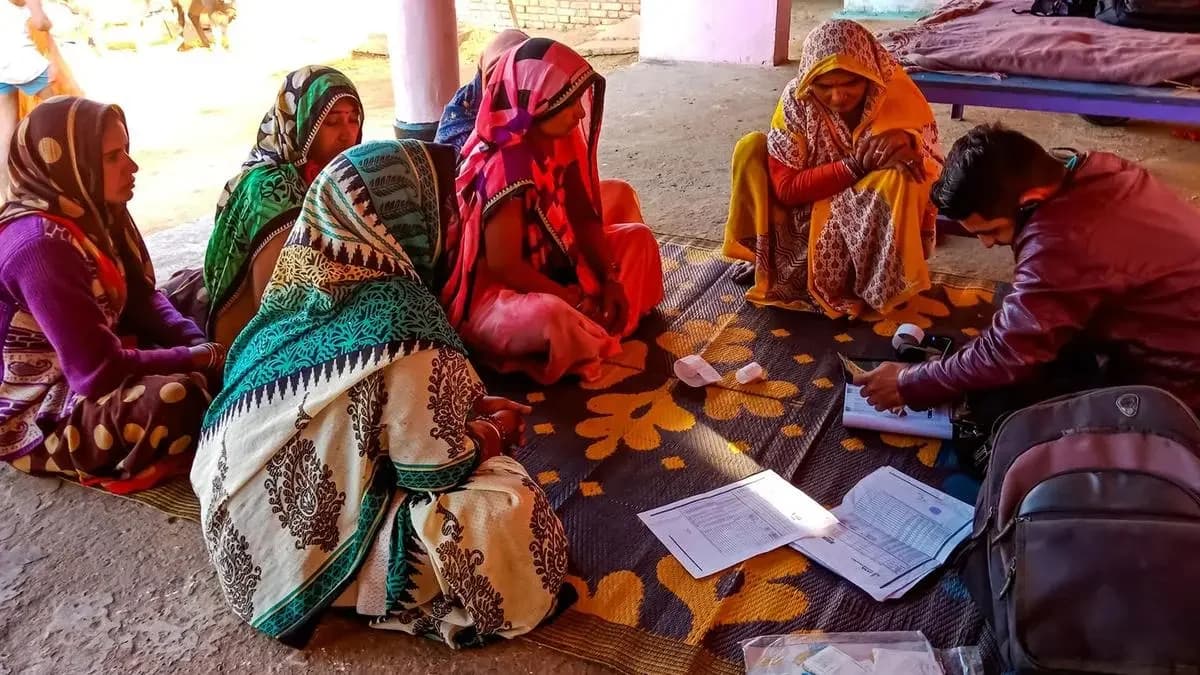
There is a structural transformation in India's credit landscape, with microfinance institutions increasingly replacing high-cost informal sources, according to a Micro Finance Industry Network (MFIN) report. According to the study conducted by the National Council of Applied Economic Research (NCAER), informal borrowing among microfinance customers declined from 46% of all reported loans in 2011 to just 1% of borrowers in 2024–25. This shift represents a significant move toward formal financial services among previously underserved populations, with the PM SVANidhi scheme now providing collateral-free loans starting from ₹10,000 to urban street vendors, further accelerating formal credit adoption among informal sector workers. The survey, which covered 10,342 borrowers across 10 states, shows a maturing market where formal credit has become the primary source of finance for rural and semi-urban households.
Digital adoption has reshaped disbursement processes, with nearly 100% of loans now credited directly into bank accounts of around 75 million women borrowers. According to the survey, this has reduced leakages and improved turnaround time, with average loan disbursal completed within six days. However, repayments remain largely cash-based, with only 12% of borrowers using digital modes such as UPI, while 88% continue to repay through cash collections conducted during group meetings. The report attributes this digital divide to 61% of borrowers owning smartphones but remaining reluctant to transact digitally due to low financial literacy and concerns over fraud.
Loans from regulated entities are far more affordable, with a weighted average annual percentage rate (APR) of 27.3% compared to a range of 97% to 178% typically charged by informal lenders, as reported by the study. The average loan size stands at ₹51,222 with an average tenure of 23 months, indicating short- to-medium-term credit cycles with variations across states. The PM SVANidhi scheme offers 7% interest subsidy credited directly to borrower's accounts, effectively reducing the cost of borrowing to near-zero for eligible street vendors. According to the report's qualitative findings, moneylenders charge between 97% and 178% annually and often demand gold as collateral.
The study indicates responsible borrowing behaviour with an overall Fixed Obligation to Income Ratio (FOIR) of 18.7%, which is well within the 50% limit prescribed by the RBI. According to the report, with an average monthly income of ₹25,844, borrowers allocate a significant share towards expenses, savings and repayments, suggesting the need for more granular household-level credit assessment. The PM SVANidhi scheme rewards timely repayment with loan escalation up to ₹50,000, encouraging disciplined borrowing practices among street vendors. As reported by MFIN, the study highlighted strong outreach among underserved/underpenetrated population segments, with nearly 46% of borrowers having low or no formal education.
The report noted encouraging trends in financial behaviour, with 97.2% of borrowers reporting regular savings, indicating the contribution of microfinance in ensuring that accounts do not turn dormant and 84.4% reporting uptake of credit-linked insurance. According to the study, microfinance lending is predominantly income-generating rather than consumption-led, with over 75% of loans used for enterprise activities. Specifically, 48.1% of borrowers used credit to expand existing businesses, 14.4% to start new ventures, and around 13% for agriculture and allied activities. As reported by MFIN, the study highlighted strong outreach among underserved/underpenetrated population segments, with nearly 46% of borrowers having low or no formal education and 76.1% of households being nuclear.
Alok Misra, CEO & Director, MFIN, emphasized that the key takeaway is the clear shift towards formal credit, with a sharp decline in reliance on informal sources and improved borrower outcomes. According to the MFIN statement, there is a need to further strengthen credit assessment, particularly around household cash flows, to mitigate risks of over-indebtedness. V Anantha Nageswaran, Chief Economic Advisor, Government of India, noted that microfinance institutions today have a strong relationship of trust with millions of borrowers, creating opportunities to strengthen financial literacy and support income enhancement through skilling interventions. The report concluded that "Microfinance has become a bridge to opportunity and financial independence," with 78% of borrowers contributing to household income.