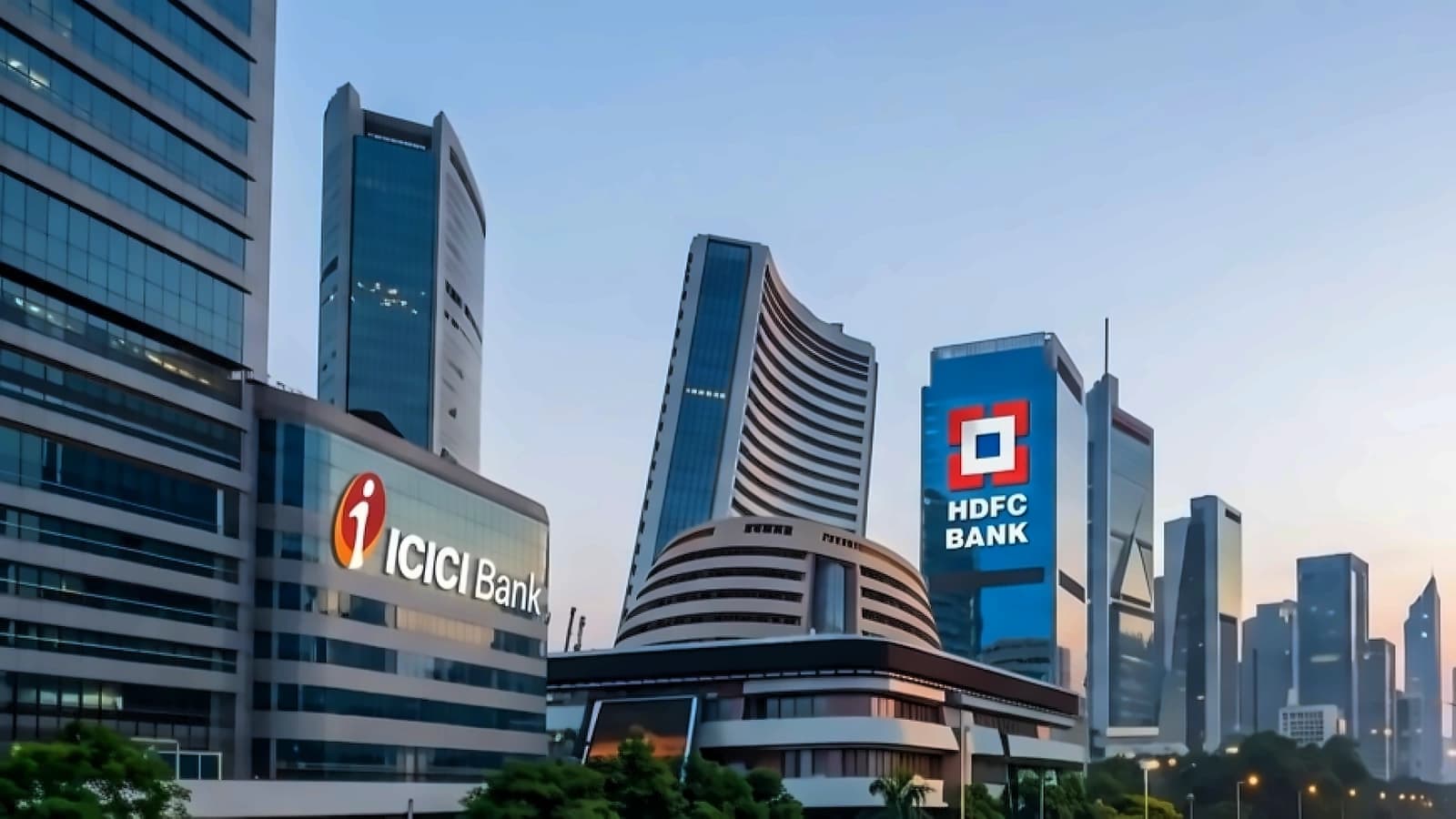
The race for India's most influential Nifty stock has intensified as ICICI Bank closes in on HDFC Bank's position in the benchmark index. According to The Economic Times, the gap in weights between the index heavyweights is the narrowest since at least January 2010, with HDFC Bank's weight at 9.85% as of August 31 and ICICI Bank's at 9.45%. This represents a significant shift from HDFC Bank's record 19.1% weight in February 2020, while Reliance Industries has also lost ground with its weight falling from 8.9% to 7.8% this year. The 1.65 percentage point gap between ICICI Bank and Reliance Industries is the widest since April 2015, marking a significant change in the Nifty's pecking order.
The race for India's most valued bank has intensified as ICICI Bank closes in on HDFC Bank, with the market-cap gap between the two lenders shrinking to just ₹50,000 crore on Monday. According to reports from Business Standard, ICICI Bank is now just ₹0.5 trillion short of surpassing HDFC Bank's market capitalisation to become India's largest private-sector bank by market value. HDFC Bank is currently valued at ₹10,92,648 crore, while ICICI Bank is valued at ₹10,43,481 crore. This represents a dramatic narrowing from the ₹4.17 lakh crore gap before the abrupt exit of HDFC Bank chairman Atanu Chakraborty. The latest market moves have further compressed the valuation gap, with HDFC Bank shares falling 1.57% on Monday after managing director and chief executive Sashidhar Jagdishan decided to opt out of the race for another term at the lender. In contrast, ICICI Bank gained 2.19% during the session, contributing to the continued narrowing of the market-cap difference.
The valuation gap has compressed significantly over the past six years since Chakraborty's exit on March 17, 2026. As reported by Business Standard, in 2023, when HDFC Bank merged with HDFC, the combined market capitalisation of the bank worked out to ₹12.37 trillion, or nearly twice the size of ICICI Bank at ₹6.69 trillion. Since then, HDFC Bank is down 4% annually, while ICICI Bank has seen its price go up by 16% annually. The current gap of ₹50,000 crore represents a reduction of ₹3.68 lakh crore during this period. HDFC Bank is now just 4.5% ahead of ICICI Bank in market capitalisation, putting the latter within striking distance of overtaking its larger rival. This represents the closest the two banks have come in more than a decade, with the difference now at a relatively small level where a relatively small move in either stock could determine which lender holds the top spot in India's banking sector by market capitalisation.
The latest market moves have further compressed the valuation gap between the two private-sector banking giants. According to The Economic Times, HDFC Bank's Nifty weight has dropped from 12.7% at the end of December 2025 to 9.85%, with the stock declining around 28% so far in 2026. In contrast, ICICI Bank's weight has risen from 8.05% to 9.45%, an increase of 1.4 percentage points. The sharp divergence in stock performance has accelerated the closing of the gap between the two banking giants. Over the last six years, the market capitalisation of ICICI Bank is up four times, while HDFC Bank's is up two times over the same period, highlighting the sustained outperformance of ICICI Bank's stock price. Despite the lower weight in the index, Reliance Industries remains the largest with a market capitalisation of around ₹17.7 lakh crore, followed by HDFC Bank at ₹10.97 lakh crore and ICICI Bank at ₹10.32 lakh crore.
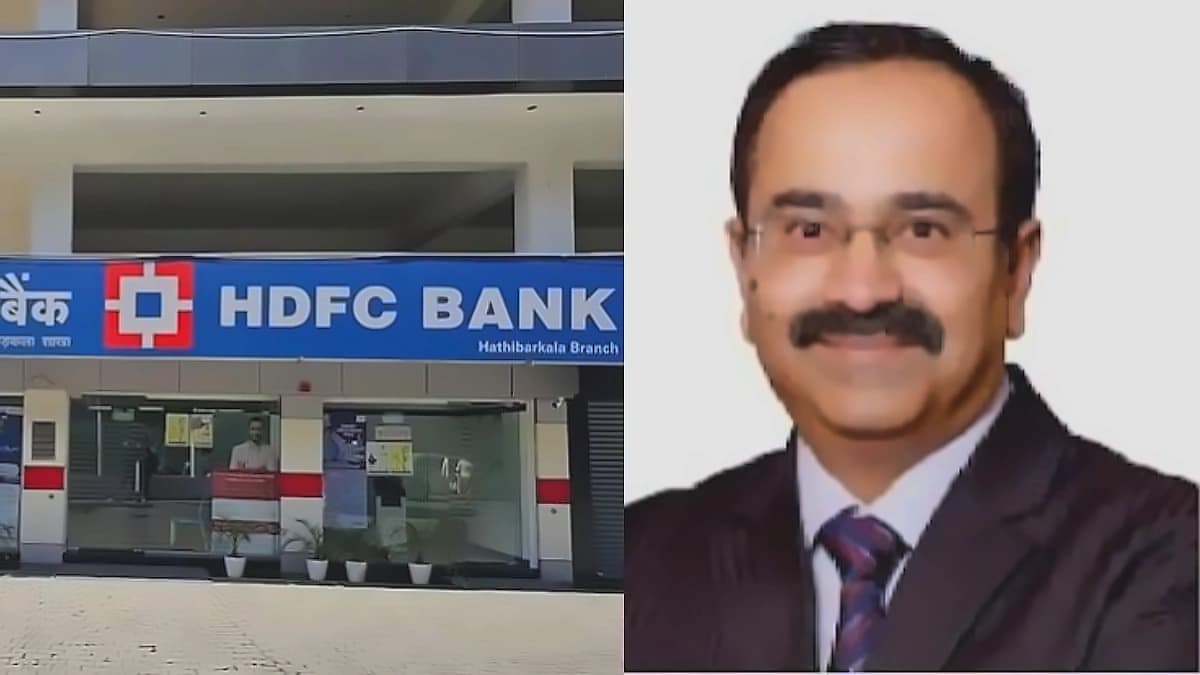
The leadership uncertainty at HDFC Bank has emerged as a key overhang for investors, with Jagdishan's decision not to seek another term coming at a time when the lender is already mired in repeated controversies. As reported by Business Standard, Atanu Chakraborty's abrupt resignation in March 2026 wiped out ₹1.5 trillion in days, followed by governance concerns and chief executive officer Sashidhar Jagdishan's planned exit further dragging the valuation down to ₹10.93 trillion. While an independent law firm exonerated the bank's management in the matter, the controversies continued to take a toll on the bank's prospects, followed by allegations of wrongdoing over excess interest paid to the Maharashtra State Road Development Corporation. ICICI Bank, on the other hand, has continued to command strong investor interest, helping its shares outperform and steadily narrow the gap with HDFC Bank.
The current narrowing gap represents the closest the two banks have come in more than a decade. According to Business Standard, it is pertinent to note that before 2009, ICICI Bank used to lead HDFC Bank in terms of market capitalisation. With the difference now at ₹50,000 crore, a relatively small move in either stock could determine which lender holds the top spot in India's banking sector by market capitalisation. This represents a significant shift in the competitive landscape between the two private-sector banking giants, with ICICI Bank's fourfold increase in market cap over six years compared to HDFC Bank's doubling highlighting the sustained momentum in the former's stock performance. The convergence in Nifty weights marks a historic moment, with the 1.65 percentage point gap between ICICI Bank and Reliance Industries being the widest since April 2015.