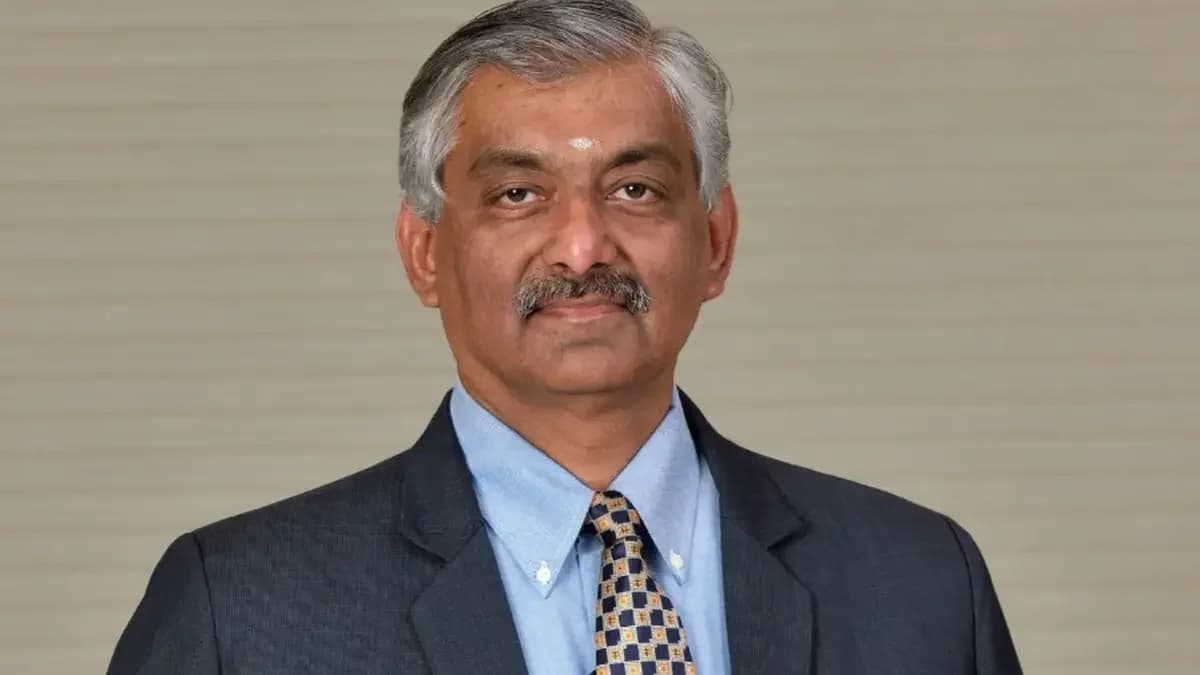
HDFC Bank spent just ₹2 crore in seed money to build Neev, its in-house artificial intelligence platform, according to Ramesh Lakshminarayanan, Group Head of Information Technology and Chief Information Officer. As reported by CNBC-TV18, Lakshminarayanan said the bank has since spent only "a couple of crores here and there" on top of that initial investment. The platform was born after a visit to the United States a couple of years ago, where two members of his team offered to build a platform in-house rather than buy one off the shelf. "I said, are you crazy? This is not something that... So he said, okay, give us three months, we'll put together something," Lakshminarayanan recalled. The platform is built and run by a team of just 40 people, demonstrating the bank's philosophy of building smaller, domain-specific models rather than relying on large language models.

Lakshminarayanan challenged the notion that AI requires billion-dollar budgets, arguing that the billions are required only for large language model tokens. According to the CNBC-TV18 report, he emphasized that banks should focus on building smaller, sharper, domain-specific models instead. This approach was supported by Sandhya Ramchandran Arun, Global Chief Technology Officer of Wipro Ltd, who noted that large language models are trained on general knowledge but enterprises need something narrower, such as understanding loan processes and financial language. Lakshminarayanan framed the ₹2 crore build as part of a broader philosophy of owning rather than renting intelligence, arguing that intelligence has to be "manufactured" in-house, particularly in banking where the margin for error is effectively zero.
Neev is built around reusable "capability" layers rather than one-off use cases, as reported by CNBC-TV18. The same underlying engine handles image extraction for various documents including trade letters of credit, import/export documents, and Aadhaar cards. AI agents are deployed behind product searches such as credit cards and current account/savings account products. One example provided was a credit card service-charge query, where an agent can now calculate and explain within seconds how charges such as minimum amounts due were arrived at, with a human agent relaying that explanation to the customer. The platform treats search the same way, with AI agents deployed behind product searches such as credit cards or current account/savings account products.
On the impact on headcount, Lakshminarayanan acknowledged that banking has seen largely stagnant hiring over the past two years, but said HDFC Bank's approach is to redeploy and reskill staff rather than cut jobs outright. According to the CNBC-TV18 report, he cited the example of a trade documentation officer with 30 years of experience being moved to a customer-facing role to help corporates navigate more complex trade problems. Headcount would fall through natural attrition rather than forced cuts, while AI-driven productivity gains should eventually translate into higher business volumes, even if the near-term transition brings some pain. The panel also featured Swapna Bapat from Palo Alto Networks, who noted that the time needed to exfiltrate data in a breach has fallen from around ten days to under 25 minutes, making unified security approaches essential for enterprises.
Lakshminarayanan pointed to regulatory uncertainty as a reason to build in-house, noting that banking regulators are still in "catching-up mode" on understanding AI. As reported by CNBC-TV18, he emphasized that a tightly controlled platform approach is important so that no model is deployed without visibility into how it behaves. The panel also featured security concerns, with Bapat noting that the time needed to exfiltrate data in a breach has fallen from around ten days to under 25 minutes, making unified security approaches essential for enterprises. She pointed to manufacturing as a sector seeing a rise in attacks, though she said no industry is spared. The panel also featured Nikhil Mittal, CTO at Zepto, who said Zepto's AI strategy is built around anticipating capabilities that will be available roughly six months ahead, rather than building only for what exists today.