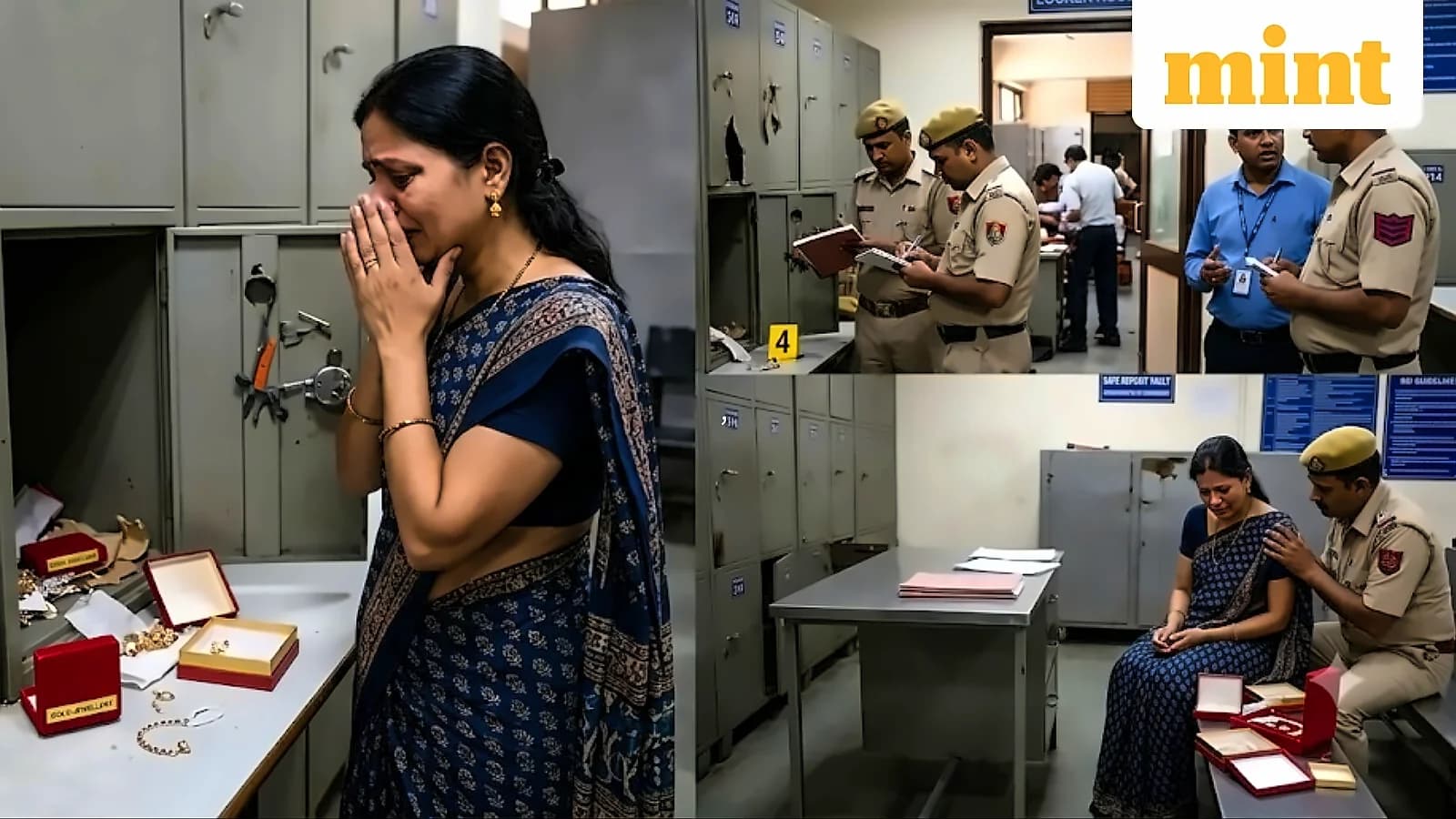
Recent thefts from bank lockers in Kanpur and Mumbai have raised significant concerns about security at these supposedly safe storage facilities. According to reports from Mint, one incident involved a woman who stored ₹50 lakh worth of jewels at the State Bank of India branch in Swaroop Nagar, Kanpur. She discovered the valuables were missing when she checked the locker after nearly four months. Another case involved a 74-year-old Dubai resident named Pradeep Motiram Bhatia, who had lived in UAE for 52 years. Upon returning to Mumbai after nearly two years, he found that his 610 grams of gold worth ₹81.8 lakh was missing from his locker. The latest development includes a BJP member's home in Kanpur where thieves stole ₹15 lakh worth of cash, jewellery and goods after breaking into the locked residence.
According to latest market data from Paytm Gold Rate, 24-carat gold in Kanpur Rural is currently priced at ₹1,63,230 per 10 grams as of August 24, 2026. The monthly trend shows significant volatility, with prices opening at ₹1,44,370 per 10 grams on August 1, 2026, reaching a high of ₹1,63,240 and touching a low of ₹1,44,140 during the month. Across India, Uttar Pradesh recorded the highest gold price at ₹1,63,230 per 10 grams, while Maharashtra registered the lowest rate at ₹1,63,080 per 10 grams, indicating a price gap of ₹150. The daily price movement shows minimal variation, with rates remaining relatively stable in the current market environment.
The Reserve Bank of India regulates locker facilities in India and has established a comprehensive regulatory framework. As reported by Mint, RBI last updated its guidelines in August 2021 to improve transparency and accountability. The central bank regulates the functioning of locker facilities and has laid down operational rules in addition to the regulatory framework. Banks have no authority to ask customers what is stored inside and are neither allowed to maintain an inventory of locker contents.
According to RBI's revised guidelines, banks are liable to compensate customers if bank negligence or security failure is proven as the reason for loss. As reported by Mint, the compensation amount can be up to 100 times the annual locker rent. For instance, if the annual locker rent is ₹4,000, the maximum compensation would be ₹4,00,000. However, this compensation is not automatically guaranteed and is contingent on proof of fault on the part of the bank. If bank negligence or security lapse cannot be proved, no compensation is provided.
Bank lockers operate with a dual-lock system where customers hold one key while the second, a master key, remains with the bank. According to Mint, both keys are needed to access the locker, implying shared responsibility. The bank must ensure that overall security and access systems are secure and functional at all times. This shared responsibility system means both parties have a role in maintaining locker security, making the current theft incidents particularly concerning given the established security protocols.