The Reserve Bank of India regulates bank locker facilities in India through a comprehensive regulatory framework, with the RBI last updating its guidelines in August 2021 to improve transparency and accountability. According to reports from Mint, the RBI has established that banks are required to exercise reasonable care in safeguarding locker facilities, but their liability is limited to 100 times the annual locker rent in cases of theft, burglary, fire, robbery, or fraud committed by bank employees. Finance Minister Nirmala Sitharaman reiterated this rationale in Parliament in March 2026, emphasizing that the compensation cap provides a standard measure of liability instead of making banks responsible for unknown values. However, customers should understand that the bank's liability ceiling may be much lower than the value of their belongings, particularly for high-value items stored in lockers.
Under the RBI's revised guidelines, banks are liable to pay compensation of up to 100 times the annual locker rent if negligence or security failure is proven to be the reason for loss. As reported by Mint, for instance, if the annual locker rent is ₹4,000, the maximum compensation the bank should pay is ₹4,00,000. However, this compensation amount is the fixed upper limit that customers can claim and is contingent on proof of fault on the part of the bank. The RBI clarifies that banks are not liable for loss arising solely from events such as earthquakes, floods, lightning or other natural calamities, or from the customer's own negligence, though banks are expected to take appropriate care to protect locker facilities even against such risks. Many customers assume that if something is stolen, the bank will reimburse the entire loss, but this is not how the current rules work under the RBI framework.
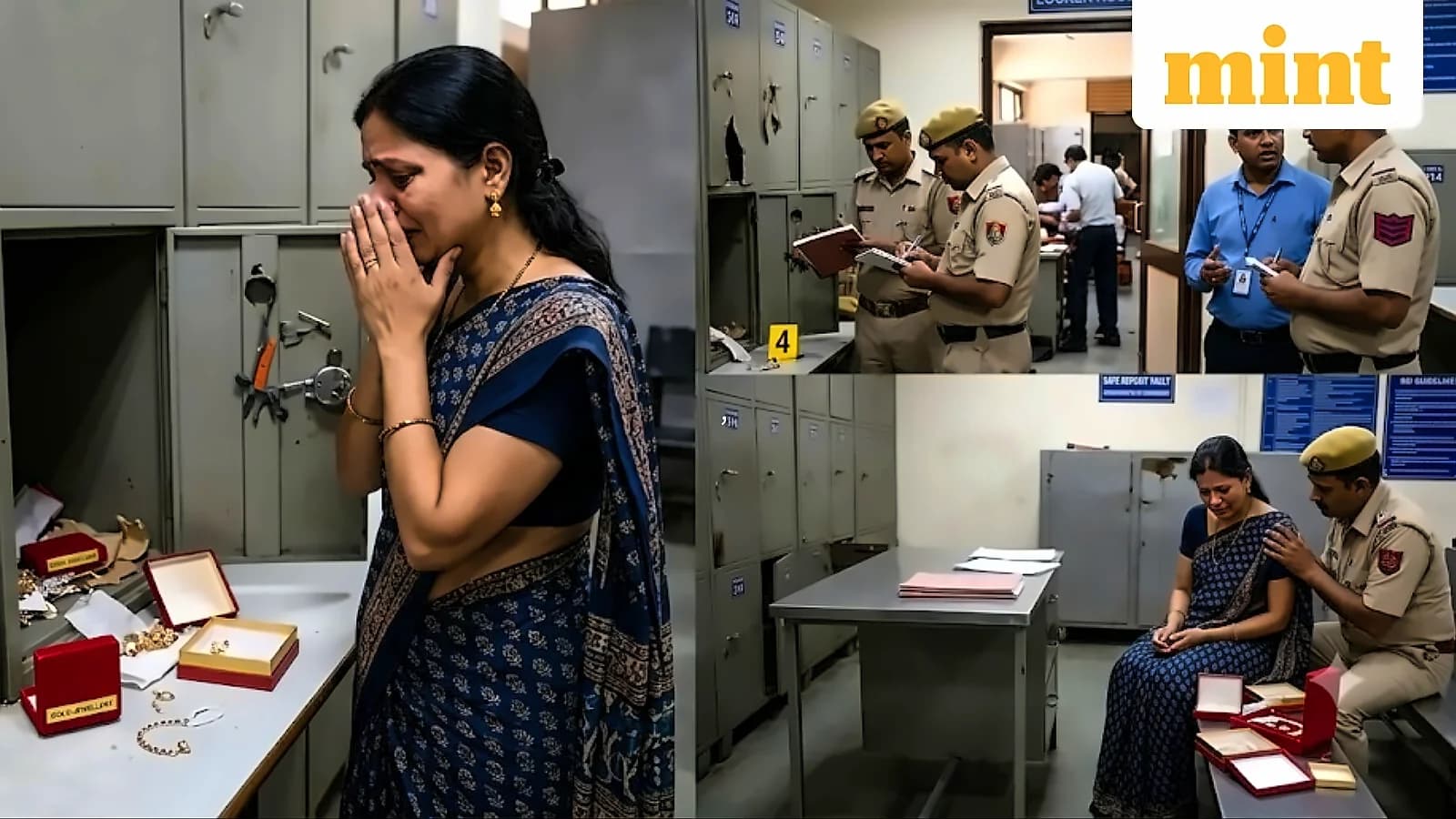
From a physical security perspective, bank lockers are robust with the RBI mandating CCTV surveillance with footage kept for 180 days, secure access control, fire-resistant vaults, and natural disaster readiness. According to Mint, banks have no authority to ask customers what is stored inside their lockers and are not allowed to maintain an inventory of locker contents. The RBI mandates that banks clarify in their locker agreements that they do not keep records of locker contents and would not be under any liability to insure the contents against any risk whatsoever. This distinction is crucial, as customers should not assume that the locker rent they pay works like an insurance premium on its contents. The circumstances surrounding the loss therefore matter when determining liability, with the bank's duty of care being limited to reasonable care of locker facilities.
Banks do not provide insurance for gold jewellery deposited in their lockers, as they do not maintain records of locker contents which is known only to the customer. As reported by Mint, the RBI states that banks shall under no circumstances offer, directly or indirectly, any insurance product to their locker hirers for insurance of locker contents. Customers are encouraged to nominate someone for easier succession, with lockers released to nominees or legal heirs within 15 days assuming proper documents are submitted. For high-value items, separate insurance designed to cover valuables, including items kept in lockers where the policy permits, can provide additional protection. Recent guidance recommends that customers maintain independent proof of the value of valuables stored, including purchase invoices, photographs, valuation reports and insurance documents. Customers should maintain their own records including purchase invoices, photographs, valuation reports and insurance documents, as these records can be useful when making an insurance claim or establishing ownership in a dispute.