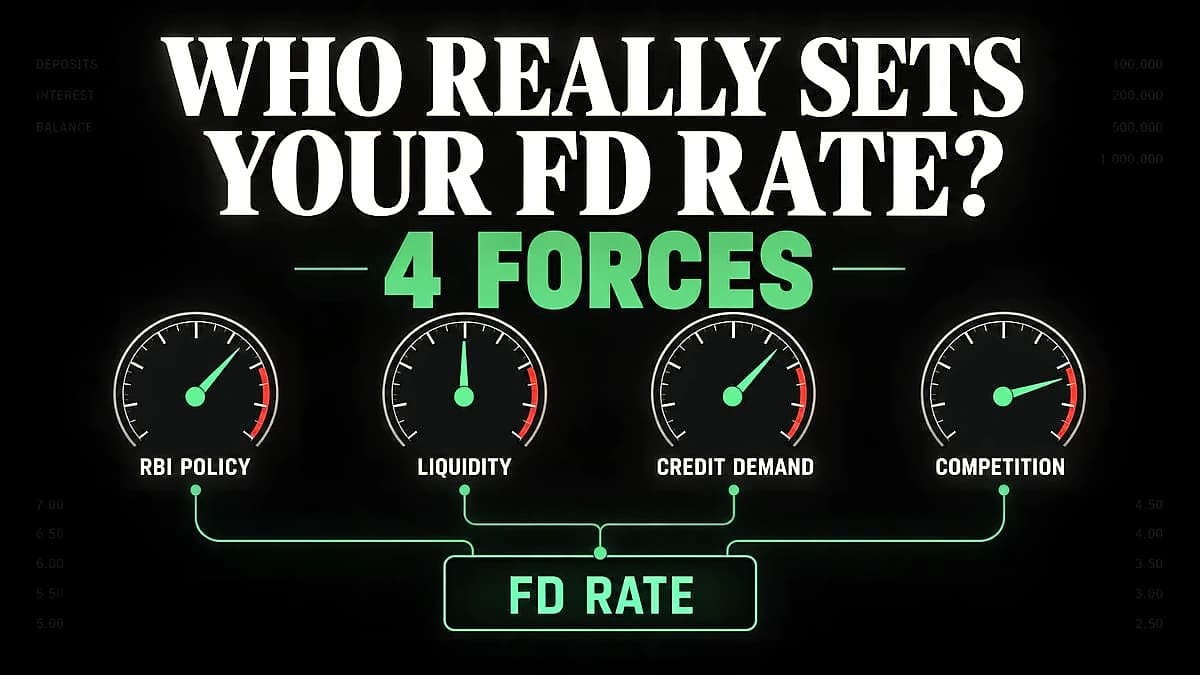
Foreign banks demonstrated the most effective transmission of the Reserve Bank of India's monetary policy easing during the current rate-cut cycle. According to the RBI's monthly bulletin released on Wednesday, foreign banks reduced weighted average lending rates (WALR) on fresh rupee loans by 1.24 percentage points, significantly outperforming private banks at 1.08 percentage points and public sector banks at 0.66 percentage points. For outstanding rupee loans, foreign banks again led transmission with a 1.20 percentage point reduction, followed by private banks at 0.98 percentage points and public sector banks at 0.81 percentage points. The superior transmission was also evident on the deposit side, where foreign banks reduced weighted average domestic term deposit rates (WADTDR) on fresh deposits by 0.91 percentage points, compared with 0.74 percentage points by private banks and 0.73 percentage points by public sector banks. For outstanding deposits, foreign banks cut rates by 0.90 percentage points, significantly higher than private banks with 0.46 percentage points and public sector banks with 0.53 percentage points.
The RBI's easing cycle occurred between February 2025 and May 2026, during which the central bank reduced the repo rate by 1.25 percentage points. According to the RBI bulletin, the rate reductions were implemented in 0.25 percentage points each in February and April monetary policies, 0.50 percentage points in June policy, and 0.25 percentage points in December policy. The central bank maintained rates unchanged during the August, October and February 2026 monetary policies, as reported by The Economic Times.
The bulletin highlighted that scheduled commercial banks reduced repo-linked external benchmark-based lending rates (EBLR) and marginal cost of funds-based lending rates (MCLR), with pass-through to fresh lending rates remaining particularly strong in infrastructure and other EBLR-mandated sectors. According to CareEdge Ratings, transmission was more pronounced in fresh loans, reflecting the growing share of External Benchmark Lending Rate (EBLR)-linked lending and faster repricing by banks. Among fresh loans, the sharpest decline in lending rates was observed in education loans (-127 basis points), MSMEs (-97 bps), trade (-94 bps), large industry (-92 bps) and housing loans (-92 bps). For outstanding loans, the largest decline was seen in trade (-100 bps) and housing loans (-99 bps), followed by education (-96 bps), infrastructure (-91 bps), large industry (-88 bps) and MSMEs (-85 bps). This indicates stronger transmission in competitive retail and business lending segments, with new loan rates adjusting faster than outstanding loan rates due to legacy contracts.

Recent market developments show that aggressive interest rate cuts combined with a shift toward lower-yielding corporate loans have significantly compressed bank margins. According to recent reports, the year-on-year NIM decline of 34 basis points can be attributed to 19 basis points due to the full impact of the 125 basis point repo cut in the current quarter, versus a 25 basis point repo cut in the same quarter last year. Additionally, 16 basis points was due to the change in balance sheet mix over the last 12 months. Banks are implementing strategic responses including AI-led capabilities platforms and operational modernization initiatives to maintain competitiveness in the evolving lending landscape. The decline in borrowing costs across housing, MSME, trade and corporate segments supported credit demand and improved credit affordability amid surplus liquidity conditions.